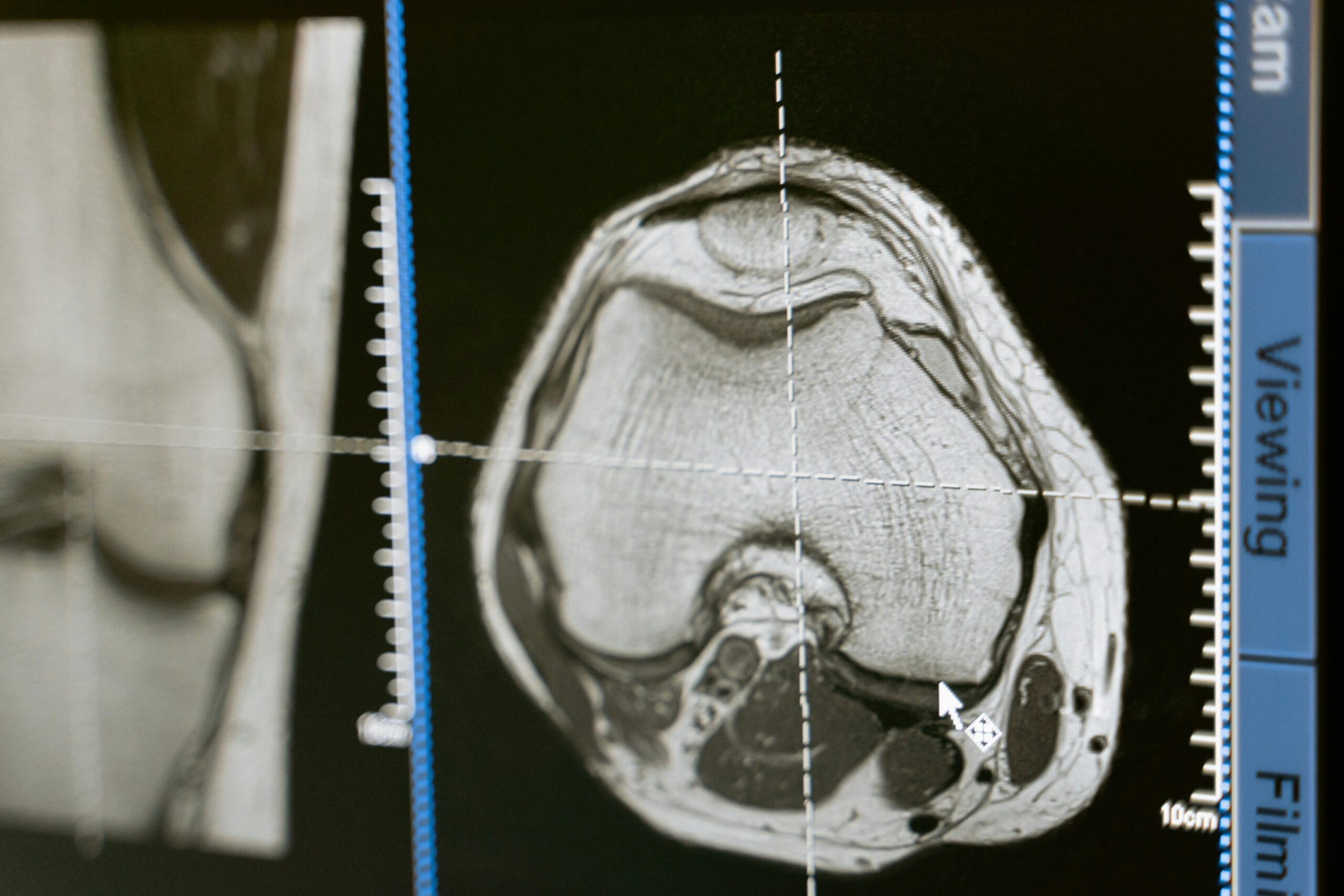


The field of image processing is currently navigating a structural transition as 2026 marks the move from experimental generative models toward “agentic vision” systems. Selecting contemporary research topics in image processing is essential for both academic depth and industrial relevance, as the industry prioritises real-time inference, digital provenance, and energy-efficient architectures. In 2026, researchers are moving beyond basic recognition toward “semantic understanding,” where systems can infer context and intent from visual data. Simultaneously, the rise of synthetic media has created an urgent need for advanced forensic tools to verify the authenticity of digital content. This guide provides a comprehensive catalogue of ideas to help you examine how the convergence of AI, spatial computing, and sustainability is redefining the processing of visual information.
Generative AI, Deepfakes, and Digital Provenance
- Identifying “Deepfake” Artefacts in 2026: Detecting High-Fidelity Synthetic Media
Investigate the latest forensic methods required to distinguish between authentic human-made content and AI-generated imagery that utilises advanced latent space modelling. - The Role of C2PA Standards in Establishing Image Provenance and Trust
Analysing the technical implementation of cryptographic metadata to track the history and editing of digital images from capture to publication. - Real-Time Deepfake Detection for Secure Video Conferencing Platforms
Researching the development of low-latency algorithms that can identify facial and voice manipulation during live digital interactions. - The Ethics of “Image Hallucination”: Managing Unreliable Features in Generative Upscaling
Evaluating the legal and professional risks of using AI to restore degraded images when the system “invents” plausible but inaccurate details. - Forensic Analysis of AI-Generated Micro-Expressions in Synthetic Video
Investigating whether subtle physiological inconsistencies in AI portraits can be used as a definitive marker of synthetic origin. - Watermarking Generative AI: Evaluating the Robustness of “Invisible” Signatures
Researching the effectiveness of various digital watermarking techniques in surviving compression, cropping, and adversarial editing. - The Impact of “Diffusion Models” on the Future of Digital Art Restoration
Analysing how generative AI can be used to repair damaged historical photographs while maintaining original artistic intent. - Managing “Latent Space” Bias: Ensuring Diverse Representation in Image Synthesis
Investigating the methods required to audit and correct the demographic imbalances inherent in large-scale generative training datasets. - The Role of Synthetic Data in Training Autonomous Vehicle Vision Systems
Evaluating whether images generated in virtual simulations can effectively replace real-world data for identifying rare or dangerous road scenarios. - Text-to-3D Generation: Evaluating the Consistency of Spatial Reconstruction
Researching the technical hurdles of creating high-resolution 3D objects from simple textual descriptions using multi-modal foundation models.
Medical Imaging and Healthcare Diagnostics
- AI-Augmented Radiology: Flags and Prioritisation in Real-World Clinical Pilots
Investigate the success of 2026 large-scale pilots where AI systems flag critical findings in MRI and CT scans for immediate human review. - Cross-Modality Synthesis: Generating High-Quality PET Scans from MRI Data
Analysing the effectiveness of using generative AI to create “virtual” imaging modalities, reducing the need for invasive or expensive procedures. - Explainable AI (XAI) in Oncology: Providing Clinically Relevant Rationale for Diagnostics
Researching the development of vision models that not only detect abnormalities but also highlight the specific visual features used in the assessment. - Automated Wound Tracking and Healing Analysis via Smartphone ISP Integration
Evaluating the accuracy of mobile-resident image processing in monitoring the progress of chronic wounds over time. - Managing Domain Shift in Medical Imaging: Improving Generalisation across Hospitals
Investigating the methods required to ensure that a vision model trained on one dataset remains accurate when deployed in a different clinical environment. - Synthetic Medical Images for Privacy-Preserving Research and Education
Analysing the use of generative AI to create realistic but anonymous patient datasets to comply with stringent data protection laws. - Real-Time 3D Reconstruction of Internal Organs during Minimally Invasive Surgery
Researching the integration of video feeds with preoperative scans to provide a “live” spatial map for surgeons. - The Impact of Hyperspectral Imaging on the Early Detection of Skin Cancers
Evaluating whether capturing data across hundreds of wavelengths provides a superior diagnostic tool compared to traditional RGB photography. - Automated Pill Identification and Verification for Pharmaceutical Compliance
Investigating the use of high-resolution image recognition to ensure that patients are receiving and taking the correct medications. - The Role of Foundation Models (for example, SAM) in Segmenting Complex Anatomical Structures
Analysing how pre-trained “segment anything” models can be fine-tuned for precise organ and tumour delineation with minimal manual input.
Edge AI, Real-Time Vision, and IoT
- Inference at the Edge: Deploying Vision Agents on Resource-Constrained Devices
Investigate the architectural shifts required to move image processing from the cloud to local sensors for immediate decision-making. - Agentic Operations for Distributed Camera Networks: Autonomous Anomaly Detection
Analysing the management of thousands of edge-resident agents that independently identify and remediate safety risks in industrial settings. - Neuromorphic Vision Sensors: Mimicking Biological Sight for Ultra-Low Power Processing
Researching the efficiency of “event-based” cameras that only capture changes in a scene, significantly reducing data volume and energy use. - Real-Time Video Summarisation for Public Safety and Infrastructure Monitoring
Evaluating the ability of AI agents to distil hours of surveillance footage into short, actionable contextual summaries. - Edge-Resident Pedestrian Detection for Autonomous Urban Mobility Systems
Investigating the technical requirements for sub-10 millisecond response times in identifying and avoiding collisions in crowded environments. - Managing “Technostress” in Industrial Vision Systems: Balancing Automation and Supervision
Analysing the psychological impact on human operators who must oversee high-speed, AI-driven quality control lines. - The Impact of 6G Connectivity on the Performance of Remote Image Processing
Researching how the increased uplink capacity of 6G enables the real-time transmission of high-definition raw data for cloud-based inference. - Privacy-by-Design in Smart City Cameras: On-Device Anonymisation and Blurring
Evaluating the effectiveness of edge-based processing that removes personally identifiable information before the data is transmitted or stored. - Low-Light Image Enhancement for Real-Time Security in “Twilight” Conditions
Investigating the integration of AI denoising and brightening algorithms into standard outdoor sensor hardware. - The Role of “Small Vision Models” in Personal Wearable Technology
Researching the optimisation of compact models for tasks like gesture recognition and spatial mapping on smart glasses.
Advanced Computer Vision and Foundation Models
- Vision Transformers (ViTs) versus traditional CNNs: A Performance Review in 2026
Investigate the structural advantages of treating images as sequences of patches for capturing global context in complex scenes. - Foundation Models for Multi-Modal Understanding: Linking Images and Text
Analysing the success of architectures that can answer natural language questions about the content of a specific photograph. - Self-Supervised Learning in Image Processing: Reducing the Need for Labelled Data
Researching the effectiveness of models that learn visual representations by predicting missing parts of an image. - The “Human Premium” in Artistic Content: Measuring the Value of Manual Photography
Evaluating whether consumers in 2026 are willing to pay more for imagery verified as “human-captured” and free from generative assistance. - Temporal Consistency in Video-to-Video Translation: Managing “Flicker” in Style Transfer
Investigating the methods required to ensure that frame-by-frame edits remain stable and visually coherent across time. - Visual Search 2.0: Inferring Context and Intent from a Single Snapshot
Analysing how modern search engines use image data to predict a user’s purchase intent or information needs. - Segment Anything Model (SAM) in Industrial Settings: Automating Quality Inspection
Researching the versatility of general-purpose segmentation tools in identifying defects across diverse material types. - The Role of Cross-Modal Retrieval in Managing Massive Image Libraries
Evaluating how firms use text-to-image and image-to-text models to catalogue and search their historical visual assets. - Zero-Shot Object Detection: Identifying Novel Items without Specific Training
Investigating the ability of foundation models to recognise items based solely on their visual and textual descriptions. - The Impact of Visual “Slop” on E-commerce Trust: Managing AI-Generated Product Images
Analysing the consumer backlash against low-quality, generic AI imagery in retail and its effect on brand reputation.
Sustainable and Green Image Processing
- Green AI Architectures: Optimising Image Models for Energy Efficiency
Investigate the design of “smaller” vision models that deliver high accuracy with significantly lower carbon and water footprints. - Measuring the Lifecycle Environmental Impact of Generative Image Tasks
Analysing the energy and water consumption associated with the training and constant inference of major image-generating platforms. - Carbon-Aware Image Processing: Scheduling Compute Tasks based on Grid Greening
Researching the use of software frameworks that move non-urgent image batches to times of high renewable energy availability. - Neuromorphic Computing for Energy-Efficient Real-Time Video Analysis
Evaluating the potential of brain-inspired hardware to handle high-resolution video streams at a fraction of the traditional power cost. - The Ethics of “Sustainable Image Scaling”: Balancing Resolution with Ecology
Investigating the policy debates regarding the regulation of energy-intensive high-definition image generation and processing. - Resource-Efficient Image Compression for Reducing Data Centre Storage Loads
Analysing the development of “perceptual” compression that prioritises visual quality while drastically reducing file size and transfer energy. - The Role of IT Greening in the Management of Global Image Libraries
Researching the move toward “circular” hardware and sustainable disposal of specialised GPU and TPU assets. - Using AI to Optimise the Energy Consumption of High-Resolution Professional Displays
Evaluating the success of real-time image adjustment that reduces pixel power usage without compromising perceived quality. - Green Software Patterns for Mobile Image Restoration and Enhancement
Investigating the effectiveness of different programming languages and algorithmic structures in reducing the battery drain of photo apps. - The Environmental Cost of “Always-On” Vision Sensing: A Priority Area for Research
Analysing the cumulative carbon footprint of billions of IoT cameras and the plans for reducing their idle power consumption.
3D Reconstruction, LiDAR, and Spatial Computing
- LiDAR Integration with 3D Computer Vision for Precise Urban Mapping
Investigate the convergence of light-based distance measurements and camera data for building high-fidelity city simulations. - Real-Time 3D Content Super-Resolution: Enhancing Immersive Environments
Analysing the methods required to upscale low-fidelity spatial data for high-resolution AR and VR headsets. - Spatial Computing and the Future of Collaborative Professional Workspaces
Researching how 3D image processing allows remote teams to interact with shared digital objects in a common virtual square. - Depth Estimation from Monocular Images: Overcoming the Specular Surface Barrier
Evaluating the latest algorithms for determining distance from a single lens, specifically for transparent or reflective objects. - Managing “Spatial Privacy”: Protecting the Interior Layouts of Private Homes in 2026
Investigating the legal and technical protections required to prevent AR devices from mapping and leaking private living spaces. - The Impact of 3D Reconstruction on the Preservation of Endangered Heritage Sites
Analysing the use of photogrammetry and LiDAR to create permanent digital records of monuments at risk from climate change. - Hand and Gaze Estimation for Intuitive Interface Control in Immersive Platforms
Researching the high-speed image processing required to turn human body language into seamless digital commands. - 3D Human Pose Estimation for Remote Physiotherapy and Sports Coaching
Evaluating the accuracy of mobile-based 3D tracking in providing real-time feedback on physical movement and form. - Digital Twins for Managing Industrial Resilience and Predictive Maintenance
Investigating the use of 3D visual data to monitor the structural integrity of factory equipment and infrastructure. - The Role of Point Cloud Processing in Autonomous Robotic Navigation
Analysing the technical challenges of interpreting millions of individual 3D points in real-time to avoid obstacles in dynamic settings.
Security, Privacy, and Forensic Imaging
- AI Provenance Systems: Forensic Watermarking as a National Security Priority
Investigate the move toward state-mandated digital signatures for all media used in official government and news communications. - Managing the Risk of “Deepfake” Identity Fraud in the Enterprise Sector
Analysing the training and technical controls needed for digital leaders to protect against synthetic executive impersonation. - Texture Blending and Pixel-Level Irregularities: New Markers for AI Forgery
Researching the forensic signatures left behind by the latest generative models that distinguish them from natural camera noise. - The Ethics of Facial Recognition in Public Squares: Managing National Security versus Liberty
Evaluating the legal frameworks and public perception of “real-time” biometric identification in urban environments in 2026. - Anonymisation for Safer Vision Analysis: The Role of Synthetic Face Replacement
Investigating the use of AI to swap real faces with realistic but non-existent “digital masks” to preserve privacy in surveillance data. - The Impact of AI-Generated Child Imagery: Technical and Legal Safeguarding
Analysing the development of automated tools for the detection and removal of harmful synthetic content from social platforms. - Provenance-Aware ISPs: Building Authenticity into the Smartphone Camera Stack
Researching the integration of secure hardware-level recording that signs images at the moment of capture. - Forensic Quality Assessment (FQA) for Verifying Evidence in Legal Proceedings
Evaluating the criteria required to prove that an image or video used in a court of law has not been tampered with by AI. - Cyber-Safeguarding for the Elderly: Identifying AI-Generated Scams via Image Cues
Investigating the educational interventions needed to help vulnerable populations spot fraudulent “family” photos or videos. - The Role of Behavioural Biometrics in Authenticating Users in Immersive Spaces
Analysing how unique movement patterns and gaze signals can serve as a secure “visual password” for digital identity.
Multimedia Restoration, Enhancement, and Industrial Applications
- Short-Form UGC Video Restoration with Generative Models: Enhancing Low-Quality Content
Investigate the use of AI to fix blur, noise, and compression artefacts in user-generated content for professional broadcasting. - Efficient Burst HDR Reconstruction on Constrained Settings: Managing Dynamic Ranges
Analysing the technical hurdles of merging multiple exposures into a single high-quality image on mobile hardware. - Automated Financial Table Reconstruction and Reasoning from Degraded Images
Researching the use of AI to extract and interpret structured data from scanned or photographed business documents. - Underwater Image Restoration: Correcting for Colour Distortion and Turbidity
Evaluating the effectiveness of denoising and dehazing algorithms in improving the clarity of deep-sea exploration footage. - Aerial and Satellite Image Enhancement for Precision Agriculture and Climate Monitoring
Investigating the use of super-resolution to identify individual plant health from high-altitude or orbital sensors. - Managing “Service Fatigue” in Client Interactions via Automated Image Retouching
Analysing the use of AI agents to perform routine photography retouching tasks, freeing human creatives for conceptual work. - The Impact of Rising Real Estate Costs on the Geography of Professional Post-Production
Researching how high living costs in traditional media hubs are driving a shift toward remote, cloud-based image processing workflows. - The Role of “Institutional Storytelling” in Building Public Trust after a Visual Scandal
Evaluating how agencies use transparent data and provenance logs to restore their reputation following the spread of fake imagery. - Automated Aperture and Bokeh Rendering: Simulating Professional Optics with AI
Investigating the accuracy of software-driven depth-of-field effects in replicating the look of expensive camera lenses. - Managing the Impact of Climate Change on Professional Imaging Logistics and Safety
Researching the preparedness of imaging firms for extreme weather, including the redesign of remote-work protocols and equipment protection.
Additional Emerging Topics for 2026
- Night-Time Image Dehazing using Multi-Scale Fusion Algorithms: Performance Review
Investigate the use of hierarchical feature extraction to remove atmospheric noise and improve clarity in low-light surveillance footage. - Reflecting Removal in the Wild: Dealing with Complex Window and Glass Glare
Analysing the adversarial networks required to separate reflected layers from transmitted light in unconstrained urban photography. - The Role of “Cognitive Liberty” in Protecting Citizens from Visual Neuro-Marketing
Researching the legal and technical safeguards needed to prevent images from triggering non-conscious neural responses in consumers. - Techno-Feudalism versus Digital Capitalism in the Management of Image Assets
Evaluating whether the control of visual data by a few global platforms creates a new form of non-territorial political authority. - Managing the “Hidden Curriculum”: Moral Learning in the Image Processing Workforce
Investigating how the unwritten values and biases of engineers are encoded into the foundational vision models of 2026. - The Impact of Global University Rankings on Local Image Processing Research Priorities
Analysing whether the pursuit of international prestige leads institutions to neglect the specific technical needs of their regional industries. - Cross-Domain Few-Shot Object Detection for Rare Industrial Defects
Researching the ability of vision models to identify unique manufacturing flaws using only a handful of training examples from different material types. - The Launch of the EU Network of AI-Powered Advanced Screening Centres
Evaluating the administrative and technical integration of high-speed image analysis for border and transport security across Europe. - Image-to-Image Translation for Architectural Visualisation in Smart Cities
Investigating the use of generative models to turn 2D site photographs into realistic 3D renderings of proposed urban developments. - Evaluating the Success of the 10-Year Health Plan: Joined-Up Imaging Results
Analysing the outcomes of the 2026 milestone for integrating diagnostic image data across primary and secondary healthcare providers. - Ethics of “Nudging” Citizens toward Green Habits via Municipal Visual Data
Researching the moral boundaries of using subtly altered digital signage to influence public recycling and energy-saving behaviours. - Role of “Challenge Networks” in Executive Imaging Firm Coaching and Performance
Evaluating whether encouraging constructive honesty within leadership teams leads to better commercial outcomes than traditional hierarchical support. - The Impact of “Grade Inflation” on the Perceived Quality of Vision Graduates
Investigating the administrative pressures in higher education and their effect on the technical competence of new image processing professionals. - Managing “Polycrisis”: Administrative Plans for Overlapping Systemic Shocks in IT
Analysing the preparedness of image processing firms for the simultaneous impact of economic, environmental, and energy crises in 2026. - The Role of “Sovereign AI” in Protecting National Visual Data Libraries
Evaluating the development of locally-hosted vision models to ensure the security and privacy of sensitive national image assets. - Event-Based Image Deblurring for High-Speed Sports Analytics
Researching the integration of neuromorphic sensors to remove motion blur from broadcast footage of professional athletic events. - Blind Computational Aberration Correction for Mobile Photography
Investigating the use of AI to fix optical distortions caused by the physical limits of compact smartphone lenses without hardware adjustments. - High FPS Video Frame Interpolation: Extreme Cases and Classic Techniques
Analysing the algorithms required to synthesise smooth movement in slow-motion video when the original capture rate is low. - Professional Image Quality Assessment Models (RAIM) for 2026
Researching the latest metrics for measuring the perceived fidelity and aesthetic value of images generated by autonomous agents. - Multi-Exposure Image Fusion in Dynamic Scenes: Managing Movement Blur
Evaluating the technical hurdles of merging different light exposures into a single high-dynamic-range image when subjects are in motion. - AI Flash Portrait Generation: Simulating Professional Lighting in Mobile Apps
Investigating the use of neural rendering to replicate the look of complex studio lighting setups in simple smartphone photographs.
How to Use These Research Topics in Image Processing
Selecting a subject is only the first step in your academic journey. To get the most out of this list, we recommend following these steps to refine your chosen idea:
- Narrow the Scope: Many of the topics listed here are broad. Once you select one, try to focus on a specific application (for example, medical diagnostics or autonomous vehicles) or a specific technological constraint (for example, edge computing versus cloud-based) to make your research more manageable.
- Conduct a Preliminary Literature Review: Before committing to a topic, check academic and professional databases like IEEE Xplore, ACM Digital Library, or NTIRE 2026 (New Trends in Image Restoration) to ensure there is enough existing data to support your study.
- Identify Your Methodology: Decide early on whether your research will be qualitative (expert interviews on ethical governance, case studies) or quantitative (analysing model accuracy, latency, power consumption, or pixel-level fidelity).
- Check for Ethical Constraints: If your topic involves the use of personal data, biometric identification, or the generation of synthetic human likenesses, ensure you can obtain ethical approval and the necessary data protection clearances before you begin.
Looking for more research inspiration?
Selecting a compelling subject is vital for your academic success. If you are still searching for the perfect focus, browse our full collection of Research Topic Ideas to discover thousands of suggestions across various disciplines and academic levels.