

Struggling through a massive pile of source material can make it incredibly easy to lose sight of the bigger picture and wander into critical writing traps. When analyzing common literature review mistakes, the most frequent pitfall is treating the assignment like a glorified book report. Simply listing summaries of individual studies back-to-back completely misses the real objective, which is providing a critical, overarching evaluation of the entire field.
This guide explains how to identify and fix structural flaws before they impact your final grades. Spotting these stylistic patterns early will allow you to quickly eliminate research narrative weaknesses and tighten your conceptual presentation. I will show you how to break out of descriptive summary loops and apply analytical tracking methods so you can confidently maintain a critical synthesis focus across every chapter of your document.
Common Literature Review Mistakes
A literature review acts as the backbone of any serious academic assignment, yet it remains one of the most frequently misunderstood components of the writing process. Recognizing the common literature review mistakes early is essential because these errors shift the focus from original analysis to simple information reporting. To succeed, the goal must move away from reciting what authors have said and instead focus on how different research projects interact, clash, and collectively define the gaps in existing knowledge.
1. Falling Into the ‘Summary Loop’ Trap
The most frequent error in undergraduate and graduate writing is the “list approach”—summarizing one paper, then the next, and the next, without any connecting tissue between them.
- The lack of synthesis: Descriptive summaries fail to explain why the papers were grouped together in the first place. Without explicit comparisons, the reader cannot identify the broader trends within the field.
- The analytical solution: Every paragraph must feature an integrated view, where multiple studies are held in conversation with one another. Instead of stating “Study A did this, and Study B did that,” prioritize comparative phrasing: “While Study A suggests X, Study B complicates this view by highlighting Y.”
- Narrative focus: Critical synthesis requires moving the spotlight from the individual authors to the thematic concepts that bridge their work.
How to transform descriptive summaries into critical synthesis
- Review draft paragraphs to see if they focus entirely on one author’s work; if so, flag them for revision.
- Identify two or three studies that cover the same core theme or measurement method.
- Rewrite the section to compare those studies directly, focusing on where their results align or contradict each other.
- Ensure the final paragraph closes with an analytical point about what that comparison means for the overarching research question.
2. Relying on Chronological Rather Than Thematic Organization
Organizing a review strictly by the date of publication creates a disconnected timeline that rarely reveals the actual conceptual debates occurring in a field.
- The structural dead-end: A chronological list forces readers to track when things happened rather than what is actually being argued. It obscures the intellectual evolution of the subject matter.
- The thematic shift: Grouping literature by conceptual themes, shared methodologies, or theoretical disagreements allows for a much sharper, more argumentative review.
- Highlighting the debate: Thematic grouping showcases the evolution of ideas and clearly identifies where scholars have changed their minds or disagreed over time.
How to re-engineer a chronological draft into a thematic map
- List out the major sub-topics or conceptual pillars of the research project.
- Sort all the cited papers into those specific thematic buckets.
- Draft the review chapters based on those topics, moving from broad frameworks to highly specific debates.
- Use transitional phrases that emphasize intellectual shifts rather than just mentioning dates, such as “Building on this early framework, later studies advanced…”
3. Failing to Address Contradictory Evidence
Many writers assume a literature review should only support the main thesis. Excluding studies that disagree with the primary argument creates a biased, shallow, and highly unprofessional review.
- The confirmation bias trap: Ignoring contradictory evidence makes the document look like a marketing brochure rather than a scholarly investigation.
- Building credibility: Proactively acknowledging opposing views demonstrates a deep mastery of the field and makes the final thesis argument far more defensible.
- Reconciling differences: Explaining why a contrary finding exists—perhaps due to a different methodology or sample demographic—is a powerful analytical move that adds significant depth to the review.
How to handle contradictory sources ethically
- Conduct a search for studies that challenge the primary thesis or dominant framework.
- Acknowledge these dissenting findings early in the review to establish balanced, evidence-based authority.
- Analyse the specific reasons for the contradiction, such as different data collection tools, sample sizes, or regional contexts.
- Use these disagreements as a bridge to explain why the research project or essay is necessary to reconcile the field.
4. Neglecting the Connection to the Research Gap
A literature review without a clear conclusion is just an endless stream of information. If the review does not lead naturally into the research gap, the entire document lacks purpose.
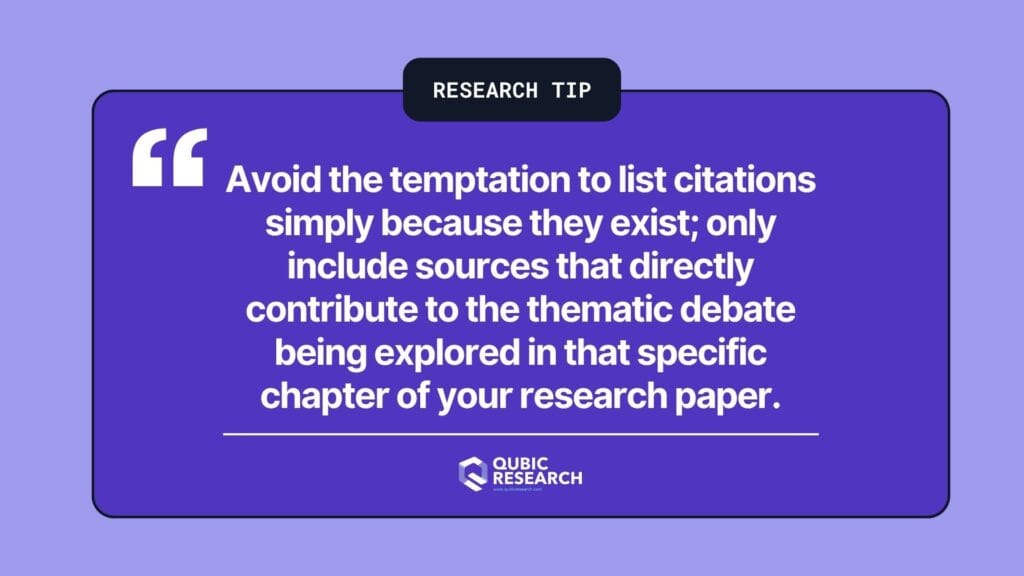
- The missing bridge: Every study cited must play a role in justifying why the new research is required. If a citation doesn’t help define the problem, it shouldn’t be there.
- Creating the justification: The final chapter of the review must explicitly map out the blind spots identified throughout the text.
- Proving necessity: The goal is to leave the reader convinced that the identified research gap is not just interesting, but absolutely essential to resolve.
How to ensure the review leads directly to the research gap
- Re-read the final section of the literature review to confirm it explicitly points to a lack of existing knowledge.
- Go through every cited source and ensure each one provides context for the specific problem being addressed.
- Remove any paragraphs or citations that do not directly help justify the research project’s purpose.
- Ensure the language directly connects the limitations of previous studies to the objectives of the current research.
5. Over-Reliance on Secondary Sources
A final critical error is relying heavily on secondary interpretations or textbook summaries instead of tracking down and auditing original primary literature.
- The ‘telephone game’ effect: Relying on secondary summaries increases the risk of misrepresenting original empirical findings, as nuances are frequently lost when filtered through multiple interpretations.
- Establishing authority: Directly analyzing primary datasets and experimental configurations demonstrates that the researcher has engaged with foundational evidence, significantly raising intellectual trust.
- Maintaining precision: Evaluating primary methods directly allows you to identify specific flaws in how raw data was gathered, uncovering the exact limitations needed to fuel your own thesis.
How to audit and integrate primary empirical sources
- Scan your bibliography for a high frequency of textbook references, meta-analyses, or broad literature overview articles.
- Identify the core breakthrough claims within those secondary sources and use their footnotes to trace the original, primary studies.
- Obtain the original papers and read their specific methodology, sample parameters, and raw data outputs directly.
- Replace the secondary citations with an authentic, first-hand analysis of the original experimental setups and conclusions.
Final Thoughts on Common Literature Review Mistakes
Building a high-impact research project requires moving away from descriptive reporting and embracing active, critical evaluation. When addressing the most common literature review mistakes, the structural evidence clearly highlights that simply listing summaries back-to-back destroys the analytical value of an assignment. Treating a background study like a simple chronology or a selective confirmation bias tool compromises academic credibility.
Protecting final submission grades requires breaking out of repetitive summary loops, organizing chapters by thematic concept, integrating contradictory data sets, and prioritizing first-hand primary literature. Taking total ownership over these structural configurations ensures a literature review transitions into a dynamic, highly critical narrative that exposes clear research gaps and establishes an undeniable justification for a thesis.
How to Find Research Gaps Quickly
If you want to know how to identify unmapped data boundaries and isolate empirical blind spots without spending weeks reading background text, read the guide on how to find research gaps quickly to anchor your project scope.
Frequently Asked Questions
Why do university evaluators penalize literature reviews that rely heavily on a chronological structure?
Evaluators penalize chronological layouts because they force the text to read like a basic historical timeline rather than a critical synthesis. Grouping sources strictly by publication date hides the analytical trends, method conflicts, and conceptual debates that naturally emerge when grouping literature thematically.
How does falling into a ‘summary loop’ damage the critical depth of a research paper?
A summary loop treats papers as isolated blocks of text, describing them one after another without any connecting tissue. This approach fails to provide synthesis, leaving the reader unable to identify how separate studies interact, where their methodologies intersect, or how they collectively define a research field.
What is the risk of omitting peer-reviewed studies that directly contradict a thesis statement?
Excluding contradictory evidence creates an immediately biased, one-sided narrative that resembles a marketing pitch rather than objective academic scholarship. Proactively addressing dissenting findings builds authority, demonstrates a complete mastery of the field, and offers a clear path to reconcile conflicting data.
How does a high volume of secondary source citations impact the credibility of a literature review?
Relying heavily on secondary review articles or textbook overviews increases the risk of misrepresenting original findings through a “telephone game” effect. Citing original primary sources proves that the researcher has audited the raw experimental setups, data parameters, and specific conclusions first-hand.
What is the most effective way to ensure a background review connects to a thesis hook?
The most effective way is to treat every single citation as a building block that establishes the necessity of your project. If a section does not help expose an active limitation or thematic blind spot in the existing literature, it must be removed to keep the entire chapter focused on justifying the new research gap.