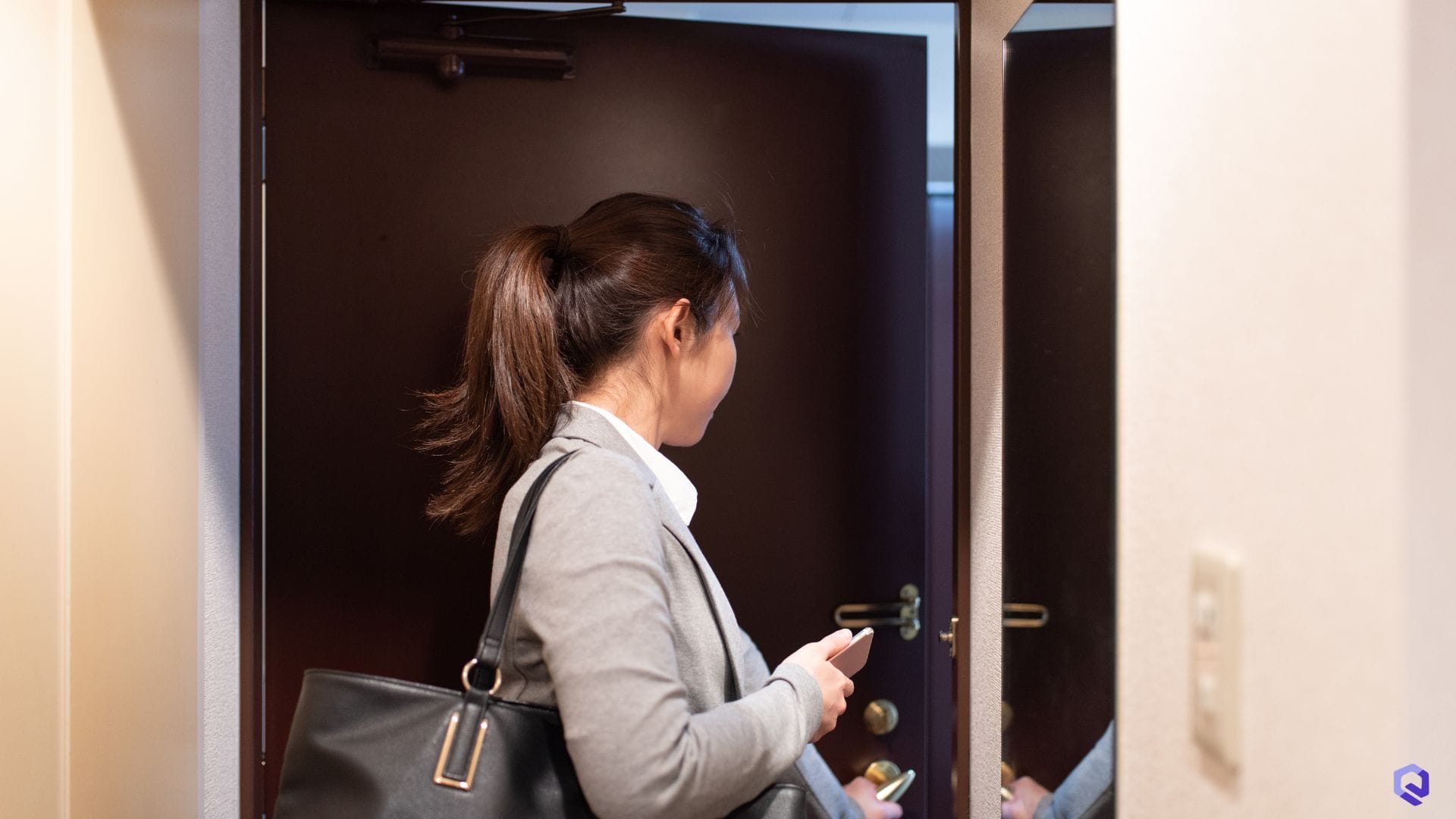


Almost everyone has experienced the mild frustration of walking from the living room into the kitchen, only to stand in the middle of the floor completely blanking on what they went there to retrieve. This sudden lapse in memory usually prompts an individual to blame their own lack of focus or stress levels. However, fascinating cognitive research reveals that you can stop blaming your brain, because the physical layout of a building is actively wiping your memory.
Jump Into the Data:
The complete, peer-reviewed psychological study detailing how environmental boundaries disrupt memory retention can be accessed via the PubMed repository here.
Decoding the “Doorway Effect”
To investigate why memory drops so sharply when navigating indoor spaces, cognitive psychologists conducted a series of controlled experiments. Participants were placed in a virtual reality environment where they had to move through various rooms to pick up, carry, and deposit different items. Crucially, the researchers designed the test so that the physical distance traveled was identical, but half the time the participants merely crossed a single large room, while the other half of the time they walked through a doorway into a completely new space.
When the participants were periodically quizzed about the items they were carrying, their memory performance dropped dramatically immediately after walking through a doorway. The researchers then repeated the experiment in real-world architectural settings and found the exact same result. The literal physical act of passing through a portal creates a cognitive barrier, heavily degrading an individual’s ability to recall their recent thoughts and intentions.
Why Your Brain Treats Doorways as an Eraser
- Event Horizons: In cognitive psychology, your brain structures information into discrete chunks called event models. A doorway serves as a literal psychological “event horizon,” signaling that one scene has ended and a new one has begun.
- The Mental Reset Button: When you cross into a new room, your working memory immediately purges data from the previous room to clear out cognitive space for the upcoming, unfamiliar environment.
- Contextual Purging: Your brain subconsciously assumes that the thoughts you had in the living room are no longer relevant to your survival or tasks in the kitchen, leading to an immediate deletion of that file.
The Persistence of Forgetfulness
A secondary, highly surprising layer of this research shattered the idea that you can easily retrieve a lost thought just by returning to the original room where you first had it. The research team tested participants who walked through a doorway, forgot their task, and then walked directly back through the same doorway to the starting location.
Remarkably, returning to the initial room did not automatically restore the lost memory. This proves that the doorway effect is not just a temporary glitch caused by the distraction of a new visual environment; it is a permanent purging mechanism. Once the brain files a thought away under a previous “event chapter,” the working memory completely overwrites that data, making it exceptionally difficult to retrieve without a distinct external cue.
“Passing through doorways serves as an event boundary in the mind, which serves to file away thoughts from the previous room and clear the mental slate for a fresh environment.”
How to Outsmart Your Internal Architectural Programming
While the doorway effect is an unchangeable, hardwired quirk of human evolution designed to keep us hyper-aware of our changing physical surroundings, understanding how it operates allows you to develop effective cognitive workarounds. You do not have to live in a house completely devoid of internal walls to maintain your daily productivity.
The best way to combat this environmental memory purge is to consciously reinforce your intention before making a physical move. Instead of mindlessly walking to another room, explicitly state your goal out loud, or physically write a quick note on your phone. By transforming a fleeting thought into a tangible sensory anchor, you force your working memory to carry the data across the threshold, keeping your focus completely intact no matter how many doors you walk through.