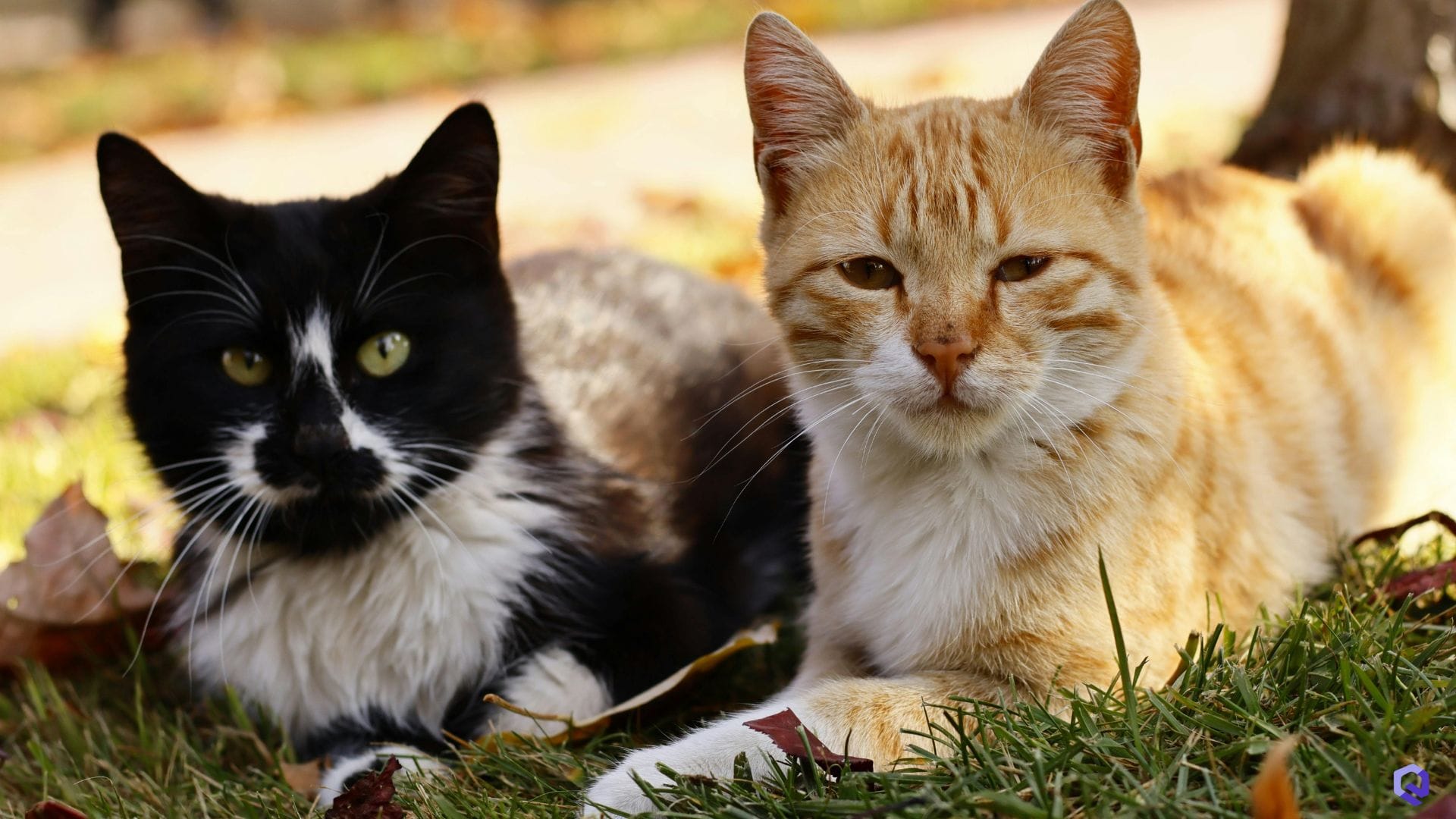


Pet owners love to observe the subtle, quirky habits of their feline companions, from the precise way they stalk a toy to how they meticulously groom themselves. While these movements might look entirely random or purely driven by instinct, cognitive scientists have discovered a fascinating layer of hidden structure beneath these daily actions. Remarkable animal behaviour research proves that cats possess a distinct paw preference that is heavily dictated by their biological sex, with females showing a strong tendency to be right-handed and males leaning heavily to the left.
Jump Into the Data:
The complete, peer-reviewed study examining lateralised motor behaviour and sex-based asymmetry in domestic cats can be read through the Faunalytics research library here.
Testing the Feline Reach
To determine whether domestic felines display a structured limb preference matching human handedness, researchers designed a series of non-invasive, real-world experiments inside the cats’ home environments. The scientists tracked dozens of male and female cats through multiple everyday tasks. The primary test involved a specialized food treats tower, forcing the animals to reach through a narrow opening to extract a single piece of kibble, alongside monitoring which paw they used first to step down stairs or cross over obstacles.
When the researchers compiled and calculated the statistical data from thousands of individual reaches, a striking, sex-based pattern emerged. The vast majority of female cats consistently and repeatedly utilized their right front paw to retrieve the food and initiate movement. Conversely, the male subjects demonstrated an identical, mirror-image bias, relying overwhelmingly on their left front paw. This clear split proves that handedness is not a unique human trait, but a deeply hardwired feature of the feline nervous system.
The Statistical Split of Feline Handedness
- The Female Bias: Roughly seventy percent of female cats showed a statistically significant preference for utilizing their right paw during complex, text-based motor challenges.
- The Male Trend: An equally dominant percentage of male cats leaned heavily toward left-paw usage, establishing a distinct neurological divergence between the biological sexes.
- The Ambidextrous Minority: A small percentage of the feline subjects showed no preference at all, happily utilizing both paws interchangeably depending on their physical position.
The Hormonal Architecture of the Brain
The root cause of this fascinating asymmetry lies deep within the structural development of the mammal brain. The preference for using one limb over another is a direct outward reflection of brain lateralisation, which means that one hemisphere of the cerebral cortex is exerting more dominant control over complex motor functions than the other.
Scientists believe that prenatal sex hormones, particularly testosterone and oestrogen, play a massive role in shaping how these neurological pathways are wired while the kittens are still developing in the womb. These hormonal surges subtly alter the growth rate of the left and right hemispheres. Because the left side of the brain controls the right side of the body, and vice versa, sex hormones effectively dictate the neurological wiring that ultimately determines whether a kitten grows up to be a righty or a lefty.
“The findings strongly confirm a significant sex difference in the lateralised behavior of domestic cats, showing that motor preferences are deeply tied to biological sex.”
What Your Cat’s Paw Preference Reveals About Their Mind
While discovering whether your pet is a lefty or a righty makes for a fantastic conversation starter, this research actually carries highly practical implications for understanding animal welfare and psychological vulnerability. In cognitive science, strong limb preferences are heavily linked to how an animal processes stress, fear, and environmental changes.
Studies in various animal species indicate that ambidextrous individuals, or those who lean heavily left, often process information predominantly through the brain’s right hemisphere, which is closely tied to heightened fear and stress responses. Cats with a strong, right-paw preference tend to display more confident, playful behavior in novel situations. Paying close attention to your pet’s paw choices gives you a direct window into their underlying neurological resilience, helping you better tailor their environment to keep them happy and secure.