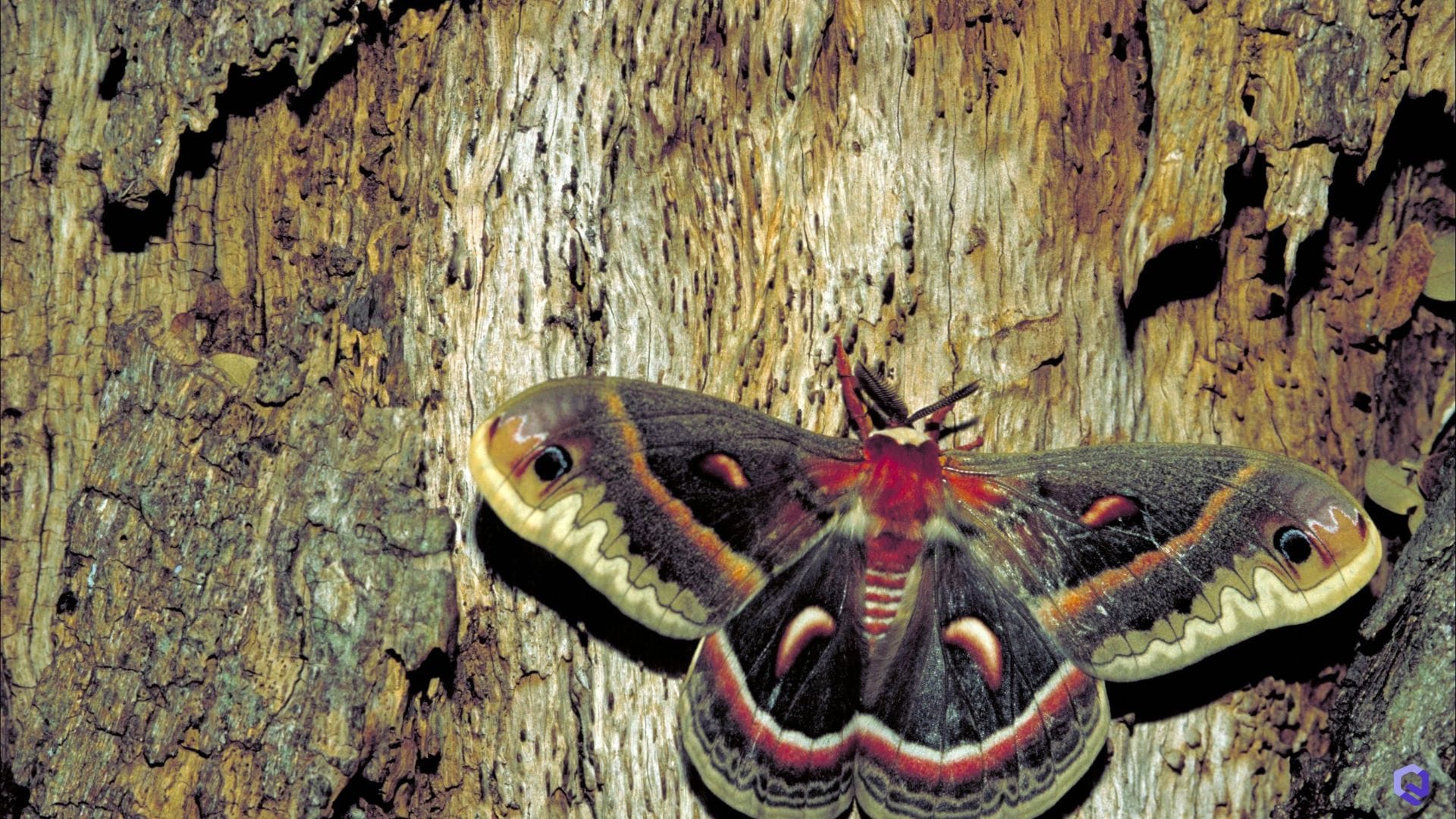


The dense, isolated rainforests of Madagascar are internationally celebrated for harboring some of the most eccentric evolutionary adaptations on the planet. From strange primates to highly specialized plants, the island serves as a living laboratory for unusual survival strategies. However, field biologists documenting nocturnal ecosystems have uncovered a truly surreal relationship that boundaries on the gothic, proving that a bizarre species of moth survives by drinking the tears of sleeping birds.
Jump Into the Data:
The original, full-text scientific paper detailing this remarkable lachryphagous behavior can be accessed via the PubMed Central repository here.
The Midnight Theft of Nutrients
To understand the nocturnal behaviors of local wildlife, a team of behavioral ecologists ventured into the island’s dense undercanopy at night. Using specialized infrared lighting, they observed a specific species of moth, known scientifically as Hemiceratoides hieroglyphica, actively seeking out sleeping forest birds. Instead of gathering nutrients from conventional flowers or muddy puddles, the insects deliberately landed on the necks of the sleeping hosts to locate their closed eyes.
The behavioral data revealed an incredibly calculated feeding interaction. The moths utilize a highly specialized mouthpart to carefully probe between the tightly closed upper and lower eyelids of the birds. Once inside, the insect passively suctions the nutrient-dense tear fluid generated by the avian host. Because the birds are deeply asleep, they remain completely oblivious to the micro-parasite feeding on their secretions, serving as unintended givers in the dark.
The Harpoon-Like Mechanics of Tear-Feeding
- Harpoon Morphology: Unlike standard tear-feeding moths that possess smooth mouthparts, this Malagasy species has a proboscis uniquely armored with microscopic hooks, barbs, and spines.
- The Anchor Strategy: Scientists calculated that the moth does not use its sharp barbs to painfully pierce the eye tissue, but rather to securely anchor its feeding tube in place between the bird’s slick eyelids.
- Evading Mud Predation: While many butterflies and moths gather essential minerals from wet mud puddles, doing so at night exposes them to abundant predatory frogs, making a sleeping bird’s head a remarkably safe sanctuary.
The Evolutionary Scarcity of Madagascar
What makes this discovery so compelling to evolutionary biologists is why this highly unique behavior evolved on this specific island. Across mainland Africa and Asia, lachryphagy—the scientific term for tear-feeding—is a well-documented habit among various insects, but they almost exclusively target large, slow-moving mammals like elephants, deer, or water buffalo.
Madagascar lacks large native land mammals entirely. The island’s most common large-eyed mammals, such as lemurs, are highly active and alert at night, making it functionally impossible for a moth to settle on their faces without being swatted away. Faced with an absolute scarcity of mammalian hosts, the ancestors of these moths faced a strict evolutionary choice: adapt or perish. Over thousands of generations, their neurological maps and physical structures shifted toward birds, unlocking an abundant, alternative reservoir of essential fluids.
“This represents the first known report of exploitation of tears by Lepidoptera from the closed eyes of sleeping birds, showing an extraordinary morphological adaptation to an island ecosystem.”
A Microscopic Masterpiece of Adaptation
The ultimate takeaway from this research highlights the spectacular precision of evolutionary engineering. The tear fluid of a bird is not just water; it is a complex biological cocktail rich in essential salts, sodium, and valuable proteins that are incredibly scarce in the surrounding tropical flora. For a male moth, gathering these specific minerals is an absolute necessity to ensure successful reproduction.
By developing a specialized tool shaped like an ancient harpoon, this tiny insect successfully bypassed the formidable protective defense systems of a bird’s eye, including the nictitating membrane or third eyelid. It proves that nature will always discover a way to fill an ecological niche, turning a routine biological secretion into a vital lifeline. The next time you think of a moth as a simple creature mindlessly fluttering toward a porch light, remember that some are executing precise, midnight operations deep in the jungle to drink the tears of sleeping prey.