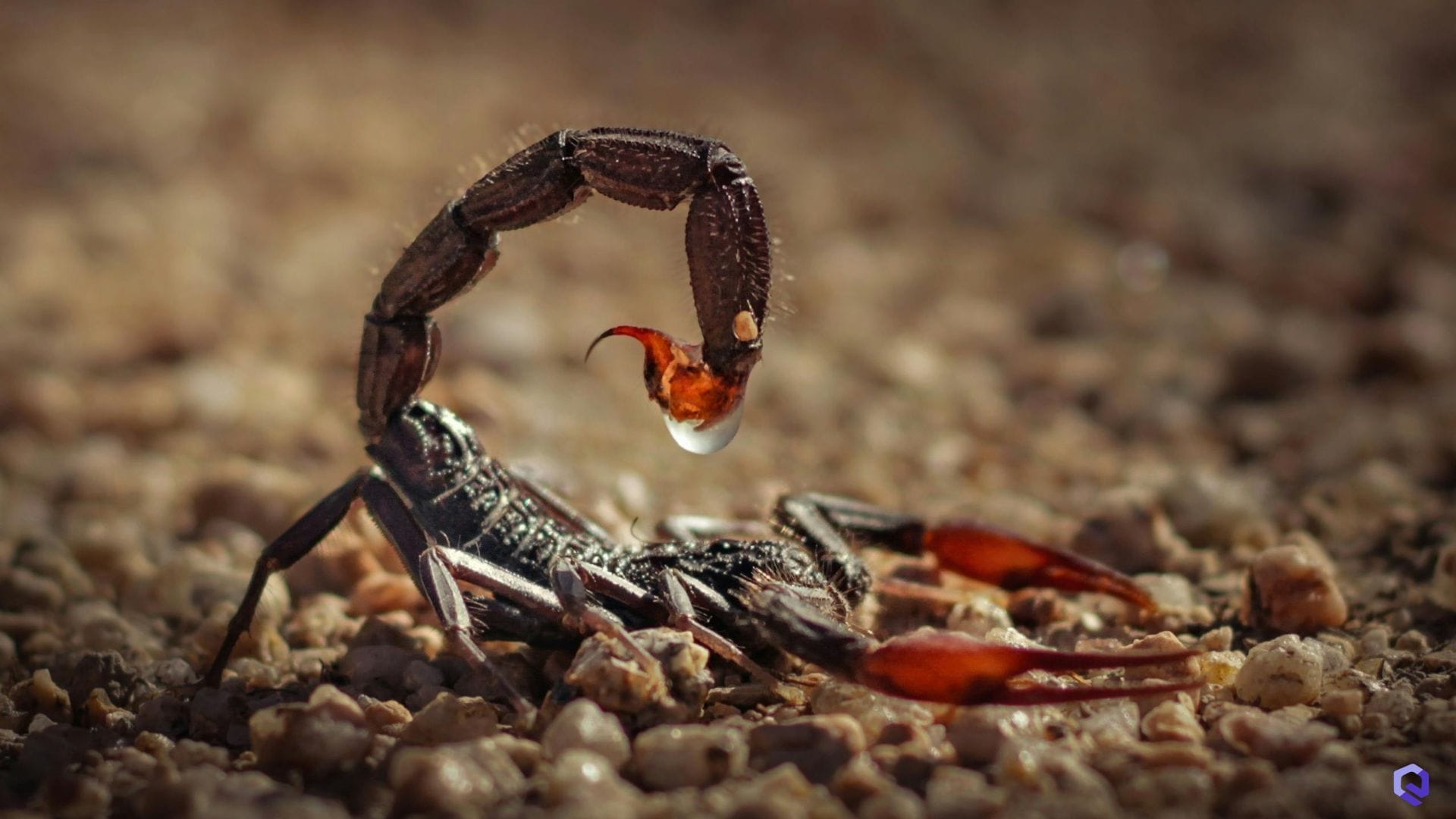


The natural world is packed with brutal survival strategies, but few evolutionary trade-offs are quite as grim as the defense mechanisms found in certain arachnids. While many creatures can autotomise—or deliberately detach—a limb to escape the jaws of a predator, the long-term consequences are usually manageable. However, a remarkable biological study has revealed that when specific scorpions drop their tails to survive, they permanently lose their anus, condemning themselves to a slow death caused by severe, incurable constipation.
Jump Into the Data:
The complete, peer-reviewed scientific study detailing this extraordinary defense mechanism and its physiological costs can be read in full via the PLOS ONE journal here.
The Ultimate Price of Immediate Survival
To understand the mechanics of tail loss in scorpions, evolutionary biologists focused their research on a South American genus known as Ananteris. These small arachnids are heavily preyed upon by lizards, frogs, and spiders. When caught by the tail, the scorpions execute a sudden, violent twist that cleaves the tail completely off at a built-in fracture point, allowing the rest of the body to escape to safety.
However, the anatomical reality of this escape is devastating. In scorpions, the tail is not a simple appendage; it is a literal extension of their torso that houses the final segments of their digestive tract, the venom glands, and the anus. When the tail separates, the wound heals over rapidly with scar tissue. Because these creatures completely lack the biological capability to regenerate lost body segments, the scorpion is left with a permanently sealed digestive system, completely blocking their ability to excrete metabolic waste.
The Physiological Timeline After Tail Loss
- Immediate Escape: The detached tail continues to twitch and display aggressive stinging motions for several seconds, successfully distracting the predator while the scorpion runs away.
- Rapid Healing: Within days, the open wound completely closes over, preventing fatal blood loss but permanently sealing the digestive tract shut.
- Abdominal Swelling: Over the subsequent weeks and months, undigested food and metabolic waste build up inside the scorpion’s abdomen, causing massive physical distension.
The Reproductive Race Against Time
From an evolutionary perspective, a defense mechanism that guarantees a slow, painful death sounds like a major biological failure. If an animal is doomed to die regardless, dropping the tail would seem to offer no real evolutionary benefit. However, the data gathered by the research team explains exactly why this extreme trade-off successfully persists in the wild.
The secret lies in the fact that the constipation takes months to become fatal. Because the scorpion’s metabolism is remarkably slow, a tailless individual can easily survive for up to eight months without ever expelling waste. During this extended grace period, the scorpions remain highly active and can successfully mate, ensuring they pass on their genetic material to the next generation before their abdomen becomes too heavy and their internal organs eventually fail.
“Tail loss in Ananteris scorpions involves a unique case of autotomy where the animal loses the final parts of its digestive tract, leading to permanent constipation, yet provides a major short-term fitness advantage by allowing reproduction.”
A Grim Testament to Evolutionary Priority
The profound takeaway from this research highlights the cold, calculated reality of evolutionary biology. Nature does not care about the long-term comfort, health, or longevity of an individual organism; it cares entirely about reproductive success. Survival is only valuable up to the exact point that an animal can pass on its genes.
While male scorpions lose their venomous sting and struggle to capture large prey after losing their tail, they can still hunt small insects and aggressively pursue females. Female scorpions who lose their tails can even survive long enough to carry and give birth to a healthy litter of offspring. It proves that in the grand game of survival, living long enough to reproduce is worth any anatomical sacrifice—even if it means spending your final months on Earth experiencing the absolute worst case of constipation imaginable.