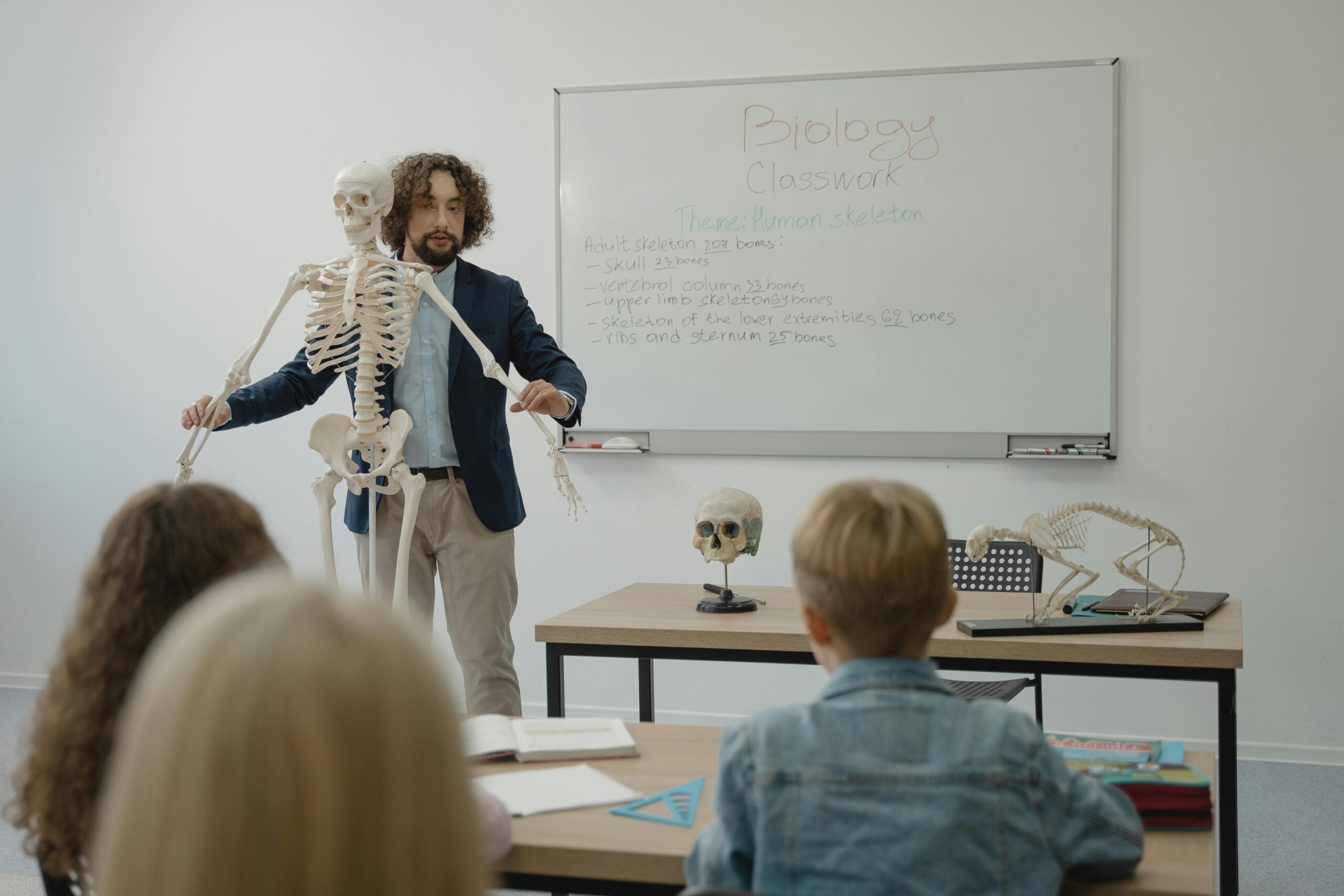


The methodology for teaching the natural world is undergoing a significant transformation, making the selection of contemporary research topics in science education essential for fostering the next generation of innovators. In 2026, the focus has shifted toward “greening” the curriculum and leveraging artificial intelligence to create safe, immersive laboratory experiences. This guide offers a robust selection of ideas to help you investigate how scientific inquiry, digital transformation, and social equity intersect within the modern classroom.
AI, Simulation, and Digital Innovation in Science
- The Efficacy of AI-Simulated Laboratories in Reducing School Chemical Waste
Investigate whether virtual experiments provide comparable conceptual understanding to physical labs while minimising the environmental footprint of science departments. - Personalised Science Learning: Evaluating AI Tutors in Physics Achievement
Analysing how personalised algorithms identify individual misconceptions in Newtonian mechanics and provide tailored scaffolds to improve student mastery. - Virtual Reality and the Visualisation of Subatomic Particle Interactions
Researching the impact of immersive 3D simulations on the ability of secondary students to conceptualise abstract quantum physics theorems. - Natural Language Processing for Supporting Multilingual Scientific Literacy
Evaluating the use of real-time AI translation in helping non-native speakers master complex technical terminology in biology and chemistry. - The Ethics of AI-Generated Hypotheses in Student Research Projects
Investigating whether the use of generative AI to suggest experimental designs enhances or undermines the development of the scientific method. - Augmented Reality (AR) and the Study of Human Anatomy: A Comparative Study
Researching the engagement levels of medical students using AR overlays on physical models compared to traditional cadaveric or textbook study. - Predictive Analytics in Identifying Early Interest in STEM Career Pathways
Analysing the accuracy of digital tracking tools in predicting which students are likely to pursue higher-level science based on their middle-school engagement. - Digital Twins in Engineering Education: Real-Time Feedback on Structural Design
Evaluating how students use digital replicas of physical objects to test stress and strain before committing to physical builds. - The Role of Blockchain in Verifying Open-Science Contributions by Students
Researching the feasibility of decentralised ledgers to reward and document collaborative student contributions to global citizen science databases. - Gamified Ecology: The Impact of Simulation Games on Biodiversity Awareness
Analysing whether complex ecological strategy games lead to a deeper understanding of food webs and trophic cascades in primary education. - The Psychology of “Automation Bias” in Digital Data Collection Tools
Investigating the risk of students accepting sensor-generated data without critical appraisal or checking for calibration errors. - AI-Enabled Triage for Laboratory Safety: Real-Time Monitoring of Student Conduct
Evaluating how computer vision systems can identify hazardous behaviours in a school lab and provide immediate audio warnings to the teacher.
Climate Change, Sustainability, and Greening the Curriculum
- Mainstreaming Climate Literacy: A Global Comparison of Science Curricula
Investigate the extent to which climate change is integrated into mandatory secondary science standards across different geographic regions. - The Impact of “Place-Based” Environmental Education on Student Pro-Environmental Behaviour
Analysing whether studying local ecological threats leads to a measurable increase in community-level sustainability actions by students. - Carbon Literacy in the Chemistry Classroom: Evaluating Lifecycle Analysis Projects
Researching the effectiveness of teaching students to calculate the carbon footprint of common chemical manufacturing processes. - The Role of “Eco-Anxiety” in Adolescent Engagement with Climate Science
Evaluating how the emotional toll of studying environmental collapse influences the willingness of students to pursue careers in green technology. - Citizen Science and the Monitoring of Local Microplastic Pollution Levels
Investigating the pedagogical benefits of involving school children in the collection and analysis of local water samples for global research. - Greening School Infrastructure as a “Living Laboratory” for Sustainability
Analysing how the use of school solar panels and rainwater harvesting systems as teaching tools improves student understanding of renewable energy. - The Effectiveness of Outdoor Education in Building Resilience to Climate Change
Researching the psychological and academic benefits of taking science lessons into the natural environment to foster a “biophilia” effect. - Teaching “Circular Economy” Principles in Secondary Design and Technology
Evaluating how a focus on waste reduction and material reuse in science-led projects changes student perceptions of consumerism. - Biodiversity Monitoring in Urban Schools: The Role of Digital Bio-Mapping
Analysing the success of app-based initiatives that encourage students to document and identify local flora and fauna in city environments. - The Impact of “Greening Education” Partnerships on Institutional Policy
Investigating how collaborations between schools and environmental NGOs drive changes in the broader science curriculum. - Food Security and Hydroponics: A Science-Led Intervention for Urban Schools
Evaluating the success of school-based vertical farming projects in teaching plant biology and the challenges of future food production. - Decarbonising the Science Lab: Best Practices for Sustainable Experiments
Researching the institutional barriers to implementing “green chemistry” principles, such as solvent reduction and energy-efficient heating. - The Ethics of “Climate Despair” versus “Climate Hope” in Science Pedagogy
Analysing the impact of different narrative styles on student motivation and their sense of agency regarding environmental protection.
Neurodiversity and Inclusive STEM Pedagogy
- Neuro-Affirming Laboratory Design: Accommodating Sensory Sensitivities
Investigate how modifications to acoustics and lighting in the science lab affect the participation of students with Autism and ADHD. - Universal Design for Learning (UDL) in Physics: Beyond the Traditional Lecture
Analysing how providing multiple modes of representation (visual, auditory, tactile) improves the achievement of neurodivergent learners in optics and waves. - The Role of Assistive Technology in Facilitating Inclusive Chemistry Practicals
Researching the efficacy of talking thermometers and tactile graph paper in supporting students with visual impairments during experiments. - Strengths-Based Approaches to Science for Students with Dyslexia
Evaluating how a focus on 3D spatial reasoning and narrative-based science improves the self-efficacy of students with literacy challenges. - Inclusive Science Communication: Training Students to Reach Diverse Audiences
Investigating the impact of teaching students to present scientific data using non-technical language and accessible visual aids. - The Psychology of “STEM Identity” among Marginalised and Minority Students
Analysing the social factors that lead to under-represented groups feeling like they do not “belong” in high-level science environments. - Gender Disparities in Laboratory Leadership during Collaborative Group Work
Researching whether subtle social dynamics in mixed-gender groups lead to a division of labour that excludes girls from technical hands-on roles. - The Impact of Culturally Responsive Science Teaching on Indigenous Student Engagement
Evaluating the benefits of integrating traditional ecological knowledge (TEK) with Western scientific methods in the classroom. - Identifying and Supporting “Twice-Exceptional” (2e) Students in Science
Investigating the systemic barriers that lead to the under-identification of high scientific talent in students with co-occurring learning disabilities. - The Role of Mentorship in Retaining Women in Post-Graduate Science Research
Analysing how formal support networks influence the decision of female scientists to remain in academia after their doctoral studies. - De-escalation Strategies for Science Teachers in High-Stimulus Environments
Researching the most effective ways to manage sensory overload and anxiety during high-intensity, noisy laboratory sessions. - The Ethics of AI-Driven “Inclusion Tracking” in the Science Classroom
Evaluating the privacy implications of using automated tools to monitor whether all students are participating equally in collaborative experiments.
Citizen Science, Global Health, and Public Engagement
- The Impact of Citizen Science Projects on Public Trust in Scientific Institutions
Investigate whether active participation in data collection for pandemic or climate research improves the perception of scientific authority. - Citizen Science in the Primary School: Mapping Local Air Quality
Analysing the educational outcomes for young children using low-cost sensors to track nitrogen dioxide levels near their school gates. - The Role of Community-Led Science in Addressing Local Health Inequities
Researching how “neighbourhood laboratories” can help residents identify and mitigate environmental toxins in underserved urban areas. - Evaluating the Accuracy of Citizen-Generated Data in Biodiversity Monitoring
Investigating the effectiveness of peer-verification systems in ensuring that data collected by the public is of sufficient quality for academic use. - The Psychology of Participation: Why Individuals Contribute to Online Science Projects
Analysing the motivations (altruism, learning, socialising) that drive long-term engagement in platforms like Zooniverse or iNaturalist. - Citizen Science as a Tool for Disaster Preparedness and Response
Evaluating how real-time data from the public can be used to track the spread of wildfires, floods, or infectious disease outbreaks. - The Impact of “Science Festivals” on the Scientific Literacy of Adult Audiences
Researching whether short-term public engagement events lead to lasting changes in how individuals evaluate scientific claims in the media. - Crowdsourcing the Future: The Ethics of Public Input on Genetic Engineering Policy
Investigating the role of “citizen juries” in shaping the legislative frameworks for emerging biotechnologies like CRISPR. - Citizen Science and the Democratisation of Archaeological Discovery
Evaluating the success of using satellite imagery and public “crowd-mapping” to identify potential heritage sites in remote regions. - The Role of Libraries as Hubs for Community-Based Science Engagement
Analysing how public buildings provide accessible spaces for the dissemination of health information and the facilitation of citizen science. - Digital Memory Practices: The Use of Citizen Science to Document Local Climate History
Investigating how the public can contribute to digital archives that track decades of local environmental change through personal photography and testimony. - Evaluating the Social Impact of Citizen Science on Marginalised Communities
Researching whether participatory research provides vulnerable groups with the data they need to advocate for better local policies. - The Ethics of “Data Labour” in Large-Scale Citizen Science Initiatives
Analysing whether scientific institutions should provide compensation or formal accreditation to the thousands of volunteers who power their research.
Science Teacher Professional Development and Leadership
- The Impact of Physics Modelling Instruction on Pre-Service Teacher Confidence
Investigate how training teachers in specific conceptual modelling techniques affects their ability to explain complex kinematics to secondary students. - Preparing Science Educators for the Ethical Challenges of Biotechnology
Analysing the adequacy of teacher training in facilitating classroom debates on controversial topics such as CRISPR and human cloning. - The Role of “Science Coaches” in Improving Laboratory Safety Standards
Researching the effectiveness of dedicated subject-specific mentors in reducing the frequency of minor accidents in school science departments. - Implicit Bias in Science Teacher Feedback: Impact on Gender Representation
Evaluating whether unconscious prejudices regarding “natural talent” influence the quality of encouragement given to girls in advanced physics. - The Effectiveness of Virtual Reality (VR) in Science Teacher Induction
Analysing how immersive simulations of classroom management challenges help new teachers prepare for high-stakes laboratory environments. - Science Teacher Burnout: Identifying Stressors in High-Acuity Practical Subjects
Investigating the relationship between equipment maintenance responsibilities, safety pressures, and the rising rates of attrition among chemistry teachers. - The Role of “Subject Knowledge Enhancement” (SKE) Courses in Staff Retention
Evaluating the long-term impact of government-funded university courses designed to help non-specialists retrain as science teachers. - Developing Reflective Practitioners: Using Laboratory Video Analysis
Researching how viewing their own practical demonstrations helps teachers identify and correct technical errors or safety oversights. - Barriers to the Adoption of Socio-Scientific Issue (SSI) Based Instruction
Analysing the institutional factors that prevent teachers from integrating real-world ethical dilemmas into the mandatory science curriculum. - The Impact of Professional Learning Communities (PLCs) on Student Inquiry Skills
Investigating whether collaborative teacher groups that focus on “scientific talk” lead to better student performance in open-ended investigations. - Science Leadership: Strategies for Managing the Shift to “Green” Lab Practices
Evaluating how heads of department can successfully transition their staff toward micro-scale chemistry and sustainable waste management. - The Ethics of AI-Driven Performance Monitoring for Science Technicians
Researching the psychological impact on technical staff when automated inventory systems are used to track their efficiency and speed of preparation.
- The Impact of Mixed-Ability Grouping on the Development of Scientific Argumentation
Investigate whether heterogenous groups lead to higher-quality peer-to-peer explanations compared to “setting” by perceived intelligence. - Peer-to-Peer Mentoring in Science: Impact on the Development of Technical Skills
Analysing the benefits for older students in teaching younger pupils how to use complex apparatus like microscopes or circuit boards. - The Role of the “Laboratory Locker Room” Culture in Shaping Science Identity
Researching the informal social interactions that occur during lab setup and how they influence the “sense of belonging” for minority students. - Gender Representation in Collaborative Physics Tasks: Identifying “Technical Gatekeeping”
Evaluating how subtle social cues in mixed-gender groups lead to boys dominating the physical apparatus while girls take on recording roles. - The Effectiveness of “Argument-Driven Inquiry” (ADI) in Reducing Classroom Conflict
Investigating whether teaching students a structured framework for scientific disagreement leads to more respectful and productive peer dialogue. - Social Loafing in Large Science Groups: Strategies for Individual Accountability
Analysing the impact of “role-assignment” (e.g., Lead Scientist, Data Manager) on the engagement levels of all students during group experiments. - The Role of Science Clubs in Building Social Capital for Low-Income Students
Evaluating how extracurricular science activities provide networking and academic opportunities that bridge the opportunity gap. - Managing Competitive versus Cooperative Motives in Science Fair Competitions
Investigating whether high-stakes science awards foster a love for discovery or lead to increased performance anxiety and peer hostility. - The Influence of Peer Popularity on Subject Choice in Advanced STEM
Analysing how the “perceived coolness” of a subject in a specific social circle influences the decision of high-achieving students to pursue science. - Refugee Integration through Collaborative Science: A Case Study
Researching the success of using hands-on experiments as a “universal language” to help displaced students integrate into local school communities. - The Impact of Classroom Noise on the Collaborative Success of Autistic Science Students
Evaluating how acoustic modifications and “quiet zones” in the lab improve the social and academic participation of neurodivergent learners. - Teacher-Student Rapport and the Resilience of At-Risk Youth in STEM
Investigating how a single supportive relationship with a science educator can protect vulnerable children from disengaging with the curriculum.
Higher Education, Vocational Pathways, and the Future Workforce
- The Value Proposition of the “Science Degree” in the Age of AI Automation
Investigate whether traditional degrees provide a sufficient return on investment compared to rapid technical “micro-credentials” in the 2026 job market. - Bridging the Gap: The Transition from Secondary Science to University Research
Analysing the specific cognitive hurdles that lead to high dropout rates in first-year undergraduate laboratory courses. - The Role of Degree Apprenticeships in Diversifying the Scientific Workforce
Evaluating the impact of debt-free vocational pathways on the participation of students from low-income and first-generation academic backgrounds. - Ethics and Philosophy in Post-Graduate Science: A Mandatory Requirement?
Researching whether formal training in the philosophy of science improves the logical rigour and integrity of doctoral researchers. - The Impact of “Open Science” Practices on Undergraduate Dissertation Quality
Evaluating how asking students to pre-register their hypotheses and share raw data influences the transparency of their research projects. - Computational Thinking and Its Integration into Undergraduate Biology
Analysing the benefits of teaching coding and bioinformatics alongside traditional wet-lab skills for the modern life-science workforce. - The Role of Industry Placements in Shaping the Professional Identity of Science Students
Investigating how internships in commercial laboratories influence the long-term career aspirations of university undergraduates. - Advanced Statistics for “Big Data” Science: Re-evaluating University Curricula
Evaluating whether the traditional focus on frequentist statistics should be replaced with a greater emphasis on Bayesian modelling and data science. - The Impact of the “Gig Economy” on the Mental Health of Early-Career Researchers
Researching the psychological toll of short-term academic contracts and precarious funding on the productivity of post-doctoral scientists. - Vocational Science in the Green Economy: Preparing for the Energy Transition
Analysing the quality and availability of technical training in sectors such as hydrogen cell technology and carbon sequestration. - The Role of “Science Communication” Degrees in Combatting Digital Misinformation
Evaluating the success of specialised courses in training a new generation of scientists to engage effectively with public and political audiences. - Gender Representation in University Science Faculty: Impact on Student Retention
Researching the “role model effect” and how the lack of diverse representation in senior academic roles affects the aspirations of female students.
Assessment, Ethics, and Institutional Policy
- The Move toward “Process-Based” Assessment in School Science
Investigate the feasibility of grading students on the quality of their experimental design and troubleshooting rather than just the accuracy of their results. - The Impact of High-Stakes Standardised Practical Exams on School Science Funding
Analysing how “teaching to the test” leads to a focus on inexpensive, repeatable experiments at the expense of innovative and exploratory work. - The Ethics of “Patent-Mindedness” in University Research Partnerships
Researching the impact of commercial secrecy requirements on the ability of students to share and peer-review their findings freely. - Standardised Testing versus Continuous Assessment: A Study of Student Lab Anxiety
Evaluating which assessment model provides a more accurate measure of true scientific ability while maintaining the well-being of the student. - The Role of the “Institutional Biosafety Committee” in Shaping Student Research
Analysing how the regulatory landscape for genetic research influences the range of topics students are permitted to investigate. - Science and Public Policy: The Use of Algorithms in National Health Education
Investigating the transparency and equity of using mathematical models to determine the distribution of health resources to schools. - The Impact of the “Replication Crisis” on the Public Perception of Science
Researching how media coverage of failed replications affects student trust in the “truth” of the scientific theories they are taught. - Assessment Design for the Neurodivergent Scientist: Moving beyond Timed Exams
Evaluating the impact of providing alternative-format assessments on the academic performance of science students with Dyslexia and ADHD. - The Effectiveness of “Science Policy” Internships for Post-Graduate Students
Analysing whether short-term placements in government departments improve the ability of researchers to translate their work for political impact. - The Impact of School Building Design on the Flow of Scientific Inquiry
Investigating how the physical layout of open-plan science hubs influences the frequency and quality of cross-disciplinary collaboration. - The Role of “Ethics Review Boards” in Secondary School Science Projects
Researching the educational value of asking students to undergo a formal ethical review before conducting experiments involving human participants. - Funding Models for Primary Science: A Comparative Study of Global Frameworks
Analysing how different national approaches to primary education funding affect the quality of lab equipment and teacher support. - The Impact of International Science Rankings on National Curriculum Breadth
Investigating whether the pressure to rank high in PISA leads to a focus on core “testable” sciences at the expense of astronomy or geology. - The Ethics of AI-Simulated Human Subjects in Medical Science Education
Evaluating the psychological and pedagogical impact of replacing real patient interactions with sophisticated, AI-driven virtual avatars. - The Role of “Science Capital” in Determining Post-16 Subject Choice
Researching how the social and cultural resources of a family (e.g., knowing a scientist) predict the long-term STEM engagement of the child.
How to Use These Research Topics in Science Education
Selecting a subject is only the first step in your academic journey. To get the most out of this list, we recommend following these steps to refine your chosen idea:
- Narrow the Scope: Many of the topics listed here are broad. Once you select one, try to focus on a specific scientific discipline (such as biology or physics) or a specific age group to make your research more manageable.
- Conduct a Preliminary Literature Review: Before committing to a topic, check academic databases like Google Scholar, ERIC, or the British Education Index to ensure there is enough existing data to support your study.
- Identify Your Methodology: Decide early on whether your research will be qualitative (interviews, case studies, lab observations) or quantitative (analysing large-scale assessment data, experimental trials).
- Check for Ethical Constraints: If your topic involves speaking to children, handling hazardous materials, or using sensitive data, ensure you can obtain ethical approval from your institution before you begin.
Looking for more research inspiration?
Selecting a compelling subject is vital for your academic success. If you are still searching for the perfect focus, browse our full collection of Research Topic Ideas to discover thousands of suggestions across various disciplines and academic levels.