


If you publish research or you plan to start, you will very quickly hear people talk about journal ranking in Scopus. The phrase appears in promotion criteria, grant calls, and informal advice from colleagues, but it is often used without a clear explanation. Many authors feel pressure to aim for a certain quartile or to prove that their journal choices meet some threshold, yet they are not entirely sure what journal ranking in Scopus actually describes or how it is calculated.
This guide puts all of the most important information at the top so that you can quickly understand what journal ranking in Scopus means, how it is built, and how you can use it without letting it control your entire publication strategy. After that, we will go into more detail for readers who want to understand the metrics and the technical background.
Key Points about Journal Ranking in Scopus
Before we get into definitions and formulas, here are the essential ideas you should keep in mind whenever you see journal ranking in Scopus used in policies or conversations:
It is not a single global list.
Journal ranking in Scopus is never just a straight line from the best journal to the worst. It always depends on subject categories and metrics.There is no one metric for quality.
Journal ranking in Scopus relies on several indicators, such as CiteScore, SCImago Journal Rank, and Source Normalized Impact per Paper.Quartiles are a simplified summary.
Labels such as Q1, Q2, Q3, and Q4 are an easy way to express journal ranking in Scopus within a specific field.Field differences matter.
The position of a journal is influenced by citation practices in that field. The same numbers mean different things in different disciplines.Rankings should inform, not control.
Journal ranking in Scopus should be one input in your decisions, not the only factor that determines where you submit.
If you keep these points in mind, you can work with journal ranking in Scopus confidently and avoid some of the most common misunderstandings.
What Journal Ranking in Scopus Actually Represents
Scopus is a large abstract and citation database that indexes thousands of journals across many disciplines. Journal ranking in Scopus is a way to describe how these journals perform relative to each other based on citation data and subject categories.
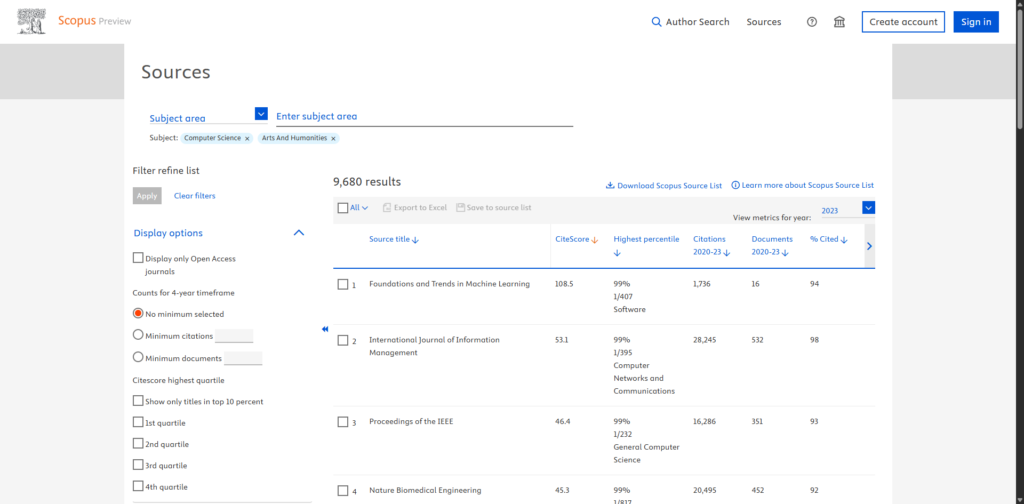
When you hear someone mention journal ranking in Scopus, they are usually referring to a combination of three elements:
Journal level metrics such as CiteScore, SCImago Journal Rank, and Source Normalized Impact per Paper
Classification of journals into one or more subject categories
Position of each journal within those categories, often summarized as quartiles
In other words, journal ranking in Scopus is not a single score printed next to a journal name. It is a structured description of where that journal sits within its field, based on how often its articles are cited and how that compares to other journals in the same category.
Why Journal Ranking in Scopus Became So Important
There are several reasons why journal ranking in Scopus has become so influential in academic life.
First, many universities and research organizations use data derived from Scopus to monitor research performance. When they design dashboards or internal reports, journal ranking in Scopus is a convenient way to summarize large volumes of publication data.
Second, funding agencies and national evaluation exercises often look for evidence that applicants publish in journals that are considered visible and reputable. In this context, journal ranking in Scopus becomes a common shorthand for perceived quality, even if everyone knows that it is not a perfect measure.
Third, individual researchers use journal ranking in Scopus to navigate a crowded publication landscape. With hundreds of journals to choose from, it is natural to look for structured information that can help identify journals that are well established in a field.
Understanding the Main Metrics Behind Journal Ranking in Scopus
To make sense of journal ranking in Scopus, you need a basic understanding of the three metrics that appear most often in journal profiles that use Scopus data.
CiteScore
CiteScore is a journal level metric that looks at the average number of citations per document over a four year window. When you see journal ranking in Scopus tables, CiteScore is often one of the columns because it provides an intuitive sense of how frequently articles in that journal are cited.
The basic idea is simple. You count the citations in a given year to documents that were published in the previous four years and divide that by the number of documents published in that period. A higher CiteScore generally means that the journal is receiving more citations relative to its output, which influences journal ranking in Scopus within its subject category.
SCImago Journal Rank
SCImago Journal Rank, often abbreviated as SJR, adds another layer to journal ranking in Scopus by weighing citations according to the prestige of the citing journals. A citation from a highly influential journal counts more than a citation from a lesser known one.
When you look at journal ranking in Scopus from the perspective of SJR, you are not just counting citations, you are also asking where those citations come from. This is why SJR is often used in external ranking tables that help visualize journal positions based on Scopus data.

Source Normalized Impact per Paper
Source Normalized Impact per Paper, or SNIP, is the third metric that plays a central role in journal ranking in Scopus. SNIP adjusts for differences in citation practices between fields. Some disciplines cite extensively, while others use shorter reference lists, and this can distort comparisons if you only look at raw citation counts.
By normalizing for field specific citation patterns, SNIP helps journal ranking in Scopus reflect how a journal is performing relative to what is typical in its discipline. This makes cross field comparisons less misleading and is especially useful for interdisciplinary journals.
How Quartiles Express Journal Ranking in Scopus
In everyday conversation, people rarely discuss the exact value of CiteScore or SJR. Instead, they often ask whether a journal is Q1, Q2, Q3, or Q4. These quartiles are a simplified way of expressing journal ranking in Scopus within a subject category.
The basic idea is:
Q1 journals are in the top 25 percent in their category
Q2 journals are in the next 25 percent
Q3 and Q4 follow in the same way
A single journal may appear in several subject categories. It might be Q1 in one field and Q2 or Q3 in another. When you consider journal ranking in Scopus for a journal with multiple classifications, you should always pay attention to which category is relevant for your work.
Because quartiles reduce complex metrics to a single label, they are easy to use in policies, but they can also oversimplify journal ranking in Scopus. That is why it is important to look beyond the quartile when you make important career decisions.
How to Find Journal Ranking in Scopus for a Specific Journal
Looking up journal ranking in Scopus has become part of the normal workflow for many researchers. While websites and interfaces change over time, the general process remains fairly stable.
A typical approach looks like this:
Identify the journal precisely.
Note the full title and, if possible, the International Standard Serial Number. This helps you avoid confusing journals with similar names when you search for journal ranking in Scopus based tools.Use a search portal linked to Scopus data.
You can usually search by title, International Standard Serial Number, or publisher. Once you have found the correct journal, open its profile page.Locate the metrics section.
On the journal profile, look for CiteScore, SCImago Journal Rank, and Source Normalized Impact per Paper, along with information about subject categories and coverage years. This is the core of journal ranking in Scopus for that title.Look at the comparison tables.
Many tools provide tables that show how the journal compares with other titles in the same category. These tables often include quartile information or rank positions, which provide a clear picture of journal ranking in Scopus within that field.Check trends over time.
Try to look at several years instead of focusing on a single snapshot. A one year change in metrics may not reflect a lasting shift in journal ranking in Scopus.
Once you are familiar with these steps, checking journal positions becomes a quick and routine part of choosing where to submit and how to describe your publication outlets.
Using Journal Ranking in Scopus to Choose Where to Publish
One of the most practical uses of journal ranking in Scopus is to support decisions about where to send a manuscript. Most researchers start by identifying journals that fit the scope and audience of their work, then they consider the relative positions of those journals.
Here are some points to consider:
If you are early in your career, you may want to balance ambition with realistic expectations. Journal ranking in Scopus can help you see which journals are very competitive and which offer a strong but more accessible option.
If you have an established track record, you may set yourself a goal to target more selective journals over time. In that case, tracking journal ranking in Scopus can show whether you are gradually moving toward journals with higher citation impact.
If your priority is reaching practitioners or local stakeholders, a journal that serves that audience well may be more appropriate even if its journal ranking in Scopus is modest. Visibility in the right community matters more than a slightly higher metric.
In every case, journal ranking in Scopus should support your thinking rather than replace your judgment about fit, audience, and research goals.
How Institutions Use Journal Ranking in Scopus
At the level of departments, faculties, and universities, journal ranking in Scopus plays several roles.

Monitoring output
Research offices often track where staff publish and summarize this information using journal ranking in Scopus. They may ask questions such as:
What proportion of outputs appear in journals that are in higher quartiles
How this pattern differs between disciplines within the same institution
Whether strategic initiatives are associated with changes in journal ranking in Scopus over time
Designing incentives and policies
Some institutions link rewards or recognition to publication in certain groups of journals. For example, they might use journal ranking in Scopus to define a set of preferred outlets or to prioritize support for submissions to particular titles.
When such policies are designed with care, they can encourage thoughtful use of journal ranking in Scopus. When they are too rigid, they can create pressure to chase metrics at the expense of creativity, openness, and relevance.
Supporting local and emerging journals
Universities sometimes sponsor or collaborate with journals that serve regional or niche communities. By tracking journal ranking in Scopus for these titles, they can demonstrate that the journals are growing in visibility and impact, which supports arguments for continued investment.
Strengths of Journal Ranking in Scopus
There are good reasons why so many people rely on journal ranking in Scopus.
It offers standardized, documented metrics that are updated regularly.
It provides a structured way to compare journals within subject categories.
It supports practical decisions about where to publish and how to present a track record.
It gives institutions a common language for discussing research output across diverse disciplines.
When combined with qualitative assessment, journal ranking in Scopus can be a very useful tool.
Limitations and Risks of Journal Ranking in Scopus
At the same time, there are clear limitations that you should keep in mind.
Journal rankings do not evaluate individual articles. A highly original paper in a modest journal can be far more important than a routine paper in a journal with a higher journal ranking in Scopus.
Coverage varies by field and region. Not all high quality journals are indexed, and some areas of knowledge are represented more strongly than others. If you rely only on journal ranking in Scopus, you may undervalue work that appears in local or practice oriented journals.
Metrics can shape behavior. When too much weight is given to journal ranking in Scopus, researchers may become overly cautious, avoid interdisciplinary work, or prioritize topics that are fashionable in highly ranked journals rather than those that matter most to their communities.
Best Practices for Using Journal Ranking in Scopus Responsibly
To get the benefits of journal ranking in Scopus without falling into its traps, consider these practices:
Combine metrics with expert judgment.
Ask about editorial quality, peer review standards, and relevance to your audience, not just numerical ranking.Interpret numbers within the right context.
Compare journals within the same subject category and understand that journal ranking in Scopus means different things in different fields.Look at more than one indicator.
Consider CiteScore, SCImago Journal Rank, and Source Normalized Impact per Paper together, and pay attention to trends over time.Be transparent when you use rankings in evaluations.
Explain which indicators you rely on, why they are relevant, and how you have adjusted for the characteristics of the field.Recognize diverse forms of quality.
Remember that journal ranking in Scopus is only one dimension of value. Impact on policy, practice, education, or local communities may not be fully captured by citation based metrics.
Practical Scenarios that Show How to Use These Rankings
To make the concepts more concrete, it can help to imagine a few real life situations.
Scenario one is a doctoral student preparing to submit a first article. The supervisor suggests a shortlist of journals. Together they check the scope of each journal, read a few recent articles, and then look at Scopus based journal information. They notice that one title is in the first quartile in a relevant subject category, but also has a very low acceptance rate and a long review time.
Another title is in the second quartile but publishes exactly the kind of methodological work the student has produced and has a shorter review cycle. In the end, they choose the second option because it offers a better balance between visibility, fit, and timely publication. The ranking information informs the decision, but it does not dictate it.
Scenario two involves a mid career researcher preparing a promotion dossier. Over the last decade, this researcher has published in a mix of specialist and broader journals. To explain the publication pattern, a simple table is created that lists each journal, its main subject category, and its current quartile. A short narrative highlights articles that have influenced policy, practice, or further research, even when those articles appeared in journals that are not at the very top of the Scopus based tables. By combining numbers with narrative, the dossier gives evaluators a more complete picture.
A final practical tip is to keep brief notes when you make submission decisions. If you record why you chose a particular journal, how you considered audience, scope, and metric information, it becomes much easier to explain those choices later in your career.
Bringing It All Together
Journal ranking in Scopus has become a powerful and highly visible part of the academic ecosystem. It shapes how researchers choose journals, how institutions evaluate performance, and how policy makers think about research quality.
By understanding what journal ranking in Scopus measures, how the main metrics are constructed, and how quartiles are assigned, you can use this information as a helpful guide rather than a rigid rule. Align your decisions with your research goals, your audience, and your values, and let journal ranking in Scopus be one of several tools that support a thoughtful and balanced publication strategy.