

Researchers always want clarity in language and presentation of facts, as well as consistency in academic tone. A majority of researchers find this very challenging. This is because they usually work on lengthy papers that present big ideas, use complex phrasing, and offer extended explanations of terms and concepts.
That is why research writing usually takes time to become fully polished. Such texts often require multiple edits to correct unclear lines, weak flow, or minor grammatical errors. When deadlines are tight or the document is long, it is easy for small mistakes to slip through.
Modern AI tools lighten this burden. They help you quickly locate errors, strengthen structure, and streamline long sentences. They also help polish the tone so that the writing sounds natural and is easy to read. Used wisely, these tools can support you through every stage of research writing, from early drafts to final submission.
How AI Tools Help Researchers Edit and Proofread
AI tools are great for improving the clarity of a researcher’s writing without participating in the actual research. They do not replace your own thinking, but they support you by:
Pointing out grammar mistakes
Highlighting unclear sentences
Identifying weak structure
This is a big help for those working on long papers, because the tool can highlight parts that break the flow or that may sound confusing to readers. AI tools can flag overly complicated sentences, repeated phrases, or sudden shifts in tone that are harder to spot when you have been working on the same text for months.
They also facilitate maintaining a consistent tone and style from one section to another, both of which are really important in academic work. A consistent voice makes your argument easier to follow and gives examiners, supervisors, and reviewers a better reading experience.
Some AI tools can make text more transparent and natural for researchers who write in a non-native language. They reduce grammatical errors and help the writer express ideas in a smooth, straightforward way. This can be especially valuable when preparing journal articles, theses, dissertations, conference papers, or funding applications for international audiences.
By using these tools, researchers can focus more of their time and energy on the content of their work – the data, arguments, and analysis – rather than becoming stuck on wording and sentence structure.
Modern AI Tools Being Used by Researchers
Below are some of the tools that help researchers improve:
Clarity
Accuracy
Tone
All at once during the editing and proofreading process. Without further discussion, let us get straight into the tools that help when writing research content.
1. Grammarly
Grammarly helps researchers fix grammar mistakes, improve sentence clarity, and maintain a steady academic tone. It underlines weak phrasal expressions, unclear structure, and repeated words to make long papers smoother and easier to read during editing.
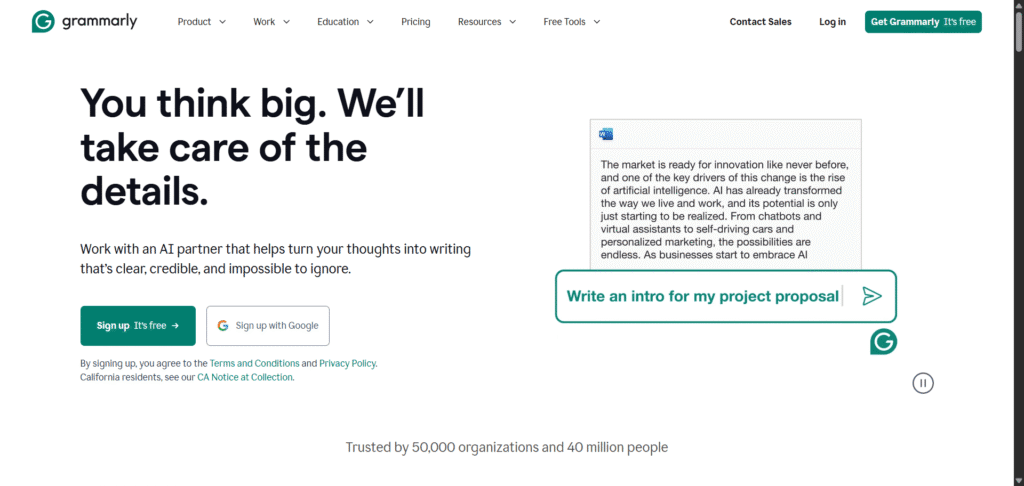
Beyond simple spelling and grammar, Grammarly can:
Suggest more precise vocabulary in academic contexts
Highlight sentences that are overly long or complicated
Offer alternatives for vague or informal phrases
Help you maintain consistency in tense and style throughout the document
Researchers can use it for journal articles, essays, PhD theses, coursework, and even emails to supervisors or collaborators. When configured to UK English, it also ensures spelling and punctuation match British standards, which is essential for many universities and publishers.
2. Super Humanizer
Super Humanizer is a free AI humaniser tool that smooths rough sentences and improves the natural academic tone of the writing. It smooths sentences while maintaining the line’s meaning and creates natural flow. It also reduces the likelihood that research content will be flagged as machine-generated and supports a clear human voice.
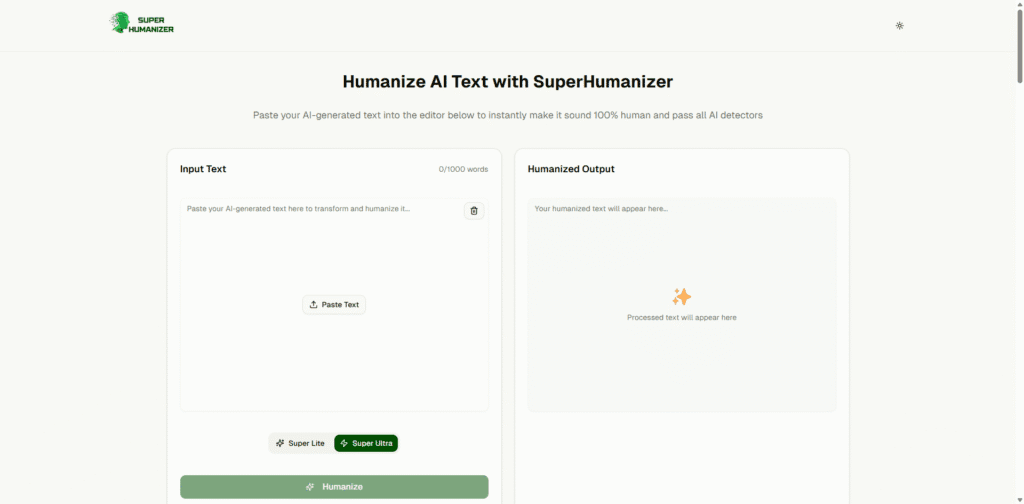
This is especially helpful if you:
Have used other AI writing tools and want the final text to sound more human
Are a non-native English speaker aiming for more fluent and natural phrasing
Want to refine the tone of your introduction, discussion, or conclusion before submission
Super Humanizer can help ensure that your argument still sounds like you, while benefiting from more polished and professional language.
3. Rewriter Pro
Rewriter Pro rewrites unclear lines, eliminates repetition, and smooths sentence flow. This helps researchers reduce reader fatigue by shortening long paragraphs and refining academic phrasing. It makes the expression clear and direct without changing the original meaning.

Researchers can use Rewriter Pro to:
Rework sentences that feel clumsy or overcomplicated
Reduce duplication in literature reviews and discussion sections
Create more concise and focused explanations of methods or results
Polish sections that are important for assessment, such as abstracts and conclusions
When used thoughtfully, it allows you to keep full control over your message while improving the quality and readability of your writing.
4. Hemingway Editor
Hemingway Editor helps researchers simplify complex sentences, thereby improving readability. It highlights lines that are hard to read, encourages clarity in structure, minimises passive voice, and allows smoother flow in lengthy discussions, literature reviews, and detailed explanations.

For research writing, Hemingway Editor is particularly useful when you:
Have very long sentences packed with multiple ideas
Want to make your work more accessible to readers outside your immediate field
Need to prepare a clearer, shorter version of your work for a presentation or blog
Are revising a section that examiners have previously criticised as “unclear” or “hard to follow”
By encouraging more direct and active language, Hemingway Editor supports clearer communication of complex research without oversimplifying the content.
Using AI Tools Responsibly in Research Writing
While AI tools are helpful, researchers must use them carefully. These tools should only assist with editing and language improvement, not with creating or changing your research ideas. They are designed to support your writing, not to replace originality, critical thinking, or academic judgement.
Always check the AI suggestions before accepting them. Make sure all facts stay accurate and your own voice remains clear. AI tools do not fully understand your research question, your methodology, or your theoretical framework, so you must ensure that suggested changes do not distort or oversimplify your meaning.
Never let AI tools write your arguments or analysis for you. They may generate text that sounds convincing, but it can be shallow, inaccurate, or inconsistent with your data. Your supervisors, examiners, and peer reviewers expect original work that reflects your own understanding and interpretation.
You should also pay attention to your university’s or journal’s guidelines on the use of AI in academic writing. Some institutions require you to declare any use of AI tools, particularly in high-stakes assessments or publications. Checking these policies helps you stay transparent and protects your academic integrity.
Remember that you are responsible for every word in your paper. Use AI as a helpful assistant, not as a replacement for your own thinking and writing skills. Your research integrity depends on honest work.
Making the Most of AI Editing Tools in Academic Research
To gain the greatest benefit from AI tools, researchers can build them into a simple, repeatable writing workflow. Instead of using them only at the last minute, you can involve them at key stages of the drafting and revision process.
Many researchers find it helpful to begin with a rough draft written entirely in their own words. At this stage, the focus is on getting ideas, arguments, and evidence onto the page without worrying too much about grammar or phrasing. Once the main structure is in place, AI tools can help in several ways:
First pass for correctness
Run the draft through a tool like Grammarly to catch obvious spelling, grammar, and punctuation errors. This quick clean-up makes it easier to spot deeper issues in the next stages.Improving clarity and flow
Use tools such as Rewriter Pro and Hemingway Editor to simplify difficult sentences, reduce repetition, and highlight areas where the argument is hard to follow. This is particularly useful in dense sections such as literature reviews, theoretical frameworks, and data analysis.Refining the academic voice
Once the structure and clarity are improved, tools like Super Humanizer can help refine the tone. This is when you make sure that your writing sounds professional, confident, and suitably formal for academic readers, while still reflecting your own style.Final consistency checks
Before submission, AI tools can help you check for consistent use of terminology, tense, spelling (for example, UK English spelling throughout), and formatting. This final check helps your work appear more polished and well-prepared.
Using AI in this structured way allows you to keep control of your research and argument, while benefiting from support on the technical side of writing. Over time, you may also find that your own awareness of grammar, sentence structure, and style improves, because you repeatedly see the types of changes these tools suggest.
AI editing tools can be especially powerful for:
PhD candidates drafting and redrafting thesis chapters
Master’s students preparing dissertations or extended essays
Early-career researchers submitting journal articles or conference papers
Professionals writing research reports, policy documents, or white papers
Across all of these situations, clearer writing helps your ideas reach a wider audience, increases the chances of positive feedback from reviewers, and supports stronger overall impact for your work.
Conclusion
AI editing tools have made life easier for researchers by improving clarity, structure, and even the tone of their writing. They refine long papers, correct minor errors, and add a natural flow to the text. By supporting better language, these tools allow researchers to focus more on the originality and quality of their ideas.
However, AI tools are only as effective as the person using them. They improve quality, but the final judgement will always depend on the researcher’s careful review. When used responsibly, they are a powerful aid in academic writing; when overused or used carelessly, they can weaken the originality and honesty of your work.
In the end, AI tools are best seen as intelligent assistants that help you present your research at its best. The real strength still lies in your own insight, critical thinking, and commitment to producing rigorous, honest, and clearly written research.