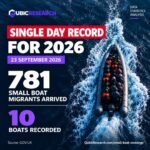
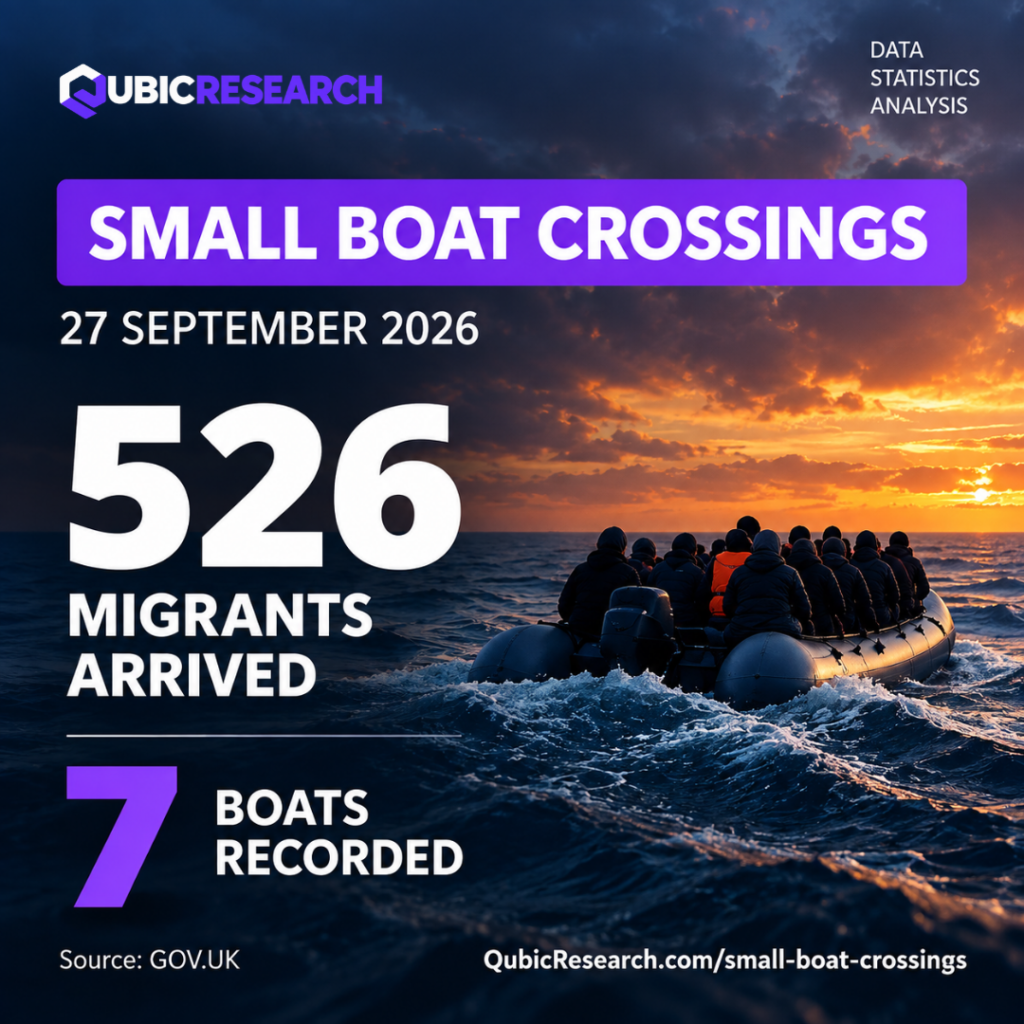
Massive overcrowding in the English Channel reached fresh heights as 526 migrants surged across the Dover Strait on 27 September 2026. Official operational logs published by the Home Office confirm that border patrol crews interdicted 7 heavily loaded small boats attempting the perilous transit from northern France. The staggering figures show an average density of over 75 individuals squeezed onto each unstable inflatable, raising immediate alarm over smuggler tactics and maritime safety.
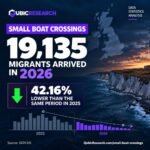
The surge in arrivals pushes the total number of small boat crossings past 19,100 for 2026, underlining the relentless pressure facing coastal processing authorities. Smuggling rings operating along northern French beaches are continuing to deploy larger, commercial-grade dinghies to maximize profits per launch during short weather windows. As coastguard and Border Force assets respond to these recurring spikes, public demand for live operational tracking and transparent daily statistics continues to grow.
Over 500 Migrants Pack 7 Small Boats in Channel Surge
The English Channel saw another massive wave of arrivals as 526 migrants navigated heavy shipping lanes to reach British shores on 27 September 2026. Data published on the official GOV.UK reporting portal reveals that just 7 vessels accounted for the entire daily influx. This extraordinary passenger ratio demonstrates how human smuggling syndicates are pushing vessel capacity limits to dangerous extremes.
1. Extreme Vessel Overcrowding Reaches 75 Passengers per Boat
Official operational figures from 27 September 2026 demonstrate a disturbing structural shift toward extreme passenger congestion aboard individual Channel dinghies.
- Unprecedented loading ratios: Squeezing 526 migrants onto only 7 recorded small boats created an average occupancy exceeding 75 passengers per craft, multiplying structural failure risks at sea.
- Smuggler profit maximization: Organized trafficking rings are utilizing larger commercial-grade inflatables to transport massive groups in single departure pushes during favorable sea states.
- Emergency maritime escorts: Coastguard surveillance assets and Border Force cutters executed emergency escort protocols across busy shipping lanes to prevent capsizing incidents during intake.
Key details from the 27 September crossing figures
- The single-day total of 526 arrivals marks one of the highest daily crossing totals recorded in late September 2026.
- With 7 vessels intercepted, the average occupant density of 75 people per boat far exceeds historical baseline averages.
- The influx follows a 3-day lull in Channel activity due to adverse coastal wind conditions off northern France.
- Sunday’s arrivals bring the cumulative total for 2026 past the 19,100 milestone across more than 300 detected launches.
2. Coastal Border Enforcement and Operational Response
The arrival of over 500 individuals in a single day places immediate logistical pressures on onshore reception infrastructure and processing hubs along the Kent coastline.
- Logistical processing demands: Transporting and processing 526 individuals within hours requires immediate deployment of intake buses, medical triage teams, and administrative staffing.
- Coastal interception activities: Border security teams intercepted multiple boats mid-channel, escorting them directly into designated facilities at Dover and regional ports.
- Bilateral interception challenges: The high volume of successful landings underscores the persistent difficulty French and British authorities face in preventing launches along miles of exposed beaches.
Operational highlights following the Channel surge
- Intake facilities at Manston and Dover immediately deployed extra triage staff to handle the influx of 526 arrivals.
- French maritime police reported intercepting and preventing multiple secondary launch attempts along beaches near Calais.
- Border Force cutters escorted 2 uncontrolled landings safely to port after vessels bypassed initial mid-channel patrols.
- Home Office teams updated official tracking systems to reflect the latest seasonal shift in smuggler launch tactics.
3. Seasonal Patterns and Smuggler Launch Tactics
Understanding the timing of single-day surges provides critical insight into how trafficking operations exploit brief maritime weather windows across northern European waters.
- Exploitation of calm sea states: Smuggling networks closely monitor real-time swell and wind forecasts, launching multiple heavily loaded dinghies simultaneously as soon as sea conditions stabilize.
- Simultaneous beach launches: French coastal patrols faced coordinated mass departure attempts across several miles of sand dunes near Dunkirk and Boulogne-sur-Mer.
- Increased vessel dimensions: Law enforcement seizures confirm that criminal networks are using wider, double-hulled inflatables fitted with high-horsepower outboard engines to carry larger groups.
Key factors behind the recent crossing spike
- A sudden drop in Channel wind speeds on Sunday morning triggered a rapid wave of coordinated launches from French beaches.
- French security forces intercepted 3 additional boats near the shore, preventing over 200 migrants from launching.
- Dover Coastguard deployed multiple search-and-rescue helicopters and lifeboats to manage simultaneous emergency calls.
- Arrivals on 27 September pushed the weekly crossing total past 1,200 individuals across consecutive sailing windows.
4. Intake Processing and Infrastructure Impact
The arrival of hundreds of migrants in a short timeframe creates immediate operational demands at reception hubs and security facilities across Kent.
- Medical screening protocols: Onshore medical teams executed immediate health assessments for hypothermia and minor injuries following hours of open-sea exposure.
- Biometric identification procedures: Security officers processed all 526 individuals through mandatory digital fingerprinting and background verification databases at Dover.
- Transport logistics and dispersal: Fleet transport vehicles moved arrivals directly from port facilities to short-term holding sites to prevent overcrowding at coastal intake centers.
Summary of reception facility operations
- Border Force officers completed preliminary intake checks for all 7 boat groups within 12 hours of landing.
- Voluntary support teams provided emergency food, warm clothing, and blankets to arriving passengers at the port docks.
- Dover processing facilities operated at elevated capacity through Sunday night to clear the intake backlog.
- Official tracking systems logged the complete arrival metadata into public government reporting archives.
Final Thoughts on the 27 September Small Boat Crossings
The recorded arrival of 526 migrants across just 7 small boats on 27 September 2026 highlights the evolving operational reality along the UK’s southern maritime border. As smuggling syndicates continue packing record numbers of individuals onto larger, unstable inflatables, the dangers associated with Channel transits remain exceptionally high. Maintaining transparent, real-time tracking of daily crossing metrics is essential for understanding long-term immigration trends, border enforcement challenges, and the continuous pressures placed on coastal reception infrastructure.
Want to see live channel migration data?
Explore more data, statistics, and analysis on our Small Boat Crossings Dashboard to track daily arrival trends, vessel counts, and historical figures.
Frequently Asked Questions
How many migrants arrived in the UK on 27 September 2026?
According to official Home Office records, 526 migrants arrived in the UK on 27 September 2026 after crossing the English Channel in small boats.
How many small boats were recorded on 27 September 2026?
Border Force and coastguard officials recorded 7 small boats carrying migrants across the Dover Strait throughout the day.
What was the average number of passengers per boat on 27 September?
The average occupancy reached approximately 75 passengers per boat, reflecting a significant increase in vessel passenger density compared to historical averages.
Where do small boat migrants land when reaching the UK?
Most small boats are intercepted in the English Channel by Border Force cutters or RNLI lifeboats and escorted directly into processing facilities at Dover, Kent.
Where can I find official, daily small boat crossing statistics?
Official daily figures are published by the UK Home Office on GOV.UK, and updated statistics and historical breakdowns can be tracked directly on our live data dashboard.