


If you are trying to decide which database to use for your research, you will very quickly run into the comparison between Scopus and Web of Science. These are the two most widely used citation databases for serious literature searching and research evaluation, and they often appear side by side in university policies, promotion guidelines, and grant instructions.
This guide puts the most important facts at the top so that you can understand how Scopus and Web of Science differ, when each one is stronger, and when it makes sense to use both together. After that, we will move into more detail about coverage, search features, metrics, and practical tips.
At A Glance: Key Differences Between Scopus and Web of Science
Before we look at the details, here are the essentials you should know when you compare Scopus and Web of Science.
Scopus generally has broader overall journal coverage, especially in terms of number of titles, including more non English and regional journals, although exact counts change over time.
Web of Science typically offers longer historical depth, with core collections that go back to 1900 in some indexes, which is important for historical or long term citation studies.
Both Scopus and Web of Science are selective, curated databases, not everything on the scholarly web, and they overlap heavily but not completely in terms of the journals they index.
Scopus tends to have stronger coverage of conference proceedings in some technical fields, while Web of Science is often viewed as highly selective and conservative with its core collection.
Metrics and citation counts will differ slightly between Scopus and Web of Science for the same author or paper, because their coverage and indexing rules are not identical.
If you remember nothing else, remember that Scopus and Web of Science are complementary rather than interchangeable. The best choice depends on your discipline, your research question, and whether you care more about breadth of coverage or historical depth.
What Exactly Are Scopus and Web of Science?
When people talk about Scopus and Web of Science, they often treat them like one thing, but each is actually a platform that hosts multiple databases.
What Scopus is
Scopus is a large, multidisciplinary abstract and citation database produced by Elsevier. It indexes peer reviewed journals, conference proceedings, books, and book series across the sciences, social sciences, and humanities. Studies generally find that Scopus covers more journals overall than Web of Science, with considerable overlap between the two.
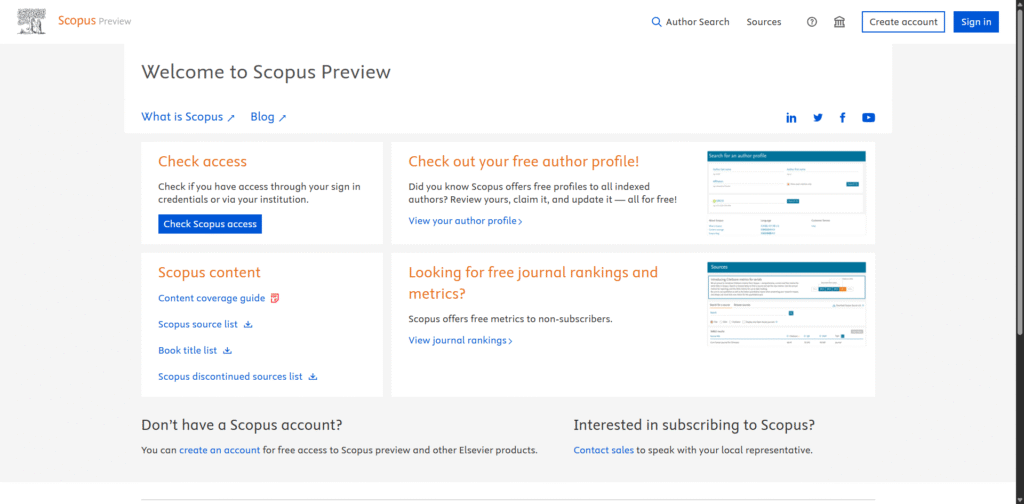
For many researchers, Scopus and Web of Science are the default tools for tracking citations, calculating h indexes, and mapping collaboration networks, but Scopus stands out for its relatively broad coverage and its inclusion of more conference material in certain fields.
What Web of Science is
Web of Science is a family of citation indexes owned by Clarivate. Its core collection includes the Science Citation Index Expanded, the Social Sciences Citation Index, the Arts and Humanities Citation Index, and several other specialized indexes. These indexes go back to 1900 in some cases, which means Web of Science is extremely valuable for historical citation analysis and long term trend studies.
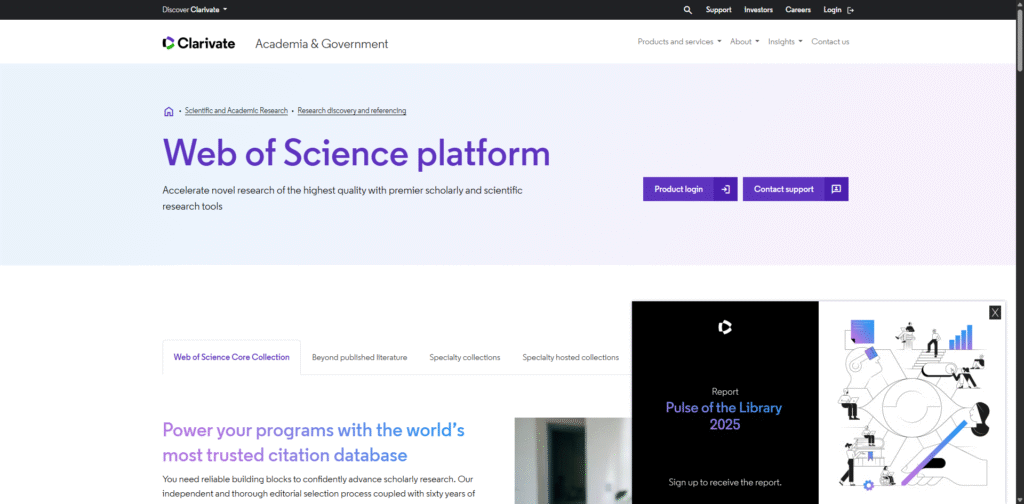
When librarians describe Scopus and Web of Science, they often highlight that Web of Science is more selective in its core collection and sometimes more conservative about which journals it includes, while Scopus aims for broader coverage, especially of newer and regional titles.
Why The Difference Between Scopus and Web of Science Matters
It can be tempting to treat Scopus and Web of Science as interchangeable tools. However, the choice between Scopus and Web of Science can meaningfully affect:
The number of articles you retrieve in a literature search
The citation counts you see for individual authors or papers
Which journals or countries appear most visible in your analysis
The h index or other metrics that you report in applications
If your institution bases important decisions on data from Scopus and Web of Science, you should understand how those data are shaped by the strengths and limitations of each database.
Coverage: How Big Are Scopus and Web of Science Really?
Coverage is usually the first question researchers ask when they compare Scopus and Web of Science. Studies that compare master journal lists show that the two databases overlap heavily but not completely, with Scopus indexing more journals overall and Web of Science being more selective.
Journal coverage
Broadly speaking:
Scopus covers more active peer reviewed journals worldwide, including many titles that do not appear in Web of Science.
Web of Science covers fewer journals in its core collection, but these are heavily curated and often considered prestigious.
For many fields, Scopus and Web of Science have very similar coverage of major international journals, but Scopus tends to include more regional or non English titles, which can make a noticeable difference when you study national or institutional outputs outside Western Europe and North America.
Because Scopus and Web of Science evolve, exact journal counts and overlaps change over time, which is one reason it is useful to treat figures as approximate rather than absolute.
Disciplinary balance
When you compare Scopus and Web of Science across disciplines, studies often show that:
The overlap is strongest in natural sciences and medicine.
Differences grow in engineering, computer science, and some social sciences, where conferences and regional journals matter more.
Humanities coverage is limited in both systems, although it has improved compared with earlier decades.
If your research spans multiple disciplines, it can be especially useful to search both Scopus and Web of Science, because each will surface some unique material in niche areas.
Time Depth: How Far Back Do They Go?
One major distinction between Scopus and Web of Science is the historical depth of their indexing.
Web of Science core collections provide citation indexing back to 1900 in some series, which is particularly valuable for historical or long range studies.
Scopus coverage is strong from the mid 1990s onward, with some content back to the 1960s, but it does not provide the same depth as Web of Science for the early twentieth century.
If you are working on a project that needs to track citations or publications over a full century, Web of Science is usually the stronger choice. If your interest is mostly in the last few decades, then Scopus and Web of Science will often feel more similar in terms of temporal coverage.
Document Types: Journals, Conferences, and More
When researchers compare Scopus and Web of Science, they often focus on journals, but document types can be just as important.
Scopus is generally praised for its inclusion of conference proceedings in fields like computer science and engineering, where conferences carry a lot of weight.
Web of Science also includes conference proceedings and books, but the mix and depth differ from those in Scopus.
If you work in a conference heavy field such as human computer interaction or some areas of engineering, Scopus and Web of Science can give noticeably different pictures of who is influential, because the conference coverage is not identical.
Search Features and User Experience
From a practical point of view, many users care just as much about how it feels to search Scopus and Web of Science as they do about raw coverage.
Search interface
Scopus and Web of Science both offer:
Simple keyword searches
Author and affiliation searching
Citation tracking and related document features
Advanced search options with field codes
Some studies note that Scopus is relatively easy to navigate for new users and highlight its ability to search both backward in time (references) and forward in time (citing papers) from a specific article.
Web of Science offers a more segmented view through its different citation indexes and has its own strengths in refined search filters and historical citation tracing. When comparing Scopus and Web of Science, many librarians recommend that students try both and see which interface feels more intuitive for their discipline.
Citation tracking tools
Both Scopus and Web of Science provide:
Citation counts for individual documents
Lists of citing documents
Tools for building citation reports and h indexes
In practice, the numbers differ slightly between Scopus and Web of Science because of their different coverage of journals, conferences, and years. For the same author, you may see a higher h index in one database than the other, which is why best practice is to report which database you used when you cite these metrics.
Metrics and Research Evaluation
Scopus and Web of Science are both deeply embedded in research evaluation systems. National assessments and global university rankings often rely on data from Scopus and Web of Science to calculate indicators of productivity and impact.
Journal metrics
On the journal level:
Web of Science data feed into Journal Impact Factor and related metrics in Journal Citation Reports.
Scopus data feed into CiteScore, SCImago Journal Rank, and Source Normalized Impact per Paper.

When institutions compare journal quality, they sometimes implicitly combine metrics that originate from Scopus and Web of Science, so it is useful to be aware of which source underlies each metric.
On the author level, both Scopus and Web of Science can calculate automated h indexes and citation counts. However, because Scopus and Web of Science do not index exactly the same publications, the resulting metrics are different views of the same underlying career.
Responsible evaluation guidelines therefore recommend that Scopus and Web of Science metrics are used in context, combined with qualitative assessment and field specific knowledge, rather than as rigid thresholds.
Strengths of Scopus
When you consider the strengths of Scopus and Web of Science, Scopus stands out in several ways.
Broad coverage: Multiple comparative studies show that Scopus indexes more journals overall and captures a larger share of total citations in many fields, especially when conferences are important.
Conference proceedings: In computer science and some engineering areas, Scopus often provides a more complete view of conference based scholarship.
User friendly searching: Many users find the Scopus interface straightforward, with helpful tools for keyword refinement and citation exploration.
If your primary interest is in mapping contemporary research across many disciplines and you rely heavily on conference material, Scopus and Web of Science will both be useful, but Scopus may feel more complete in some technical domains.
Strengths of Web of Science
Web of Science also has distinct strengths when compared with Scopus and Web of Science as a pair.
Historical depth: For projects that require citation data back to 1900, Web of Science is normally the better choice.
Selective core collection: The criteria used to select journals for the core collection are relatively strict, and some evaluators appreciate this curated set when they want to focus on long established outlets.
Integration with evaluation tools: Web of Science connects tightly with other Clarivate products such as Journal Citation Reports and InCites, which many institutions use in formal assessment.
If your work depends on tracking long term citation patterns or you need detailed access to Journal Impact Factor and related indicators, Web of Science can be particularly valuable, even if you also use Scopus for other tasks.
When To Use Scopus, Web of Science, or Both
In practice, researchers rarely have to choose between Scopus and Web of Science forever. Instead, you choose based on the task at hand.
Literature reviews and topic searches
For broad topic searches, especially in applied fields, many librarians suggest starting with Scopus and Web of Science together. If you have access to both, searching them in parallel can help you:
Capture more unique journals and conferences
Reduce the chance of missing important but less visible work
Compare how different fields are represented across the two databases
When time is limited and you must pick one, the choice between Scopus and Web of Science often comes down to your discipline. Technical fields may lean toward Scopus, while historically oriented or highly selective projects may lean toward Web of Science.
Citation analysis and h index calculation
If you want to calculate your own h index or citation counts, it can be informative to check both Scopus and Web of Science and see how the numbers differ. Differences will tell you how sensitive your metrics are to database coverage, and they will help you answer questions if evaluators ask why a number in one system does not match a number in another.
Institutional reporting
For institutional dashboards and rankings, the decision between Scopus and Web of Science is often made centrally. Some rankings use Scopus data, some use Web of Science, and some use both. Knowing which data source underlies a ranking helps you interpret what it really measures. Wikipedia
Common Misconceptions About Scopus and Web of Science
Because Scopus and Web of Science are so widely used, there are several myths that circulate about them.
Myth 1: One database is always better than the other.
In reality, Scopus and Web of Science each have strengths and weaknesses. Which one is better depends on your field, your time frame, and your data needs.
Myth 2: If something is not indexed in Scopus and Web of Science, it is low quality.
Many respected journals, books, and local outlets are not indexed in these databases, especially in humanities, regional studies, and practice oriented fields. Indexing decisions reflect selection policies as well as quality.
Myth 3: Citation counts are directly comparable across databases.
Because coverage differs, citation counts from Scopus and Web of Science are not directly comparable and should always be interpreted within the context of the database used.
Practical Tips For Working With Both Databases
If you are fortunate enough to have access to both Scopus and Web of Science, here are some practical suggestions.
Start broad, then refine.
Begin with quick keyword searches in both Scopus and Web of Science, then refine by subject area, document type, or time period as you see patterns in your results.Use citation chaining in parallel.
Pick a key paper and follow its references and citations in both systems. Scopus and Web of Science may reveal slightly different networks of related work.Export and deduplicate.
When doing a systematic review, export records from both Scopus and Web of Science and use reference management or review software to deduplicate them. This gives you a combined dataset that captures the strengths of each database.Document your methods.
In your methodology section, state clearly whether you used Scopus and Web of Science, which years you searched, and which subject filters you applied. This makes your work more transparent and reproducible.Stay aware of changes.
Both databases evolve. New journals are added, and occasionally journals are removed. When you rely heavily on Scopus and Web of Science, it is helpful to check periodically how their coverage in your field is changing.
Which One Should You Learn First?
If you are a student or early career researcher with limited time, you might wonder whether to invest first in learning Scopus and Web of Science interfaces or focus on just one database.
A sensible approach is:
Learn the basics of both Scopus and Web of Science with simple topic and author searches.
Pick the one that your supervisor, department, or library uses most heavily and develop deeper skills there.
Over time, become comfortable moving between Scopus and Web of Science so that you can switch tools whenever your project requires it.
Think of Scopus and Web of Science as two lenses. Each lens reveals slightly different details in the same research landscape, and experienced researchers know how to look through both.
Bringing It All Together
Scopus and Web of Science are the two major commercial citation databases that shape how research is discovered, evaluated, and counted. They share many features, but they are not identical.
Scopus tends to offer broader coverage across a large number of journals and conferences, particularly in recent decades and in some technical fields. Web of Science offers deeper historical coverage and a highly curated core collection that is tightly integrated with widely used evaluation tools.
Instead of asking which database is absolutely better, it is more productive to ask which aspects of Scopus and Web of Science best match your current task. For a wide ranging contemporary literature search, you may favor Scopus, or you may combine Scopus and Web of Science results. For long term citation histories or specific journal metrics based on the Web of Science core collection, you will probably rely more heavily on Web of Science.
If you want to go a step further and understand how journals themselves are evaluated, we recommend reading our detailed guide on journal ranking in Scopus next.