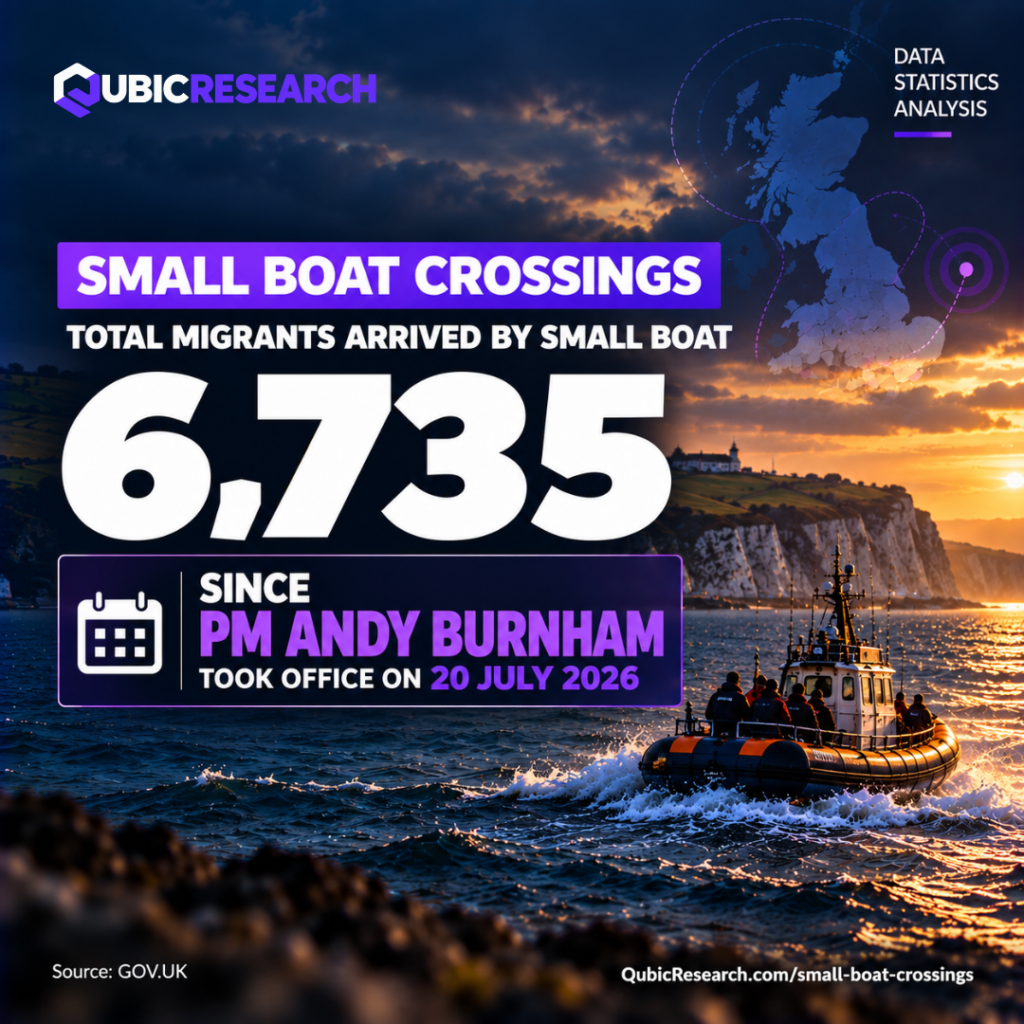
Cumulative immigration tracking figures published by the Home Office show that 6,735 small boat migrants have arrived in the United Kingdom since Prime Minister Andy Burnham assumed office on 20 July 2026. Official GOV.UK data highlights a continuous stream of Channel crossings during the new administration’s initial months in government, placing immediate focus on national border security policies and coastal enforcement strategies.
The arrival of 6,735 individuals across summer and early autumn underlines the persistent operational pressure facing maritime interdiction crews and onshore processing hubs. As political scrutiny grows over border policy performance, live tracking metrics offer a clear, empirical baseline for evaluating immigration management under the current administration. Maintaining transparent daily statistics provides essential insight into how seasonal weather windows and smuggler tactics continue to shape arrival headcounts.
6,735 Small Boat Migrants Arrive Under New Administration
Official government statistics record a cumulative total of 6,735 small boat migrants reaching the United Kingdom since Prime Minister Andy Burnham assumed office on 20 July 2026. Data published on the official GOV.UK reporting portal illustrates the scale of Channel migration managed by border authorities during the administration’s opening months.
1. Tracking Arrival Metrics Since 20 July 2026
Evaluating the 6,735 headcount recorded since 20 July reveals key operational trends across summer and early autumn crossing cycles.
- Summer crossing volume: Favourable sea conditions during August contributed significantly to the aggregate 6,735 total, including multi-vessel surges across the Dover Strait.
- High-density vessel loading: Smuggling syndicates continued packing unprecedented numbers of passengers onto individual dinghies, frequently averaging over 70 individuals per craft.
- Interdiction operations: Border Force cutters and Coastguard surveillance teams executed continuous escort maneuvers to transfer incoming vessels safely into Kent ports.
Key statistical takeaways from the tenure tracking report
- A cumulative total of 6,735 migrants crossed the English Channel between 20 July 2026 and late September.
- Arrivals were processed through primary onshore facilities at Dover and Manston.
- The data reflects continuous daily tracking compiled across official Home Office registries.
- GOV.UK statistics provide an unvarnished record of border intake during the administration’s initial term.
2. Onshore Processing and Enforcement Strategy
Managing 6,735 arrivals in a condensed timeframe requires high operational readiness across coastal security assets and reception infrastructure.
- Reception facility throughput: Onshore triage hubs mobilised dedicated staff to conduct rapid medical evaluations and digital biometric screening for all 6,735 individuals.
- Bilateral coastal coordination: UK authorities maintained active intelligence sharing with French police to target smuggler launch sites along northern beaches.
- Logistical transport management: Transport fleets operated continuously from Dover docks to transfer newly arrived groups to regional processing centres.
Operational highlights across the administration’s opening months
- Border security teams expanded surveillance along key maritime routes to detect incoming inflatables early.
- Intake centres at Dover maintained streamlined biometric screening to prevent processing bottlenecks.
- French beach patrols intercepted numerous secondary launch attempts before boats entered open waters.
- Official databases logged verified headcount metrics into permanent government statistical repositories.
3. Border Security Policies and International Cooperation
The arrival of 6,735 migrants since 20 July 2026 has focused significant political attention on the government’s long-term border management strategy and international partnerships.
- Bilateral policing agreements: Joint UK-French enforcement efforts continue to target launching sites along the French coastline, utilising drone monitoring and increased beach patrols to prevent departures.
- Disrupting human trafficking networks: Multi-agency law enforcement operations across Europe remain focused on dismantling organised crime syndicates that supply heavy-duty inflatables and outboard motors.
- Enhancing deterrence mechanisms: Policy discussions continue regarding streamlined asylum processing and expanded return agreements to reduce the incentive for hazardous Channel crossings.
Key policy benchmarks under the current administration
- Over 6,700 arrivals have been registered and processed through official Home Office systems since 20 July 2026.
- Bilateral intelligence units have expanded real-time data sharing to track organised smuggling logistics across northern Europe.
- Coastal intake facilities have maintained continuous 24-hour operations to manage incoming passenger transfers safely.
- Government tracking databases update regular metrics to measure policy outcomes against historical crossing benchmarks.
4. Structural Strain on Onshore Reception Facilities
Managing a continuous influx of arrivals over a multi-month period requires sustained operational coordination across regional infrastructure in Kent.
- Short-term holding capacity: Border Force intake centres at Dover and Manston have maintained high operational throughput to prevent administrative backlogs during surge periods.
- Emergency health triage: Onshore healthcare teams perform immediate medical screenings upon arrival to identify and treat hypothermia or injury sustained at sea.
- Logistical dispersal transport: Dedicated transport fleets move processed individuals from coastal entry points to regional holding hubs across the UK.
Summary of coastal intake operations
- All 6,735 arrivals since 20 July 2026 underwent mandatory biometric identification and preliminary security screening.
- Maritime rescue assets executed dozens of successful interdictions across active shipping lanes throughout August and September.
- Support agencies provided immediate dockside aid, including food, warm clothing, and emergency medical care.
- Home Office repositories catalogued complete arrival metadata to ensure full public tracking transparency.
Final Thoughts on Recent Small Boat Crossing Trends
The total of 6,735 small boat migrants arriving in the UK since Prime Minister Andy Burnham took office on 20 July 2026 underscores the persistent scale of Channel migration. As smuggling networks continue capitalising on favourable sea states to launch high-density inflatables, border security forces must maintain constant operational readiness. Transparent statistical tracking remains vital for evaluating enforcement policies, monitoring intake infrastructure, and informing public debate on immigration management.
Want to see live channel migration data?
Explore more data, statistics, and analysis on our Small Boat Crossings Dashboard to track daily arrival trends, vessel counts, and historical figures.
Frequently Asked Questions
How many small boat migrants have arrived since PM Andy Burnham took office?
According to official Home Office figures, 6,735 migrants have arrived in the UK via small boat crossings since 20 July 2026.
When did the current administration take office?
Prime Minister Andy Burnham assumed office on 20 July 2026, establishing the baseline date for recent migration tracking statistics.
Where are small boat migrants taken after being intercepted in the Channel?
Interdicted passengers are brought by Border Force cutters or lifeboats directly into coastal facilities in Dover and Kent for health checks, biometric logging, and initial intake.
Arriving individuals undergo mandatory biometric identification checks, health screenings, and security processing before being transferred to short-term holding centres.
Where can I find updated daily small boat crossing figures?
Official daily statistics are published by the Home Office on GOV.UK, and comprehensive live updates and historical breakdowns can be tracked directly on our live data dashboard.