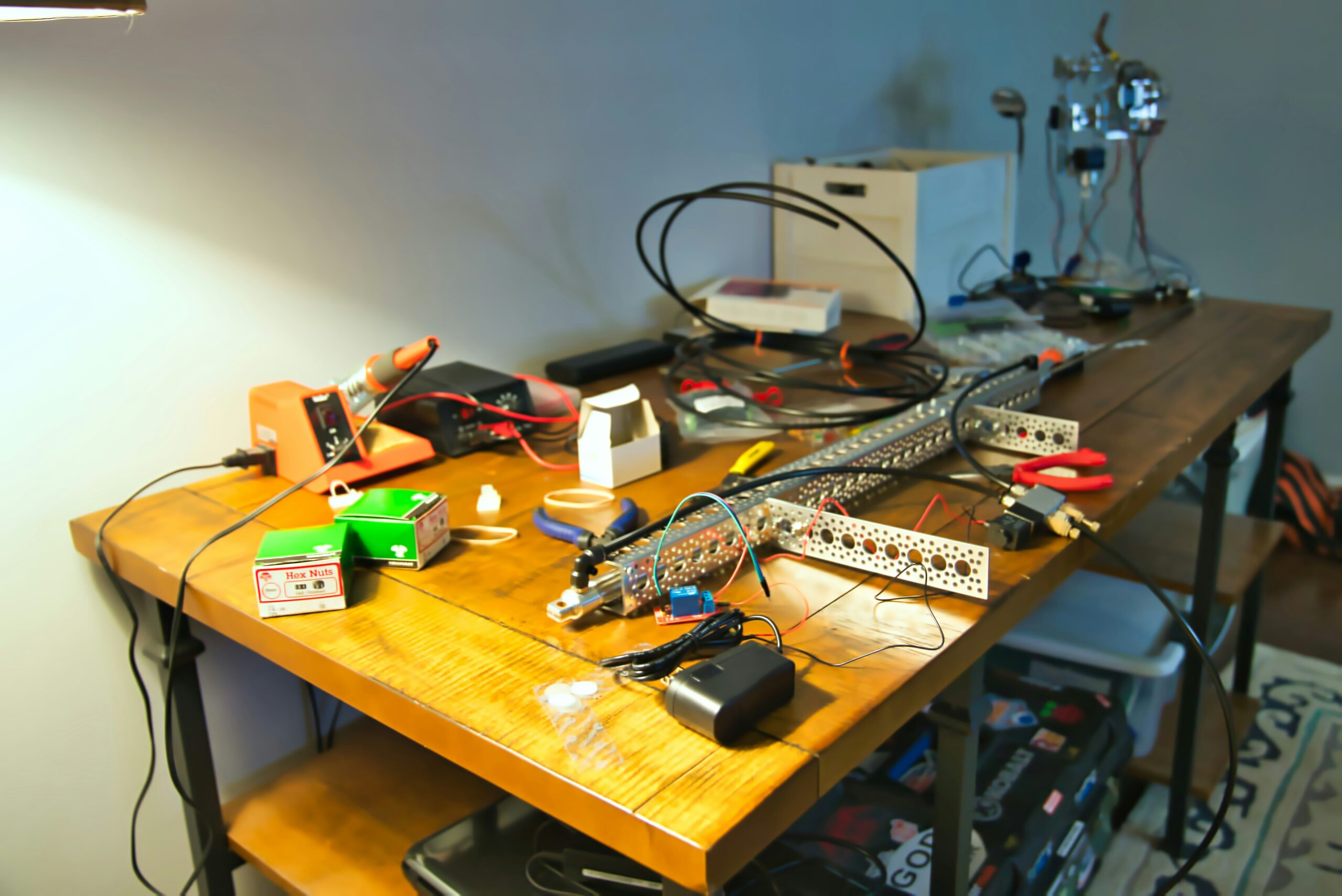


If you are searching for electrical engineering capstone project ideas, I recommend choosing a project that produces a working demo and a defensible test report. A capstone is not judged by effort or complexity. It is judged by results you can measure, explain, and reproduce.
In this list I focus on ideas that can be delivered within a typical capstone timeline using realistic tools. Some projects are hardware heavy, some are simulation first, and many work well with a microcontroller and a small sensor set. Each idea tells you what to make and what to measure, so you can write a clean methodology and defend your results in a final presentation.
- Embedded systems and IoT
- Power electronics and converters
- Control systems and robotics
- Signal processing and audio
- Communications and networking
- Energy systems and smart grid analytics
- Instrumentation and measurement
- Machine learning and data driven systems
- Machines, drives, and mechatronics
- Hardware design and PCB systems
How to Choose an Electrical Engineering Capstone Project
Before I commit to a capstone, I confirm five constraints. If any one fails, I narrow the scope or pick a different project.
- Demo definition: I write one sentence that describes the live demo and the audience value, such as a controller that stabilizes speed under load or a dashboard that detects anomalies.
- Baseline comparison: I define an A versus B comparison early, such as fixed threshold versus adaptive detection or PID versus MPC, because it makes evaluation and writing easier.
- Metrics first: I choose two to three metrics I can plot, such as efficiency and ripple, accuracy and false alarms, overshoot and settling time, latency and packet loss, or RMSE and drift.
- Tool realism: I select tools I can access every week, such as a microcontroller kit, basic sensors, SPICE, MATLAB, or Python, and I avoid fragile dependencies.
- Risk plan: I plan a fallback path so the project still finishes if hardware access fails, such as a simulation backed evaluation or recorded data validation.
Safety note: If your design touches mains voltage or high power battery charging, I recommend a simulation first approach or a supervised low voltage prototype with isolation and proper safety equipment.
100 Electrical Engineering Capstone Project Ideas
Embedded systems and IoT
- IoT energy monitor with anomaly alerts: Develop a node that streams real time power data and flags abnormal usage, measure precision and recall plus false alarms per day, and you will need an ESP32, a current sensor, MQTT, and Python.
- Smart greenhouse controller: Design a closed loop irrigation and ventilation controller driven by sensor thresholds and trends, measure water saved plus temperature stability and actuator duty cycle, and you will need soil moisture sensors, a temperature sensor, a microcontroller, and logging.
- Asset tracker with geofencing: Implement a low power tracker that reports location and triggers alerts when leaving a boundary, measure location error plus battery life estimate and message success rate, and you will need a GPS module, a LoRa or LTE module, and a test route.
- Predictive maintenance vibration node: Prototype an accelerometer based condition monitoring device for a small motor, measure detection accuracy plus false alarms and latency, and you will need an accelerometer, a microcontroller, and Python feature extraction.
- Indoor air quality dashboard: Create a sensor hub and dashboard that visualizes CO2, humidity, and particulate proxies, measure sensor drift plus data completeness and alert response time, and you will need sensors, a gateway, and a dashboard stack.
- Secure sensor node with signed telemetry: Implement message signing and replay protection on sensor packets, measure overhead plus packet success rate and verification time, and you will need a microcontroller, a crypto library, and a receiver.
- Time synchronized sensor network: Design a two node or multi node network with synchronization and timestamp alignment, measure clock drift plus timestamp error over time, and you will need multiple devices and a synchronization protocol.
- Occupancy aware lighting controller: Implement a controller that adapts brightness based on occupancy and ambient light, measure energy saved plus false triggers per hour and response time, and you will need a PIR sensor, a light sensor, and a dimmable driver.
- Ultra low power duty cycled data logger: Develop a logger that wakes periodically and samples sensors efficiently, measure average current plus data loss risk and wake latency, and you will need a microcontroller with sleep modes and a current measurement setup.
- Edge sensor fusion for robust measurement: Prototype fusion of two sensors into one estimate that resists noise spikes, measure RMSE versus a reference plus robustness to outliers, and you will need two sensors and Python evaluation.
Power electronics and converters
- Buck converter efficiency and ripple optimizer: Design and prototype a buck converter and tune operating points, measure efficiency plus ripple and thermal rise, and you will need a low voltage power stage, sensing, and an oscilloscope.
- Digital control of a DC DC converter: Implement digital PWM control with compensation and compare stability margins, measure transient overshoot plus settling time and load regulation, and you will need a converter stage, a microcontroller, and logging.
- MPPT controller for small PV: Prototype a perturb and observe or incremental conductance tracker, measure tracking efficiency plus time to track and stability under irradiance changes, and you will need a PV panel, sensing, and a DC DC stage.
- Synchronous rectification crossover study: Develop a rectifier stage with diode and synchronous options and compare, measure efficiency versus load plus temperature rise, and you will need MOSFET drivers and a controlled load.
- Inverter PWM strategy comparison: Implement SPWM and SVPWM in simulation or hardware and compare harmonics, measure THD plus dominant harmonic magnitudes and switching loss proxy, and you will need MATLAB or Python plus optional inverter hardware.
- Active power factor correction demonstrator: Design a low power PFC concept and evaluate current shaping, measure power factor plus input current THD and efficiency, and you will need a safe low voltage setup and simulation support.
- Snubber design for switching stress reduction: Implement RC and RCD snubbers and compare switching stress, measure peak voltage reduction plus added loss proxy, and you will need SPICE and optional bench validation.
- Gate drive tuning for EMI and losses: Prototype a gate drive with adjustable slew control and evaluate trade offs, measure ringing amplitude plus switching loss proxy and EMI related spectral peaks, and you will need a power switch, probing, and FFT analysis.
- Thermal model validation for a power stage: Develop a thermal model and validate with measurements, measure model error plus steady state temperature rise, and you will need temperature sensors and a repeatable load profile.
- Converter fault detection and protection logic: Implement overcurrent and overvoltage detection and evaluate selectivity, measure trip time plus false trip rate and recovery behavior, and you will need sensing, thresholds, and logging.
Control systems and robotics
- DC motor speed control benchmark: Implement PI and PID control on a motor and compare performance, measure overshoot plus settling time and steady state error, and you will need a motor driver, an encoder or tachometer, and Python plotting.
- Self balancing platform in simulation or hardware: Design and tune a controller for balance with disturbances, measure recovery time plus maximum disturbance tolerated and stability margin proxy, and you will need an IMU and control software.
- Line following robot with robust sensing: Prototype a robot that maintains tracking under varying lighting conditions, measure tracking error plus lap time and recovery after loss, and you will need reflectance sensors and a microcontroller.
- Model predictive control light implementation: Implement an MPC style constrained controller for a simple plant, measure constraint violations plus tracking RMSE and computation time, and you will need MATLAB or Python control libraries.
- Anti windup methods comparison: Implement saturation handling strategies and compare recovery, measure recovery time plus overshoot reduction, and you will need a simulation environment or hardware with saturation.
- System identification and control loop: Identify a plant model from step data and tune a controller from the model, measure model fit RMSE plus closed loop improvement versus baseline, and you will need data logging and curve fitting.
- Sensor fusion for control stability: Implement fused state estimation for improved control under noise, measure estimation RMSE plus closed loop error reduction, and you will need multiple sensors and an estimator.
- Trajectory tracking for a two wheel robot: Design a controller that tracks a path and evaluates drift, measure path error plus speed stability and recovery, and you will need wheel encoders and a planning routine.
- Disturbance observer based control demo: Implement a disturbance observer and compare against raw feedback, measure peak error under disturbance plus recovery time, and you will need a plant model or hardware rig.
- Adaptive controller for parameter variation: Implement an adaptive or gain scheduled controller for drifted parameters, measure performance degradation versus parameter changes, and you will need simulation and a parameter sweep.
Signal processing and audio
- Real time audio denoiser: Develop a denoising pipeline and evaluate quality under noise types, measure SNR improvement plus runtime and a perceptual proxy, and you will need audio recordings and Python DSP.
- Adaptive noise cancellation demo: Implement an LMS canceller and compare against a fixed filter, measure convergence time plus SNR improvement and stability under mismatch, and you will need recordings and DSP code.
- Heartbeat detection from ECG signals: Implement detection methods and evaluate robustness to noise, measure precision and recall plus timing error, and you will need an ECG dataset and Python.
- Event detection in vibration signals: Design a detector for faults or impacts in time series, measure false alarms per hour plus detection delay, and you will need a vibration dataset and evaluation scripts.
- Spectrogram parameter optimization for classification: Evaluate window settings for best detection or classification, measure accuracy plus compute cost and latency, and you will need Python and a labeled dataset.
- FFT leakage study and amplitude estimation tool: Create a window comparison tool with repeatable tests, measure amplitude estimation error plus leakage levels, and you will need Python or Octave.
- Filter design trade off explorer: Implement FIR and IIR designs for a target spec and compare, measure stopband attenuation plus group delay and phase distortion, and you will need Python or MATLAB.
- Speech keyword spotting prototype: Implement a small footprint keyword spotter and test on noise conditions, measure accuracy plus false triggers and latency, and you will need an audio dataset and an embedded target optional.
- Sensor smoothing library for noisy measurements: Develop smoothing options and compare performance, measure RMSE versus lag and noise attenuation, and you will need logged sensor data and Python evaluation.
- Wavelet denoising parameter selection: Implement wavelet denoising and tune parameters systematically, measure SNR improvement plus distortion proxy and runtime, and you will need Python and test signals.
Communications and networking
- BER simulator with modulation and coding: Develop a simulator that compares modulation and coding options, measure required SNR at target BER plus throughput penalty, and you will need Python or MATLAB.
- OFDM impairment sensitivity study: Implement timing and carrier offsets and evaluate degradation, measure BER versus offset plus EVM, and you will need an OFDM simulation.
- MMSE versus ZF equalization benchmark: Implement equalizers and compare under noise and fading, measure BER plus noise enhancement proxy, and you will need a baseband simulation in Python or MATLAB.
- LoRa versus Wi Fi telemetry evaluation: Prototype two links and compare reliability, measure packet success rate plus range and energy per message, and you will need a LoRa module, a Wi Fi device, and logging.
- BLE advertisement tuning study: Implement different advertising intervals and evaluate discovery behavior, measure discovery latency plus power draw and connection success rate, and you will need BLE hardware and a logger.
- Packet reliability with CRC and ARQ: Implement CRC checks and retransmission and compare link behavior, measure throughput plus latency and packet delivery ratio, and you will need a packet level simulator in Python.
- Channel model comparison for system planning: Compare AWGN and Rayleigh fading effects for a target system, measure SNR penalty plus outage probability, and you will need a simulation environment.
- SDR spectrum monitor and interference detector: Develop a monitor that identifies occupancy and interference events, measure detection precision plus time to detect and false positives, and you will need an SDR and Python FFT tools.
- Mesh networking prototype for sensors: Implement a small mesh or multi hop relay and compare with single hop, measure delivery ratio plus latency and energy per delivered packet, and you will need multiple nodes and logging.
- Secure communication handshake for IoT nodes: Implement a lightweight handshake and evaluate overhead, measure connection time plus message overhead and failure rate, and you will need two devices and a crypto library.
Energy systems and smart grid analytics
- PV output forecasting comparison: Compare persistence and regression models for PV output, measure MAE and RMSE plus bias by time of day, and you will need a PV dataset and Python.
- Short term load forecasting model benchmark: Compare baseline and ML models on load data, measure MAE and RMSE plus peak error, and you will need a load dataset and Python.
- Load profile clustering dashboard: Develop clustering and interpret typical usage patterns, measure cluster quality plus stability across weeks, and you will need smart meter data and Python.
- Energy theft detection prototype: Implement anomaly detection for suspicious consumption patterns, measure precision and recall plus a cost savings proxy, and you will need a dataset and Python.
- Harmonic distortion monitoring tool: Implement THD estimation with sensitivity checks, measure THD variation versus window settings and repeatability, and you will need sampled signals and FFT code.
- Power factor estimator comparison: Implement multiple PF estimation methods and test noise sensitivity, measure PF error versus reference plus stability under noise, and you will need voltage and current samples.
- Microgrid load shedding strategy simulation: Implement load shedding policies and compare resilience, measure unserved energy plus recovery time and number of load trips, and you will need a simulation model.
- Battery state of charge estimator: Implement and compare SoC estimation methods under variable loads, measure SoC error plus drift over time, and you will need a dataset or a safe low voltage test rig.
- Islanding detection concept evaluation: Implement detection methods for islanding scenarios, measure detection time plus false positive rate, and you will need MATLAB or Python simulation.
- Transformer parameter extraction from data: Estimate equivalent circuit parameters and validate model predictions, measure fit error plus voltage regulation prediction error, and you will need test or synthetic data and Python.
Instrumentation and measurement
- Smart oscilloscope style logger for low frequency signals: Develop a logger with trigger and capture features, measure trigger accuracy plus timestamp error and data integrity, and you will need an ADC, storage, and Python visualization.
- ADC characterization and ENOB estimator: Implement a routine that estimates ADC performance from measurements, measure quantization error plus ENOB estimate and repeatability, and you will need a microcontroller and a stable input source.
- Anti aliasing filter design and validation: Design and test different cutoff choices, measure alias amplitude plus passband distortion, and you will need SPICE and FFT analysis.
- Sensor calibration toolkit: Develop linear, polynomial, and piecewise calibration options, measure RMSE plus max error and residual patterns, and you will need a sensor, a reference method, and Python.
- Drift detection in long term sensor logs: Implement drift detection methods and compare performance, measure detection delay plus false alarms per day, and you will need logged data and Python.
- Noise characterization of a sensor front end: Implement time domain and frequency domain noise metrics, measure RMS noise plus spectral peaks and SNR, and you will need a sensor setup and FFT tools.
- Current sensor bandwidth test bench: Design a test method for bandwidth and transient response, measure rise time tracking error plus phase delay proxy, and you will need a current sensor and a repeatable load step.
- Temperature sensor time constant estimator: Implement step response fitting for time constant estimation, measure fit RMSE plus consistency across airflow conditions, and you will need sensor logging and a controlled step change.
- Contact resistance monitoring method: Develop a monitoring routine and thresholds for degradation, measure drift rate plus false positives and time to detect, and you will need repeated measurements and a multimeter method.
- Measurement repeatability and reproducibility study: Design a test that separates within day and between day variation, measure variance components plus confidence intervals, and you will need a repeatable setup and logging.
Machine learning and data driven systems
- Anomaly detection engine for time series: Implement and compare z score and isolation forest detectors, measure precision and recall plus false alarms per day, and you will need Python and a dataset.
- Fault classification with ablation study: Develop a classifier and remove features to quantify importance, measure F1 score plus accuracy drop under ablation, and you will need Python and labeled data.
- Imbalanced data handling benchmark: Compare oversampling and class weighting strategies, measure minority class F1 plus PR AUC, and you will need Python and an imbalanced dataset.
- Noise robustness evaluation for a classifier: Train with and without augmentation and compare robustness, measure performance versus SNR plus generalization gap, and you will need Python and test signals.
- Edge inference versus cloud inference comparison: Compare where inference runs for latency and energy trade offs, measure end to end latency plus energy per inference proxy and accuracy, and you will need an embedded device and a cloud endpoint.
- Human activity recognition with IMU: Implement recognition from accelerometer and gyro features, measure accuracy plus F1 score and energy per inference proxy, and you will need an IMU and Python.
- Audio event classification prototype: Implement a classifier for events like knocks, alarms, or machinery sounds, measure accuracy plus false positives and latency, and you will need an audio dataset and Python.
- Predictive maintenance from current signature: Implement feature extraction and classification for motor health, measure classification F1 plus robustness to noise, and you will need a dataset and Python.
- Change point detection for operational shifts: Implement change point detection and validate against known events, measure detection delay plus false positives, and you will need time series data and Python.
- Multi objective design optimizer: Implement an optimizer that explores trade offs in a design space, measure Pareto front quality plus trade off stability across runs, and you will need Python optimization libraries.
Machines, drives, and mechatronics
- BLDC commutation strategy comparison: Compare commutation methods and quantify smoothness, measure speed ripple plus efficiency proxy and torque ripple proxy, and you will need a BLDC setup and logging.
- Stepper microstepping performance study: Implement microstepping and compare to full step behavior, measure positional error plus vibration proxy and power draw, and you will need a stepper driver and optional IMU.
- Sensorless speed estimation prototype: Implement a sensorless estimator and compare to encoder feedback, measure speed RMSE plus robustness to load changes, and you will need a motor and logging.
- Motor acoustic noise reduction study: Implement a reduction technique and quantify noise, measure spectral peak reduction plus overall noise proxy, and you will need a microphone and FFT analysis.
- Drive derating controller based on temperature: Implement thermal protection logic for a drive, measure overheating events avoided plus performance loss, and you will need a temperature sensor and a drive controller.
- Regenerative braking control in simulation: Implement regenerative profiles and evaluate recovered energy, measure recovered energy plus stability under braking profiles, and you will need simulation tools.
- Motor fault detection with vibration features: Implement a detector from vibration features and validate, measure detection accuracy plus false alarms, and you will need an accelerometer or a dataset and Python.
- Induction motor parameter estimation: Estimate model parameters and validate under load changes, measure model fit error plus sensitivity to load, and you will need MATLAB or Python and data.
- Thermal management for a small enclosure: Prototype airflow or heatsink improvements and measure performance, measure temperature rise plus time to steady state and cooling effectiveness, and you will need sensors and logging.
- Reliability oriented test plan for an electronic module: Design a stress test plan and estimate reliability bounds, measure failure rate estimate sensitivity plus confidence bounds, and you will need a test protocol and Python analysis.
Hardware design and PCB systems
- Mixed signal sensor board with clean power design: Design a PCB with analog front end and digital control, measure noise RMS plus ripple and repeatability, and you will need PCB tools, a microcontroller, and test equipment.
- PCB decoupling placement experiment: Prototype decoupling strategies and validate supply stability, measure supply ripple plus frequency domain noise peaks, and you will need SPICE and an oscilloscope optional.
- Low noise instrumentation amplifier front end: Implement a front end for microvolt or millivolt sensing, measure input referred noise plus drift and bandwidth, and you will need an instrumentation amplifier and a test source.
- Comparator hysteresis design and validation: Implement hysteresis for noisy signals and test stability, measure false trigger rate plus response delay, and you will need SPICE or a breadboard and a noise source.
- Op amp filter topology comparison: Compare Sallen Key and multiple feedback designs, measure cutoff accuracy plus Q sensitivity and output noise, and you will need SPICE and optional measurement.
- EMI shielding effectiveness evaluation: Prototype shielding approaches and quantify attenuation, measure attenuation in dB across frequency, and you will need an SDR or spectrum measurement tool.
- Antenna placement sensitivity for IoT: Evaluate how placement affects link quality, measure RSSI plus packet loss versus orientation and placement, and you will need a Wi Fi or BLE device and logging.
- Trace resistance versus temperature model: Prototype measurement of trace resistance change with temperature, measure resistance slope versus temperature plus model fit error, and you will need a multimeter and controlled heating.
- Solder joint quality impact study: Evaluate how solder quality affects resistance and noise, measure resistance variance plus noise RMS, and you will need repeated samples and a measurement routine.
- Component tolerance sensitivity tool for a circuit: Implement a Monte Carlo tolerance analysis workflow and validate key sensitivities, measure output variance plus worst case bounds, and you will need SPICE and Python plotting.
Want more electrical engineering research ideas?
If you still have not found the right direction, explore my complete hub of Electrical Engineering Research Topics for broader topic lists and more inspiration across different areas.
What to Include in a Strong Capstone Report
- Problem statement: One paragraph on the practical problem and why it matters.
- System overview: A block diagram and a short description of modules and data flow.
- Methodology: What you implemented, what you held constant, and what you varied.
- Test plan: Repeatable test cases and the exact metrics you computed.
- Results: Plots and tables with comparisons against a baseline.
- Limitations: What could not be tested, assumptions, and real world constraints.
- References: Support your project ideas with peer-reviewed journal or conference papers (e.g., search in IEEE Xplore or Google Scholar).
- Demo script: A step by step plan for the live demonstration.
FAQ
What makes a good electrical engineering capstone project?
A good capstone has a clear demo, a defined baseline, and two to three measurable metrics, so the results are easy to defend in a report and presentation.
Do I need to fabricate custom hardware for a capstone?
Not always. Many strong projects are software heavy and validate with simulations or datasets, and hardware based projects can still be excellent using development boards and minimal custom circuitry.
How do I avoid a capstone project that is too large?
I recommend limiting the project to one system and one primary variable, then adding depth through evaluation, comparison against a baseline, and repeatable testing.
What metrics should I include in my capstone results?
I recommend metrics that match the project type, such as efficiency and ripple for converters, overshoot and settling time for control, BER and packet loss for communications, RMSE and drift for sensing, and precision and recall for detection.
How do I present a capstone demo professionally?
I recommend a three part demo: show the baseline behavior, show the improved behavior, and then show the test report plots that quantify the improvement.