

When comparing Scopus vs Web of Science vs Google Scholar, the right choice depends on your research goals, access, and need for accuracy. These three platforms dominate academic research, but they differ significantly in coverage, reliability, and citation tracking. This guide provides a detailed comparison to help you choose the best database for literature reviews, citation analysis, and academic publishing.
What Is the Difference Between Scopus, Web of Science, and Google Scholar?
Although these platforms are often used interchangeably, they serve different roles in the academic ecosystem. Understanding how they collect data is essential for choosing the right tool for your project.
- Google Scholar: A web-based academic search engine that uses automated crawling to index scholarly content. It includes journal articles, theses, books, conference papers, and non-peer-reviewed material.
- Scopus: A curated abstract and citation database that indexes peer-reviewed journals, books, and conference proceedings. It is widely used for research analytics and metrics.
- Web of Science: One of the oldest citation databases, known for its strict journal selection and high-quality indexing through the Core Collection.
Google Scholar vs Scopus vs Web of Science: Interface Comparison
The user experience of each platform reflects its primary purpose. While one focuses on speed and simplicity, the others are designed for deep analytical work. Below is a breakdown of what you can expect when navigating these dashboards.
Google Scholar Interface
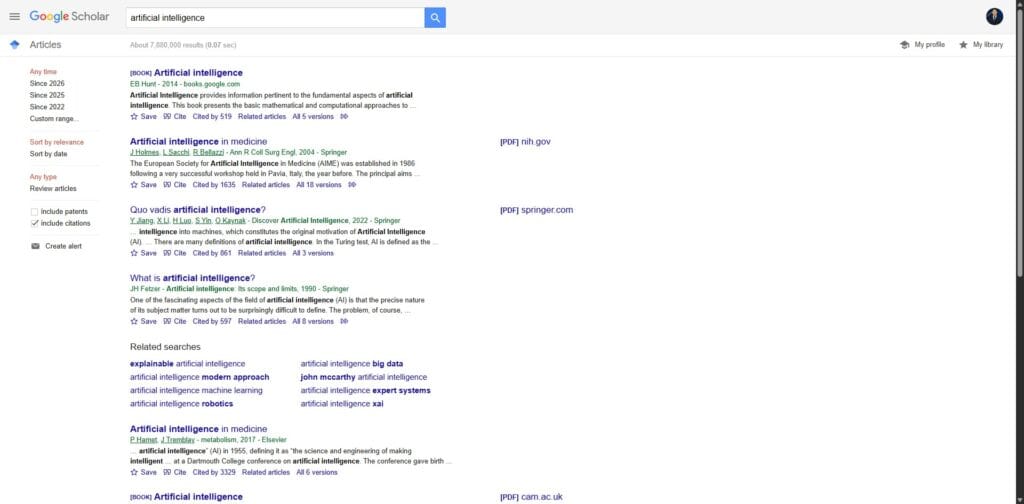
Google Scholar provides a simple interface but limited filtering options compared to its premium counterparts. It maintains the classic, minimalist Google search layout, which makes it incredibly intuitive for beginners. However, this simplicity comes at a cost of precision.
- Search Layout: A single search bar dominates the homepage. The advanced features are tucked away in the “hamburger” menu in the top-left corner.
- Result Filtering: After performing a search, a basic sidebar appears on the left. It allows you to filter by date range, include or exclude patents, and sort by relevance or date.
- Limitations: It lacks a dedicated dashboard for complex query building, and you cannot filter by peer-review status or specific subject categories.
Scopus Interface
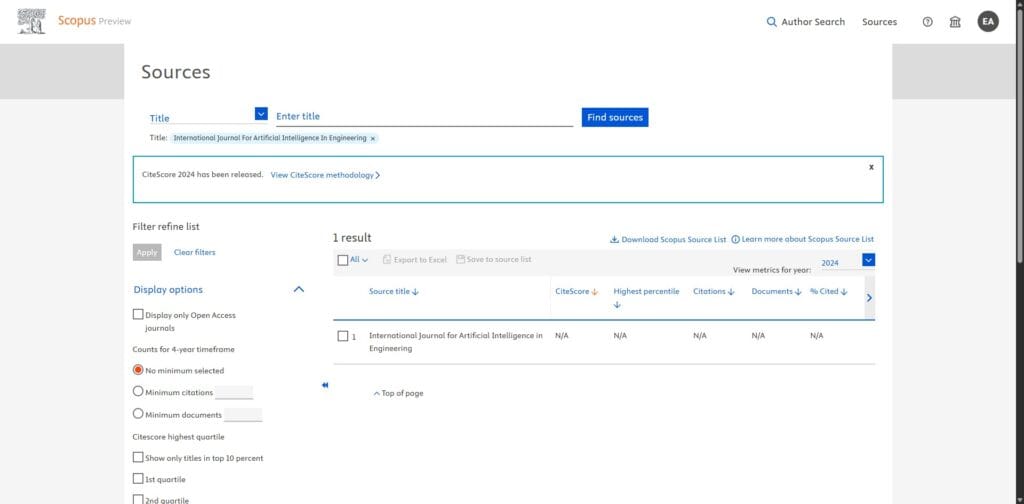
Scopus offers advanced filters, author profiles, and citation tracking tools within a highly structured environment. In 2026, the interface has been transformed by the AI Discovery tab, which shifts the focus from keyword matching to natural language exploration.
- AI Discovery Dashboard: Users can type full questions into a dedicated AI panel to receive cited summaries and interactive “Concept Maps” that visualise the relationship between research topics.
- Advanced Filtering: The sidebar is significantly more robust than Google Scholar, allowing you to narrow results by sub-discipline, document type, funding sponsor, and even specific language.
- Author Profiles: Scopus provides clean, dedicated pages for researchers that visualise h-index trends and co-author networks directly on the screen.
Web of Science Interface
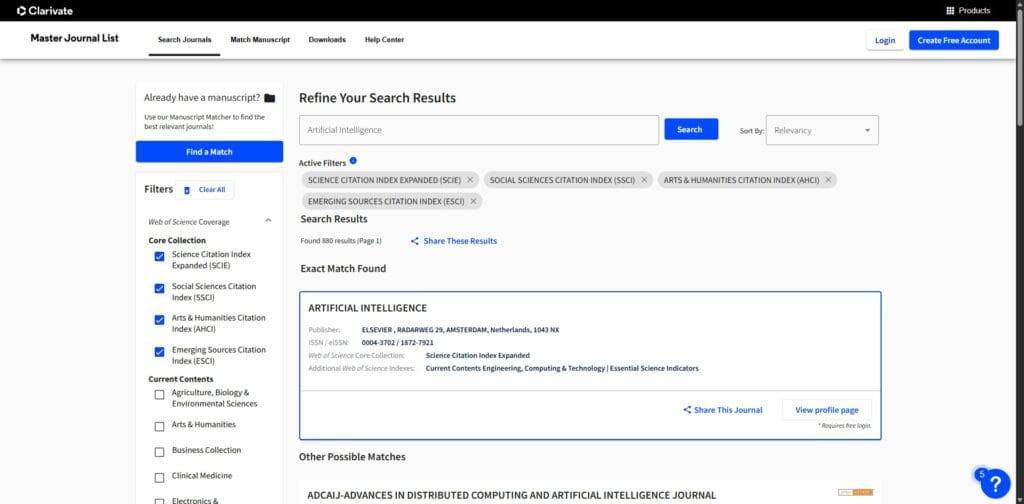
Web of Science focuses on precision and allows deep citation tracking through a sophisticated, data-rich interface. Its 2026 design features the Web of Science Research Assistant, an agentic AI that runs alongside your search to provide real-time guidance.
- The Research Assistant Sidebar: This AI agent provides task-based walkthroughs. If you are starting a literature review, it will guide you through multi-step processes to ensure no seminal papers are missed.
- Citation Network Visualisations: One of the standout features is the interactive citation graph. You can view papers as “nodes” to see how a specific theory has branched out into different fields over time.
- Enriched Cited References: The interface does more than list citations; it labels them as “supporting,” “differing,” or “discussing,” giving you immediate context into the “why” behind a citation count.
Scopus vs Web of Science vs Google Scholar: Key Differences
To choose the most effective platform, it is necessary to understand how they gather and process data. While Google Scholar uses automated web crawling to find as much information as possible, Scopus and Web of Science rely on human curation and strict quality standards. These differences impact the accuracy of your results and the reliability of the citation metrics you receive.
| Feature | Google Scholar | Scopus | Web of Science |
|---|---|---|---|
| Indexing Method | Automated crawling | Curated selection | Highly selective curation |
| Coverage | Very broad | Broad (20,000+ journals) | Selective (high-impact journals) |
| Content Types | Journals, theses, books, PDFs | Journals, books, conferences | Peer-reviewed journals |
| Accessibility | Free | Subscription | Subscription |
| Data Accuracy | Moderate | High | Very high |
While the automated nature of Google Scholar means it is often the first to index new research, it also results in a higher frequency of duplicate records and non-peer-reviewed content. In contrast, the selective nature of Scopus and Web of Science ensures that the metadata is clean and ready for formal bibliometric analysis. It’s often best to use Google Scholar for initial discovery and then verify your findings using the more controlled environments of Scopus or Web of Science.
Real Example: A Comparative Search Across All Three Databases
To truly understand how these platforms differ, it is helpful to look at a real-world example. Imagine we are searching for a contemporary 2026 research topic: “The Ethics of Generative AI in Climate Policy”. When we run this exact query across all three databases, the results illustrate their unique strengths and weaknesses.
| Database | Approximate Results | Primary Content Type |
|---|---|---|
| Google Scholar | 215,000+ | Mixed (PDFs, blogs, preprints, books) |
| Scopus | 1,840 | Peer-reviewed journals and conferences |
| Web of Science | 420 | High-impact journal articles only |
Google Scholar: The Wide Net
In this example, Google Scholar returns the highest volume of results. It includes news articles, university repository PDFs, and draft papers that have not yet been peer-reviewed. This is what’s on the list for researchers who need to see the absolute latest discussions, but it requires significant time to filter through the “noise” to find high-quality evidence.
Scopus: The Structured Middle Ground
The results in Scopus are significantly lower because the platform only includes content from indexed publishers. What is on the screen here is far more reliable. You can quickly see which authors are leading the discussion on AI ethics and which climate journals are publishing the most on the topic. It’s often the best balance between breadth and quality.
Web of Science: The Curated Core
Web of Science provides the fewest results, but these are essentially the “Gold Standard.” Every result comes from a highly prestigious journal with a rigorous peer-review process. If you are writing a policy brief and only want to cite the most trusted authorities, this is where you should begin your search.
Which Database Should You Use? (By Research Scenario)
Every research project has different requirements for precision and depth. Instead of searching aimlessly, you should select your primary database based on your specific academic goals. It’s important to choose the tool that matches the level of rigour required for your work.
| Scenario | Recommended Platform | Why It Works |
|---|---|---|
| Comprehensive Literature Review | Use all three (Google Scholar, Scopus, and WoS) | Ensures no “grey literature” or high-impact studies are missed. |
| Systematic Review | Scopus + Web of Science | Essential for PRISMA standards and reproducible search strings. |
| Quick Assignment or Essay | Google Scholar | Fast, free, and what’s on the web is usually sufficient for introductory work. |
| Detailed Citation Analysis | Scopus | Offers the best visual tools for tracking citation networks over time. |
| Tenure or Promotion Applications | Web of Science | The “Gold Standard” for high-stakes evaluation and funding bodies. |
Why h-index Values Differ Across Platforms
The h-index of a researcher often varies between Google Scholar, Scopus, and Web of Science due to differences in database coverage. This discrepancy occurs because each platform includes different citation sources in its calculations.
- Google Scholar: Highest values due to inclusion of theses, preprints, and non-peer-reviewed content.
- Scopus: Moderate values based on curated journal coverage and books.
- Web of Science: Lowest but most conservative and reliable values, strictly from the Core Collection.
Important: Always specify the source of your metrics when reporting your h-index to provide context to your evaluators.
Pros and Cons of Each Research Platform
Every research platform has distinct advantages and limitations that can influence the outcome of your literature search. Each database is designed for a specific user intent, which results in varying levels of coverage and data quality.
Google Scholar
Google Scholar provides an unparalleled level of accessibility, though this openness can impact the consistency of its data. It’s often the most common starting point for discovery because it indexes almost everything that is academic in nature.
- Pros: It is free to use, highly comprehensive, and easy to navigate for beginners.
- Cons: Its results often include duplicate records and low-quality or non-peer-reviewed sources.
Scopus
Scopus is a powerful analytical tool that is widely used for its robust data visualisations and interdisciplinary reach. It allows researchers to see what’s on the horizon in terms of emerging citation trends and author networks.
- Pros: It features strong citation analytics, exceptionally clean data sets, and broad coverage of modern academic literature.
- Cons: Access is restricted to paid institutional subscriptions, and it contains limited historical data from before 1996.
Web of Science
Web of Science focuses on high-quality curation and is often considered the primary choice for formal institutional evaluations and high-stakes research.
- Pros: It offers high-quality indexing of the world’s most prestigious journals and is the most trusted source for academic evaluation.
- Cons: The platform has a more limited coverage compared to its competitors and presents a steeper learning curve for new researchers.
Final Verdict: Scopus vs Web of Science vs Google Scholar
There is no single winner among these platforms. The best tool depends on your research needs. It’s often most effective to use a combination strategy to ensure your work is both broad and high quality.
- Google Scholar: Use this for free access and broad discovery of what’s on the web.
- Scopus: Use this for interdisciplinary research and precise citation analytics.
- Web of Science: Use this for high-impact, curated data and formal academic evaluation.
For the most reliable results, it’s often best to start with Google Scholar for initial discovery and then verify your findings using the curated databases of Scopus or Web of Science.
Ready to master Google Scholar for your research?
Finding a single paper is helpful, but mastering the entire platform is essential for a successful literature review. If you are navigating your own research journey, explore our comprehensive guide on How to Use Google Scholar for Research to fully optimise your academic workflow.
Frequently Asked Questions
Which is better: Scopus or Web of Science?
Scopus offers broader coverage and better usability, while Web of Science provides more selective and trusted indexing. The best choice depends on your specific research purpose.
Is Google Scholar reliable?
Google Scholar is useful for discovery but less reliable for citation accuracy due to duplicate records and non-peer-reviewed sources.
Can you use Scopus and Web of Science for free?
No, both require institutional subscriptions. Most researchers access them through university libraries.