

Finding the best databases for peer-reviewed articles is essential for any serious academic or professional researcher in 2026. With the staggering volume of digital information available, the ability to separate high-quality, verified studies from unvetted content is a critical skill. Whether you are conducting a systematic literature review or searching for a single supporting fact, knowing which platforms offer the most reliable data will save you hours of fruitless searching and ensure the integrity of your work.
Best Databases for Multidisciplinary Research
In 2026, multidisciplinary databases are the primary starting point for any comprehensive literature review. These platforms index millions of records across diverse fields, ranging from the hard sciences to the humanities. By using these broad-reaching tools, you can identify interdisciplinary connections that might be missed in subject-specific repositories. Whether you are a student or a professional researcher, these are the most reliable platforms for general academic discovery.
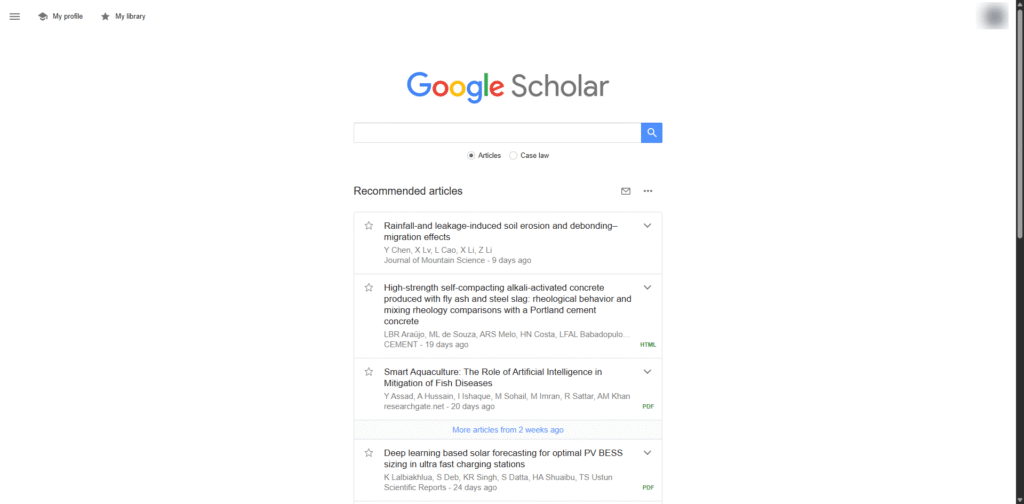
Google Scholar (scholar.google.com)
Google Scholar remains the most comprehensive search engine for scholarly literature globally. It crawls publisher websites, university repositories, and professional societies to index journal articles, conference papers, theses, and books. Because of its massive reach, it is often the first place researchers look to find the widest possible range of literature on a new topic.
- Key Features: Broad indexing of over 400 million documents, citation tracking, personalised alerts, and an integrated “Cite” tool for multiple academic formats.
- Search Depth: It allows for sophisticated keyword combinations and “Related articles” discovery, helping you find newer research built on older, foundational studies.
- Document Access: It identifies “Library Links” and alternative versions of papers, making it simple to find free PDFs that are otherwise hidden behind publisher paywalls.
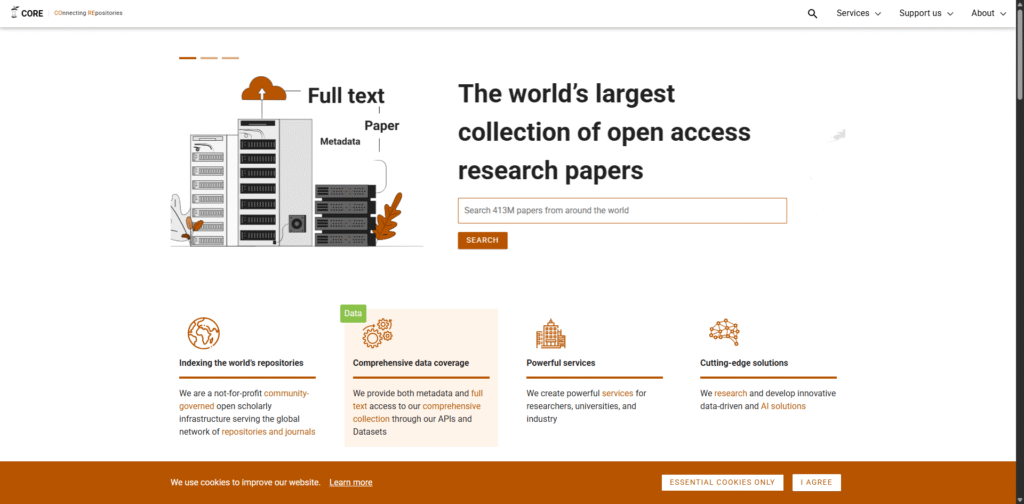
CORE (core.ac.uk)
CORE (Connecting REpositories) is a massive aggregator specifically designed to provide unrestricted access to scholarly data. It gathers open-access research outputs from thousands of global repositories and journals. It is the preferred tool for researchers who prioritise legally shared, open-access content over proprietary commercial database results.
- Key Features: Aggregation of over 200 million research papers, advanced search filters for open-access status, and full API access for advanced text mining.
- Search Depth: It focuses on institutional and subject repositories, allowing you to discover “grey literature” and university-hosted research often missed by standard search engines.
- Document Access: Every result provided is a legally shared version of the research, ensuring you stay within academic integrity guidelines while downloading full-text files.
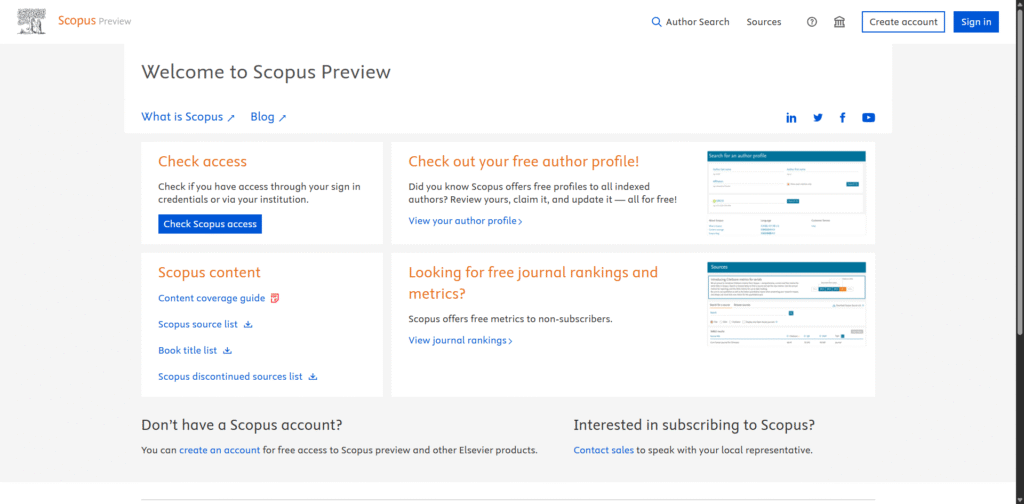
Scopus (scopus.com)
Scopus is a premium, expert-curated database that provides a comprehensive overview of the world’s research output. It is widely respected for its rigorous indexing standards and its ability to track emerging research trends through sophisticated citation analysis. It is an essential tool for those who require the highest level of academic verification.
- Key Features: Indexing of over 27,000 active peer-reviewed journals, CiteScore metrics, and robust author profile management to distinguish between similar names.
- Search Depth: It provides visual tools to map citation networks and track research performance over time, which is vital for identifying the most influential authors in any field.
- Document Access: While it is a subscription service, it offers an “Open Access” filter that allows users to identify and download millions of free peer-reviewed articles directly.
Best Databases for Life Sciences and Biomedical Research
The field of life sciences and medicine relies on databases that offer not only vast volume but also precise medical indexing to ensure the discovery of high-impact peer-reviewed articles. These platforms are essential for clinical decision-making, systematic reviews, and laboratory research. By utilising tools that integrate standardised medical vocabularies and real-time retraction tracking, researchers can ensure they are capturing the most reliable and validated data available in the current academic landscape.
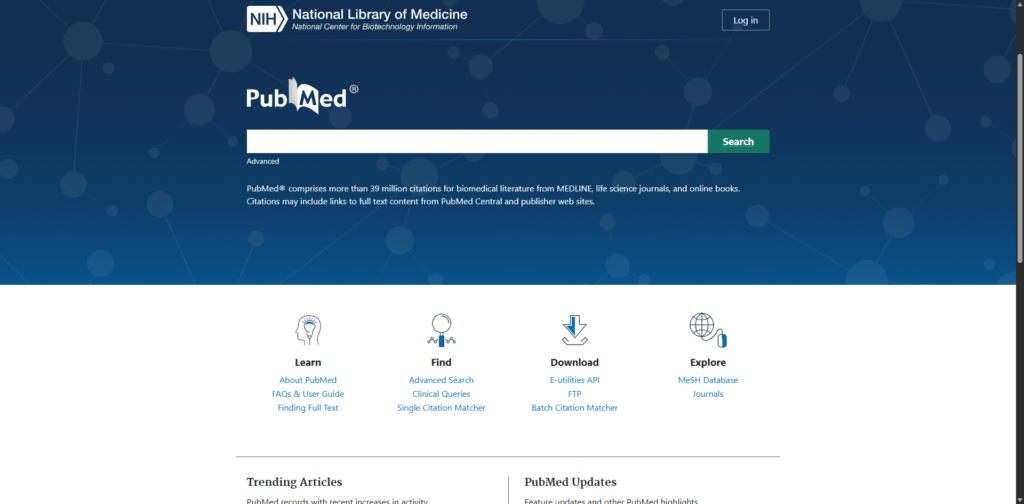
PubMed Central (ncbi.nlm.nih.gov/pmc)
PubMed Central (PMC) is the world’s leading digital archive of biomedical and life sciences literature. Following the release of the 2026 PubMed Baseline, the platform has further refined its ability to index peer-reviewed articles with the latest MeSH (Medical Subject Headings) terms. PMC is the primary destination for researchers seeking the full-text version of studies funded by major global health organisations, ensuring that vital scientific findings remain accessible to the public.
- Key Features: Access to over 40 million citations, full integration with 2026 MeSH terminology, and improved rendering of reference lists for faster navigation.
- Search Depth: It employs a sophisticated “Single Citation Matcher” and advanced proximity searching, making it easier to locate specific peer-reviewed articles even with limited metadata.
- Document Access: It provides a permanent and free archive, offering direct full-text access to every article in the repository without the need for a personal or institutional subscription.
Embase (elsevier.com/products/embase)
Embase is Elsevier’s premier biomedical database, specifically valued for its unparalleled coverage of international pharmacology and medical device research. In 2026, it remains the industry standard for conducting systematic literature reviews because it indexes thousands of peer-reviewed articles from international journals that are often excluded from other major databases. The platform ensures that research from Europe and Asia is given equal visibility in the global scientific community.
- Key Features: Over 50 million records indexed with the Emtree thesaurus, comprehensive clinical trial data on record pages, and daily updates of newly published research.
- Search Depth: It features deep indexing of drug trade names and medical devices, while also incorporating pre-prints from bioRxiv and medRxiv to provide a view of research before it appears as peer-reviewed articles.
- Document Access: While Embase is a subscription service, it offers powerful filters to isolate open-access content, allowing users to identify downloadable files from reputable publishers instantly.
Cochrane Library (cochranelibrary.com)
The Cochrane Library is the global gold standard for evidence-based medicine. It is a collection of databases containing high-quality, independent evidence to inform healthcare decisions. In April 2026, Cochrane introduced enhanced retraction visibility in its CENTRAL database, ensuring that researchers can identify peer-reviewed articles that have been withdrawn by publishers at a single glance, thereby maintaining the highest levels of research integrity.
- Key Features: Home to the Cochrane Database of Systematic Reviews, featuring a new “Smarter Search” BETA for more intuitive discovery of trusted evidence.
- Search Depth: It offers “Clinical Interpretations” and plain-language summaries directly in search results, helping researchers assess the relevance of peer-reviewed articles to specific clinical questions.
- Document Access: It clearly categorises content as “Free Access” or “Open Access,” providing immediate links to full-text versions of the highest-level evidence available in the medical literature.
Best Databases for Physical Sciences and Mathematics (STEM)
For researchers in the STEM fields, the priority in 2026 is often speed and technical accuracy. These databases are built to handle complex mathematical notations, high-resolution engineering schematics, and the rapid-fire release of pre-prints. Using these specialised platforms ensures that you are accessing peer-reviewed articles that meet the rigorous standards of the international scientific and technical community.
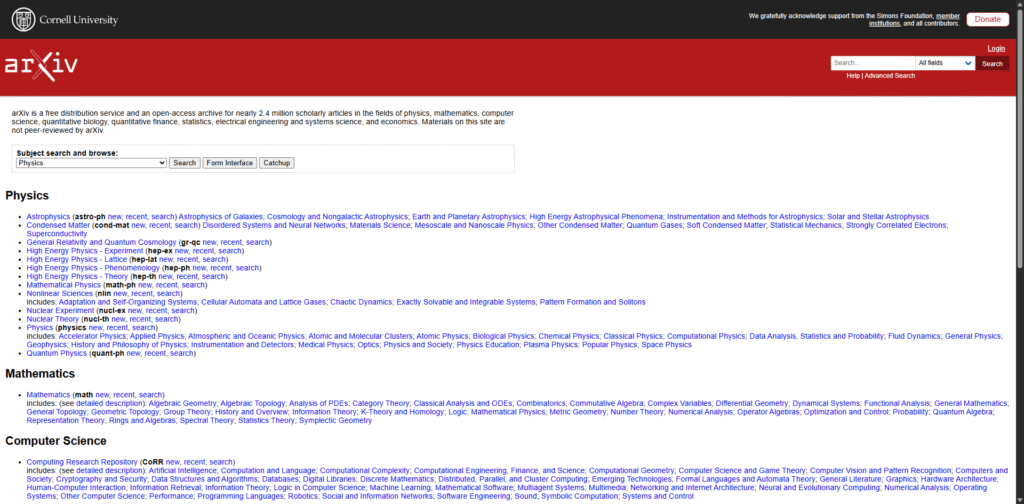
arXiv (arxiv.org)
arXiv is the world’s leading open-access repository for physics, mathematics, and computer science. In early 2026, the platform integrated “alphaXiv,” a new collaborative layer that allows researchers to discuss and annotate papers in real-time. While it is famous for pre-prints, many of its entries are later updated to reflect their status as peer-reviewed articles, making it a vital bridge between initial discovery and formal publication.
- Key Features: Open access to over 2 million documents, automated daily alerts for new submissions, and a robust new AI-driven recommendation engine to surface niche studies.
- Search Depth: It allows for precise filtering by sub-discipline (e.g., Quantum Physics or Neural and Evolutionary Computing) and provides version control to track how a paper has evolved.
- Document Access: All content is permanently free to download in PDF and LaTeX formats, ensuring that technical research remains accessible to the global community regardless of institutional funding.
IEEE Xplore (ieeexplore.ieee.org)
IEEE Xplore is the industry standard for researchers in electrical engineering, computer science, and electronics. In 2026, the platform launched its “Agentic AI” assistant, which helps users curate technical information and identify emerging hardware trends. It houses millions of peer-reviewed articles from some of the most highly cited journals and conference proceedings in the technological sector.
- Key Features: Indexing of over 6 million documents, a new “Innovation Map” tool to visualise technology lifecycles, and direct integration with various coding repositories.
- Search Depth: It offers exceptionally detailed metadata filtering, including search capabilities for specific standards, patents, and technical specifications alongside academic papers.
- Document Access: While primarily a subscription service, IEEE Xplore provides a dedicated “Open Access” filter and a “Free Content” section for thousands of papers and educational resources.

MathSciNet (mathscinet.ams.org)
MathSciNet, maintained by the American Mathematical Society, is the definitive database for the mathematical sciences. In 2026, it introduced a new tiered access model to ensure smaller institutions can better afford its services. It is renowned for its “Mathematical Reviews,” which provide expert-written critiques of peer-reviewed articles, offering a layer of quality control that automated search engines cannot replicate.
- Key Features: Over 4 million records indexed with the MSC2020 (Mathematics Subject Classification), unique author identifiers, and a comprehensive citation tracking system for pure and applied math.
- Search Depth: It provides a historical depth that extends back to the early 19th century, allowing researchers to trace the mathematical lineage of modern concepts through over 100,000 new reviews added annually.
- Document Access: It provides direct links to original articles hosted on publisher sites, including “Article URL” and DOI links for immediate download where institutional access is active.
In 2026, research in the social sciences and humanities requires tools that can navigate both modern datasets and vast historical archives. These platforms have recently integrated more sophisticated language processing tools to help researchers identify thematic trends and cultural shifts over centuries of literature. By focusing on these specialised repositories, you can find peer-reviewed articles that provide deep qualitative insights into human behaviour, society, and the arts.
JSTOR (jstor.org)
JSTOR is a cornerstone for humanities research, known for its expansive digital library of academic journals, books, and primary sources. In 2026, JSTOR launched its “Publisher Collections” model, which significantly expanded its ebook library, making thousands of new titles searchable alongside their existing journal archives. It remains the go-to platform for researchers who need high-quality, stable access to long-term academic discourse.
- Key Features: Access to over 12 million journal articles and books, the new 2026 Publisher Collections for expanded ebook access, and a powerful image-search tool for art history and archaeology.
- Search Depth: It allows for “Full-Text” searching across centuries of data, with a new 2026 thematic filter that helps researchers group results by historical era or specific cultural movements.
- Document Access: While much of the content is subscription-based, JSTOR offers a “Read Online for Free” programme for individual researchers and a growing selection of open-access peer-reviewed articles.

Taylor & Francis Online (tandfonline.com)
Taylor & Francis Online is a premier platform for social science and humanities journals, offering a vast array of niche and mainstream publications. In 2026, the platform introduced an integrated “ReadSpeaker” tool, which provides real-time translation and audio versions of papers. This advancement has made their peer-reviewed articles more accessible to a global audience, breaking down language barriers in international social research.
- Key Features: Hosting for over 2,700 journals, a new 2026-2028 “Read and Publish” framework for increased open access, and personalized research alerts tailored to specific social science disciplines.
- Search Depth: The platform features a highly refined “Discovery” interface that enables users to filter by specific geographic focus or methodology, such as qualitative vs quantitative studies.
- Document Access: It provides a clear “Open Access” indicator on all eligible content and offers “Gold Open Access” options that allow researchers to download final published versions immediately.
Project MUSE (muse.jhu.edu)
Project MUSE is a trusted provider of digital humanities and social science content from over 200 university presses and scholarly societies. For 2026, the platform has expanded its “Premium Collection” to include a wider range of interdisciplinary journals focusing on global development and heritage studies. It is particularly valued for hosting peer-reviewed articles that explore complex social issues without the commercial bias of larger corporate publishers.
- Key Features: A non-profit focus on university press content, a mobile-responsive interface updated for 2026, and an extensive archive of “MUSE Open” books and journals.
- Search Depth: It offers a unique “Discipline Browser” that helps researchers navigate the nuances between similar fields, such as Political Science and International Security.
- Document Access: Many journals offer “Basic Research” and “Basic College” tiers for free, and the platform uses a tiered access model to ensure equitable document availability for independent scholars.
Open Access and General Research Repositories
As the academic community moves closer to a “Diamond Open Access” model in 2026, general research repositories have become indispensable for finding peer-reviewed articles without the barrier of a paywall. These platforms aggregate data from thousands of university archives and independent journals, providing a centralized location for searching verified scholarly content. By utilizing these repositories, you can access high-quality research that is legally shared and permanently preserved for the public good.
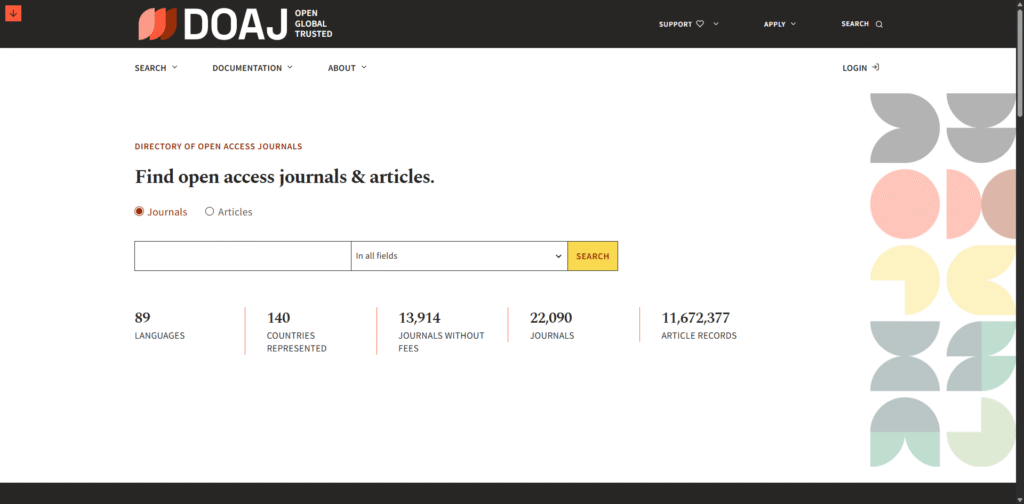
DOAJ (doaj.org)
The Directory of Open Access Journals (DOAJ) is the premier index for high-quality, open-access, peer-reviewed articles. In early 2026, the DOAJ launched a significant technical update to its metadata system, now allowing for the ingestion and display of full reference lists directly on its platform. This advancement makes it much easier for researchers to perform forward and backward citation searches within the directory itself, ensuring a more seamless discovery experience for open research.
- Key Features: Indexing of over 20,000 journals across 80 languages, a new 2026 organizational ID (ROR) support system, and rigorous quality checks to exclude predatory publishers.
- Search Depth: The platform now allows for more granular author searches, including support for researchers with multiple institutional affiliations and integrated ORCID syncing.
- Document Access: It guarantees that 100% of the research it indexes is free to read and download, with clear licensing information provided for every article.
Zenodo (zenodo.org)
Zenodo is a general-purpose open-access repository developed under the European OpenAIRE programme and operated by CERN. In April 2026, the platform introduced a major interface overhaul designed to better handle the increased traffic from AI-driven research agents. It is unique because it hosts not only peer-reviewed articles but also the datasets, software, and supplementary materials that support them, making it the world’s most versatile “catch-all” repository for modern science.
- Key Features: A new “Most Downloaded” sorting option launched in 2026, automatic DOI assignment for every upload, and specialized communities for university departments and global projects.
- Search Depth: It features a powerful new “Publication Date” filter that allows for precise search refinement, ensuring you can locate the most current research outputs in a rapidly evolving field.
- Document Access: It offers flexible access levels, including open, embargoed, and restricted files, while prioritizing the immediate and free download of publicly funded research papers.
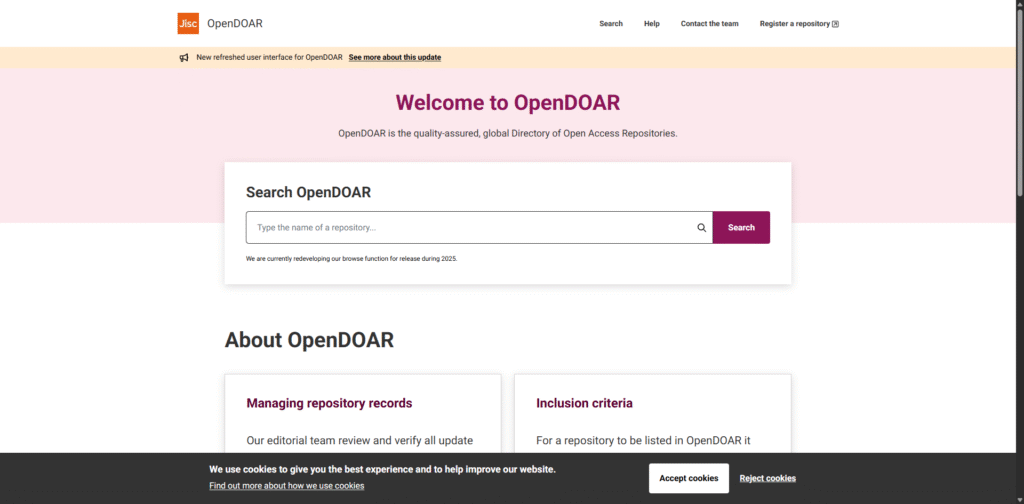
OpenDOAR (v2.sherpa.ac.uk/opendoar)
OpenDOAR (Directory of Open Access Repositories) provides a curated, quality-assured list of repositories worldwide. In February 2026, Jisc and COAR released a new international roadmap for the platform, cementing its role as the critical infrastructure for verifying the legitimacy of academic archives. It is an essential tool for identifying trusted university repositories where authors often deposit the “accepted manuscript” version of their peer-reviewed articles to comply with global funding mandates.
- Key Features: A comprehensive directory of over 6,000 verified repositories, advanced mapping of repository functionalities, and a community-driven governance model.
- Search Depth: It allows you to search for repositories by country, software type, or specific subject area, helping you locate niche institutional data that general search engines might overlook.
- Document Access: While it is a directory rather than a direct host, it provides direct links to the homepages of compliant repositories where full-text peer-reviewed articles are available for free download.
Comparison of the Best Databases for Peer-Reviewed Articles (2026)
To help you choose the most effective platform for your specific research needs, the following table provides a direct comparison of the 2026 landscape. This overview highlights the differences in primary fields and access models across the top-tier platforms, ensuring you can identify which tools are best suited for discovering verified peer-reviewed articles within your discipline.
| Database Name | Primary Field | Access Type | Key Strength in 2026 |
|---|---|---|---|
| Google Scholar | Multidisciplinary | Free | Widest indexing of global scholarly documents. |
| PubMed Central | Life Sciences / Medicine | Free | Authoritative archive for clinical and health data. |
| arXiv | STEM (Physics / Math / CS) | Free | Real-time access to pre-prints and alphaXiv discussions. |
| JSTOR | Humanities / Social Sciences | Subscription / OA | Unrivalled historical archives and primary sources. |
| IEEE Xplore | Engineering / Tech | Subscription / OA | Agentic AI assistance for identifying hardware trends. |
| DOAJ | Multidisciplinary Repositories | Free | Verified curation of 100% open-access journals. |
Conclusion
Selecting the right research tool is a critical step in ensuring the quality of your academic or professional output. In 2026, the best databases for peer-reviewed articles are no longer just storage vaults for PDFs; they have evolved into intelligent ecosystems that offer citation networking, real-time collaboration, and verified open access. Whether you require the vast multidisciplinary reach of Google Scholar or the specialised clinical accuracy of PubMed, utilising these professional platforms is the only way to ensure your citations are grounded in verified, high-impact science.
Ready to expand your research horizons?
For a broader view of top research databases, including subscription-based and premium tools, see our guide to the Best Research Databases for Academic Research.
Frequently Asked Questions
Which databases are most reliable for peer-reviewed articles in 2026?
PubMed, Web of Science, and Scopus remain the gold standards due to their exceptionally high indexing requirements for scholarly journals.
How can I find free peer-reviewed articles on Google Scholar?
You can locate them by checking the right-hand side for [PDF] links or by selecting “All versions” beneath a search result.
What makes Semantic Scholar a good choice for research?
It uses artificial intelligence to provide one-sentence summaries and identifies which peer-reviewed articles have the most influential citations in their field.
Where is the best place to find open-access medical research?
PubMed Central is the premier digital archive, offering millions of high-quality peer-reviewed articles in the life sciences at no cost.
Is every document on ResearchGate a peer-reviewed source?
No, because authors upload their own work, you must manually verify the journal name to ensure you are reading peer-reviewed articles.