Navigating the expansive landscape of scholastic publishing requires access to foundational repositories that index high-impact scholarly work. When looking for the best research databases to support your analytical writing, it is vital to select platforms that prioritize peer-reviewed materials, clear citation indexing, and verifiable digital objects. Relying on basic web search tools frequently exposes your bibliography to unverified corporate reports, whereas deploying structured academic repositories guarantees the systemic integrity of your entire background study.
This post breaks down a professional evaluation framework to help you connect with authoritative publishing channels with absolute efficiency. Mastering the structural search protocols within these environments allows you to quickly streamline real-time academic sourcing and isolate high-quality datasets. By learning how to navigate these premier indexing spaces, you can confidently leverage live citation mapping to organize your background literature with absolute precision.
Best Research Databases
Transitioning from standard search engine inputs to structured database lookups can radically strengthen your data verification pipeline. When utilizing the best research databases, the platform interfaces directly with comprehensive indexations like PubMed or Scopus. Rather than treating these databases as static repositories for manual reading, you must understand them as complex citation networks. This strategic application ensures that your reference tracking remains completely secure, shielding your bibliography from low-tier digital media and predatory publishing circles.
The main advantage of global citation indexes is their strict screening criteria for inclusion, which removes low-quality academic papers from your view automatically. Utilizing these tools ensures that your literature search rests entirely on verified scientific foundations.
- Predatory journal exclusion: Institutional indexing setups apply multi-stage board reviews to evaluate scientific journals, ensuring that unverified, self-published literature cannot corrupt your bibliography.
- My Experience: I regularly analyze reference lists where a researcher accidentally cited a retracted paper, an error that could have been avoided by using an indexation platform that updates citation statuses automatically.
- Impact trajectory evaluation: These platforms track precise institutional metric parameters, such as journal impact factors and h-index metrics, allowing you to isolate dominant papers rapidly.
How to construct an institutional search query sequence
- Log into your institutional library portal to access premium citation tracking repositories.
- Input a multi-variable search string, utilizing strict Boolean operators to connect your primary concepts cleanly.
- Filter the active results by choosing specific thematic boundaries, such as confining the output to English-language literature.
- Click on the database citation counts to isolate the most influential papers within that specific discipline.
2. Leveraging Specialized Subject Repositories
While broad institutional indexes cover multiple fields, specialized discipline databases provide deeper coverage within specific areas like medicine, life sciences, or behavioral fields. Using these targeted environments makes finding obscure methodology variations highly reliable.
- Granular vocabulary indexing: Specialized databases utilize customized vocabulary frameworks to map topics precisely, minimizing the time spent filtering out unrelated fields.
- My Experience: Attempting to locate precise empirical metrics in a massive general database can be incredibly time-consuming, but specialized repositories isolate those specific data fields instantly.
- Methodological standardization: Subject-specific databases index detailed experimental designs, which helps you compare contrasting research setups with absolute clarity.
How to extract data fields from subject-specific databases
- Select a database that focuses exclusively on your primary research field or broader discipline.
- Enter a highly refined query string, such as utilizing specific medical subject headings or scientific keywords.
- Restrict the active search matrix by selecting precise study types, such as limiting the search to randomized controlled trials.
- Save the verified publication strings to your workspace to ensure your technical tracking metrics remain accurate.
3. Accessing Open-Access Global Aggregators
Open-access global aggregators break down institutional paywalls by compiling millions of free scholarly records from thousands of international repositories. Utilizing these open systems ensures that your background search incorporates diverse global perspectives without requiring premium database subscriptions.
- Democratic source collation: Global aggregators collect metadata across public institutional networks, making it easy to find authentic dissertations, preprints, and independent research documents.
- My Experience: I have reviewed numerous literature reviews that relied only on commercial publishing houses, which means they missed critical public data sets that global aggregators index for free.
- API-driven metric tracking: These open networks leverage transparent data pipelines, allowing you to trace complete citation trails and open-source validation links easily.
How to harvest open-access scholarly metadata
- Navigate to an open-source global research catalog and locate the advanced query terminal.
- Input your descriptive search parameter, ensuring that you encompass broad thematic variations of your core concept.
- Utilise the access filter settings to display exclusively open-licence documents that permit complete text text downloads.
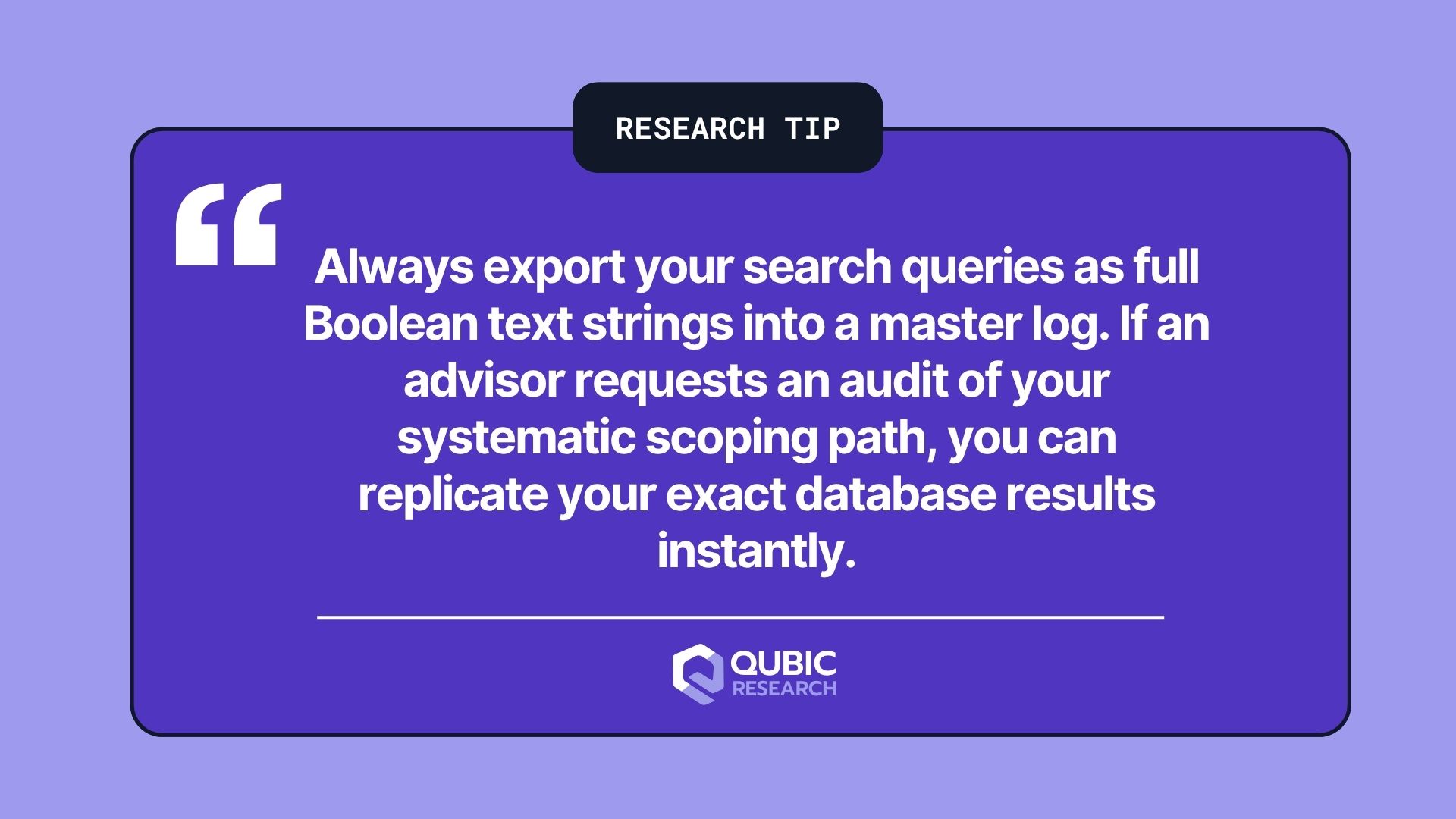
- Export the retrieved metadata strings directly into your personal research log to maintain a clean tracking sequence.
4. Deploying Live Citation Graph Visualizers
The final element of a modern database strategy involves using interactive graph visualizers to map structural relationships between independent authors. This method helps you uncover critical paper clusters that traditional lists hide.
- Structural linkage discovery: Citation graph tools represent scholarly papers as interactive nodes, showing you exactly how different research teams cite each other’s experiments.
- My Experience: Tracking down older foundational papers used to require reading through reference lists manually, but visual graph engines reveal those historical roots instantly.
- Research gap exposure: Discovered disconnects between independent clusters inside a citation graph often signal unmapped areas, helping you isolate strong research opportunities.
How to build an interactive citation network graph
- Identify the core publication that serves as the methodological baseline for your current research paper.
- Paste that paper’s digital footprint into a visual network engine to map its surrounding citation links.
- Analyse the density of the connecting lines to find out which secondary studies are most closely related to your topic.
- Save the generated graph configuration to your personal workspace to ensure your systematic overview remains perfectly structured.
Final Thoughts on Utilizing the Best Research Databases
I believe that selecting verified data repositories to guide your preliminary academic exploration is an indispensable step for modern scholars, but you must remain attentive to how these networks index content parameters. When evaluating the best research databases, the structural evidence confirms that these platforms must be used as strategic maps rather than passive document warehouses. By focusing on institutional citation indexes, utilizing subject-specific fields, and tracking connections via open global graphs, you can keep your background study completely secure. Ultimately, your personal interpretation is what shapes your paper’s academic worth—do not let automated indexes replace your original critical thinking.
Is OpenAlex a reliable research tool?
If you want to understand how free, open-source catalogue systems can assist your scholarly preparation, read our comprehensive review on OpenAlex as a research tool to discover how to leverage global open metadata to find validated papers without a paywall.
Frequently Asked Questions
Why are institutional citation indexes safer than standard search engines?
Institutional citation indexes apply strict selection criteria to filter out predatory or unverified journals, ensuring that only peer-reviewed literature is displayed. Standard search engines do not separate academic writing from commercial web content, which can expose your bibliography to unverified blog posts or biased corporate data.
How do specialized subject repositories save time during a literature review?
Specialized subject repositories utilize highly targeted vocabulary frameworks designed for a specific discipline, such as medicine or behavioral fields. This focused indexing filters out unrelated topics automatically, allowing you to isolate specific methodology variations and experimental data without sorting through millions of general documents.
What is the benefit of using open-access global aggregators for research?
Open-access global aggregators compile millions of free academic records from public networks and institutional repositories worldwide. This approach breaks down traditional paywalls, allowing you to find authentic dissertations, preprints, and international research items that might be omitted by commercial databases.
Can live citation graph visualizers help identify overlooked research papers?
Yes, citation graph visualizers are excellent for uncovering overlooked papers. By converting text citations into interactive graphic nodes, these tools show you exactly how different research teams are linked, making it easy to spot influential clusters and foundational historical papers that standard list searches fail to highlight.
Will university plagiarism portals flag an essay if the sources were found using AI tools?
No, university evaluation platforms will not flag your bibliography for using intelligent search systems to find authentic, peer-reviewed URLs. Your assignment will only trigger integrity alerts if you copy machine-generated text into your draft instead of writing the analytical comparisons in your own voice.