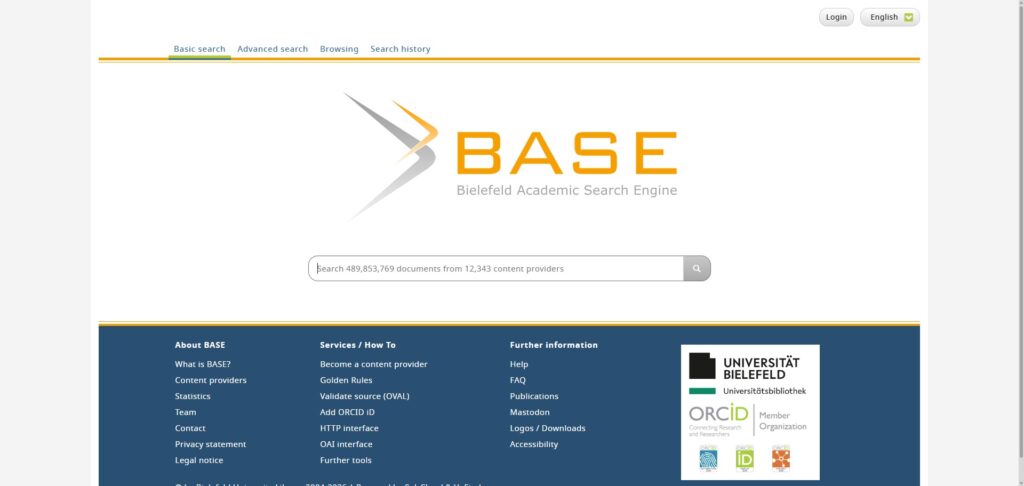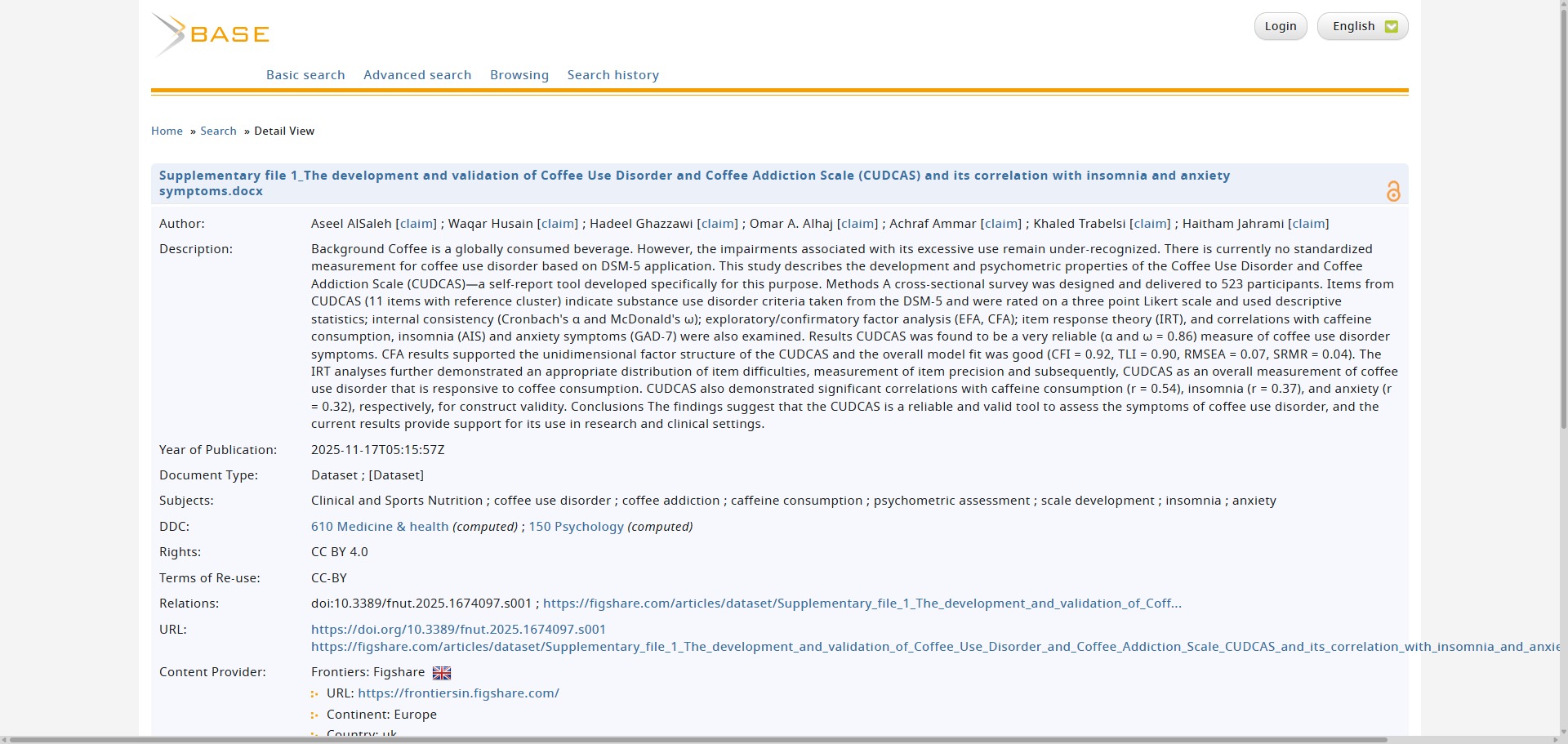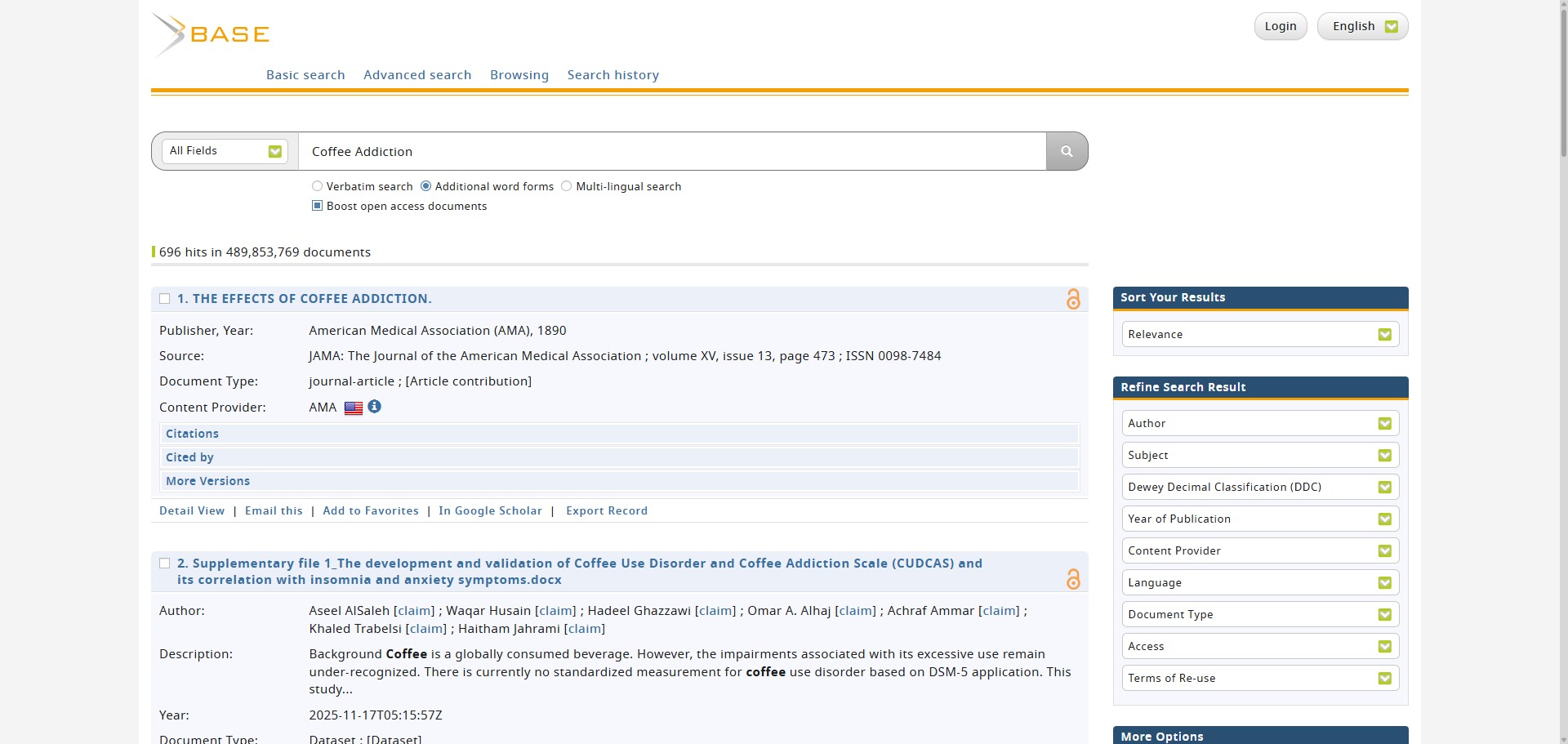

BASE (Bielefeld Academic Search Engine) is a completely free, multi-disciplinary web search engine designed to help university students, academic researchers, and library teams discover scholarly internet resources and harvest open-access literature.
Operating as a massive repository aggregator, BASE avoids the commercial ad-driven models of generic web indexers. Instead, the platform collects, normalizes, and indexes structured metadata from thousands of global institutional repositories, digital journals, and university collections using specialized metadata harvesting protocols to expose deep-web academic files.
Highly Recommended
What can you use BASE for?
You can use it to build intricate multidisciplinary queries, isolate legally accessible full-text documents, and browse deep-web university repositories. By deploying its faceted filtering options, users can quickly separate commercial articles from public repository manuscripts, ensuring you locate materials that do not sit behind expensive journal paywalls.
It also functions as an automated metadata harvesting hub. The underlying architecture systematically harvests indices using the Open Archives Initiative Protocol for Metadata Harvesting (OAI-PMH), which means it uncovers specific digital theses, grey literature, and institutional preprints that standard commercial search engines often overlook entirely.
Who is BASE best for?
It is ideal for postgraduate researchers, independent authors, and university students who lack premium institutional logins but still require a massive, high-integrity directory to execute comprehensive literature reviews.
It is also an essential utility for academic librarians and repository managers who need to verify data index consistency, monitor regional open-access compliance, or study international collection distributions.
Is BASE genuinely free?
Yes. BASE is entirely free to access, search, and deploy globally without an active user account or hidden profile upgrade costs. Because it is developed and hosted by a public university library system, there are no monetization walls, tracking systems, or premium account ceilings active on the platform.
While some external links may point toward proprietary publisher sites that require distinct institutional proxies to read full texts, roughly sixty percent of the indexed records inside the database link directly to free, open-access document versions.
Should I use BASE as an academic search engine?
Yes. It is an excellent, comprehensive tool for discovering scholarly literature, tracing citation networks, and finding accessible versions of research documents across almost every academic discipline.
Because it covers multiple areas of study in one central place, it makes the initial discovery process fast and straightforward. It serves as an essential starting point for any literary search before diving into niche database systems.
Key Features
- Massive multi-source repository index
Aggregates over 340 million academic documents drawn dynamically from more than 10,000 verified global digital repositories and journal databases. - Intellectual source selection verification
Filters incoming servers manually via library curation guidelines to ensure the index only introduces high-quality academic data streams. - Faceted open-access grading selectors
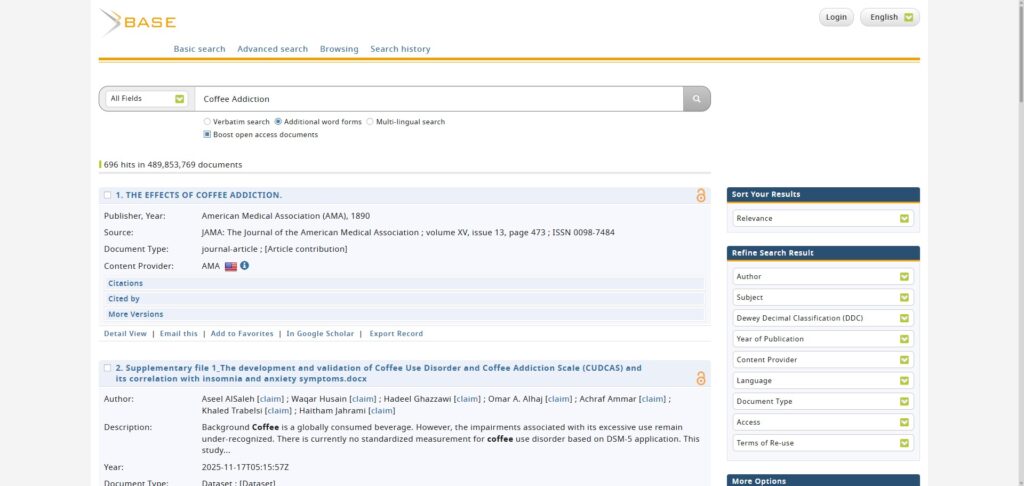
Allows you to instantly refine search lists by terms of re-use, separating open-access manuscripts from paid subscription files. - Advanced multilingual query tools
Expands plain text terms across integrated multi-language dictionaries to retrieve matching international literature automatically. - Public open-access API endpoints
Provides transparent integration pathways for university libraries to embed the underlying index metadata into local catalog frameworks.
Best for
- Locating free open-access full-text research papers
- Uncovering hidden grey literature and university theses
- Searching across diverse global institutional repositories
- Filtering complex literary data sets by specific reuse terms
- Conducting multidisciplinary literature reviews without paywalls
Pros and Cons
Here are the main advantages and limitations of using BASE for academic literature searches.
Pros
- ✓Entirely free to use with zero registration barriers, premium paywalls, or feature limits.
- ✓Exceptional at exposing deep-web grey literature, academic preprints, and digital university dissertations.
- ✓The strict manual vetting of sources ensures high data integrity and filters out predatory content.
Cons
- ✗The user interface can feel visually dated and slightly complex compared to modern AI discovery tools.
- ✗Requires precise keyword usage and boolean operators, as it lacks natural language processing capabilities.
- ✗Metadata quality depends entirely on the source repository, occasionally leading to incomplete citation rows.
How to Use BASE
Follow this quick guide to run your repository searches, configure open-access filters, and extract clean bibliographic records.
- Visit the Website and Access the Workspace
Go to the official BASE search engine website. While you can perform searches immediately without logging in, creating a free personal profile allows you to save specific search queries and curate your own document lists. - Navigate to the Advanced Search Panel
Click the “Advanced Search” link situated next to the main entry bar. This expanded console allows you to build precise search lines using explicit filters for authors, journals, publishers, and exact publication year brackets. - Apply the Open Access Facet Filters
Execute your primary search query, then inspect the left-hand sidebar dashboard. Under the “Terms of Re-use” section, select the “Open Access” checkbox to instantly separate free full-text manuscripts from paid commercial journal links. - Utilize the Multi-Language Search Expansion
If you are tracking international studies, activate the Eurovoc multi-lingual lookup tool within the advanced options. Enter your English terms, and the engine will translate and search across European repository indexes simultaneously. - Review Document Metadata and Source Repository Links
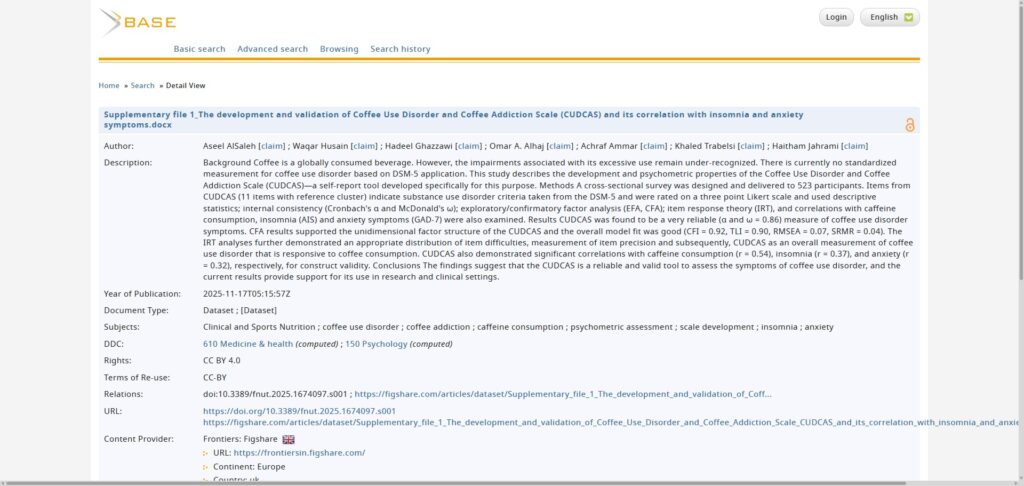
Click on an article title to examine its deep metadata profile. Here you can inspect specific classification codes, language listings, and direct URL connections pointing straight to the local university repository holding the file. - Export Bibliographic Citations
Select the citation icon on your target result line to expand the reference properties. Download the metadata structure directly into standard formats like BibTeX, RIS, or EndNote text files for trouble-free importing into your favorite reference manager.
Frequently Asked Questions
How does BASE differ from a generic web search engine like Google?
Generic search engines scrape the entire internet indiscriminately, indexing blogs, commercial storefronts, and unverified articles. BASE exclusively targets academic repositories and peer-reviewed journal directories, ignoring standard web traffic to deliver reliable scholarly data.
What exactly is grey literature, and how does BASE find it?
Grey literature refers to research material that is produced outside of traditional commercial publishing channels, such as government policy reports, university working papers, and thesis files. BASE pulls these files by using OAI-PMH protocols to directly harvest the internal servers of global institutions.
Can I use BASE to automatically check the citation impact factor of a paper?
No. Unlike Scopus or Google Scholar, BASE focuses primarily on document discovery and repository aggregation rather than processing citation graphics or mapping citation counts over time. It is designed to find text files rather than calculate tracking benchmarks.
Why do some articles labeled as open access still ask me to pay on external sites?
This issue occasionally happens when an institutional repository hosts a free preprint version of a study, but the platform link directs you to the publisher’s commercial page instead. Check the alternative links on the BASE results page to locate the repository file directly.
How can an institutional repository submit its server data to be indexed by BASE?
Repository administrators can visit the official developer section on the BASE portal to submit their base URL address. The Bielefeld University Library team evaluates the server structure manually to confirm metadata consistency before adding it to the global index.