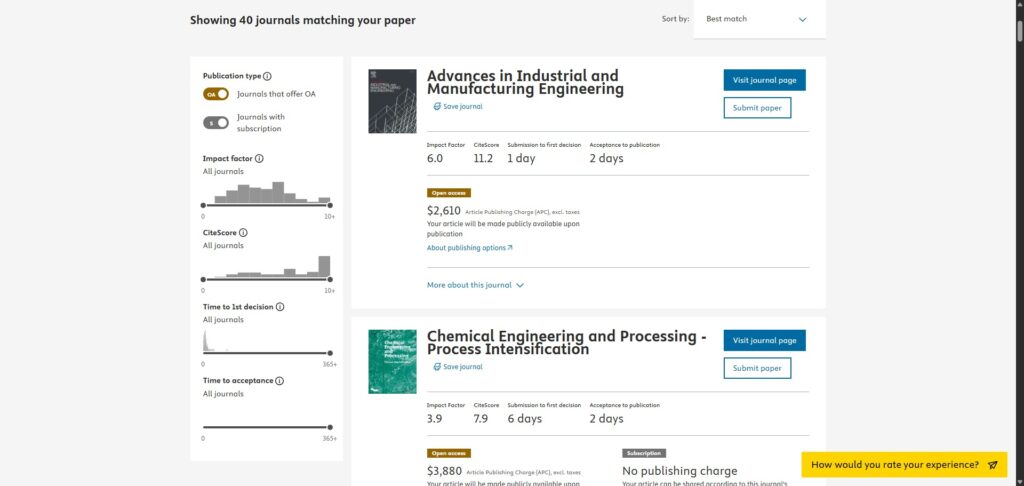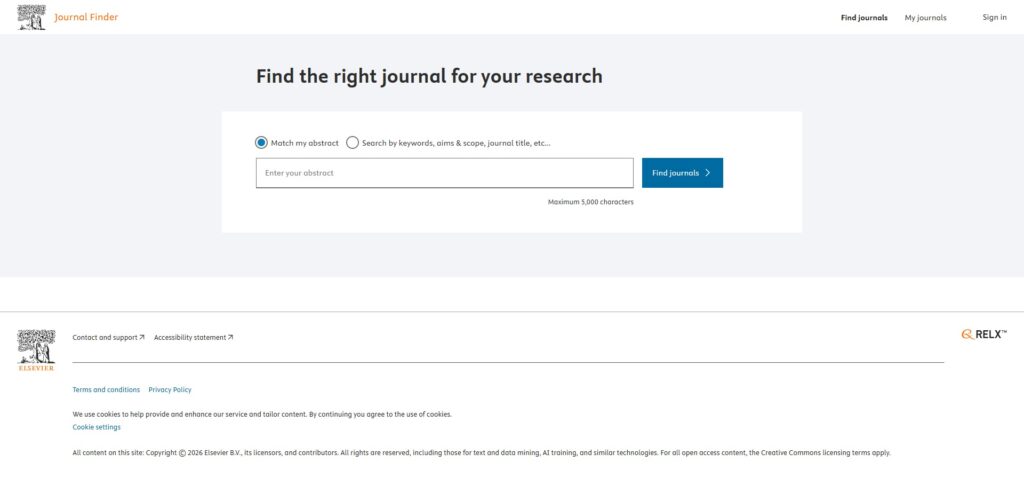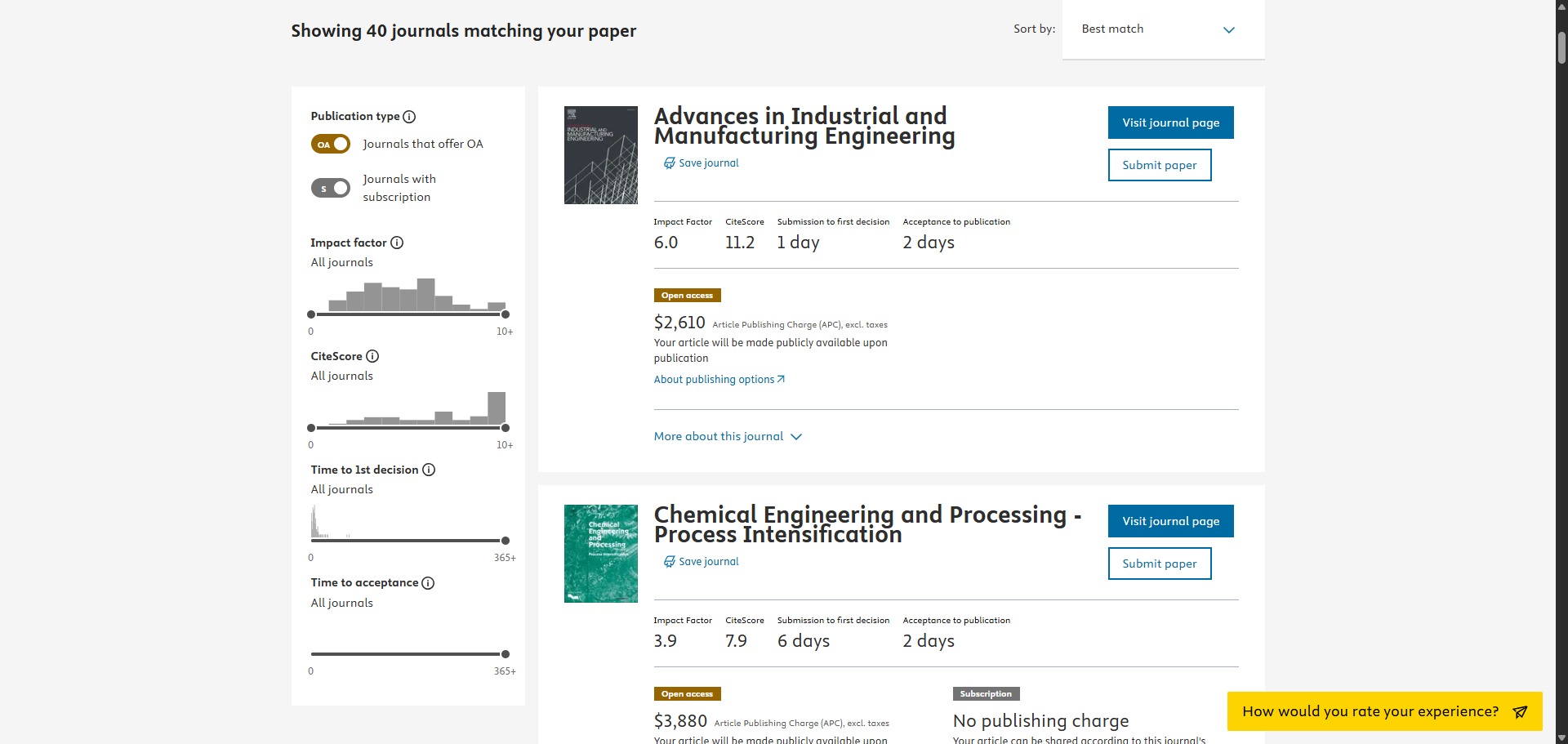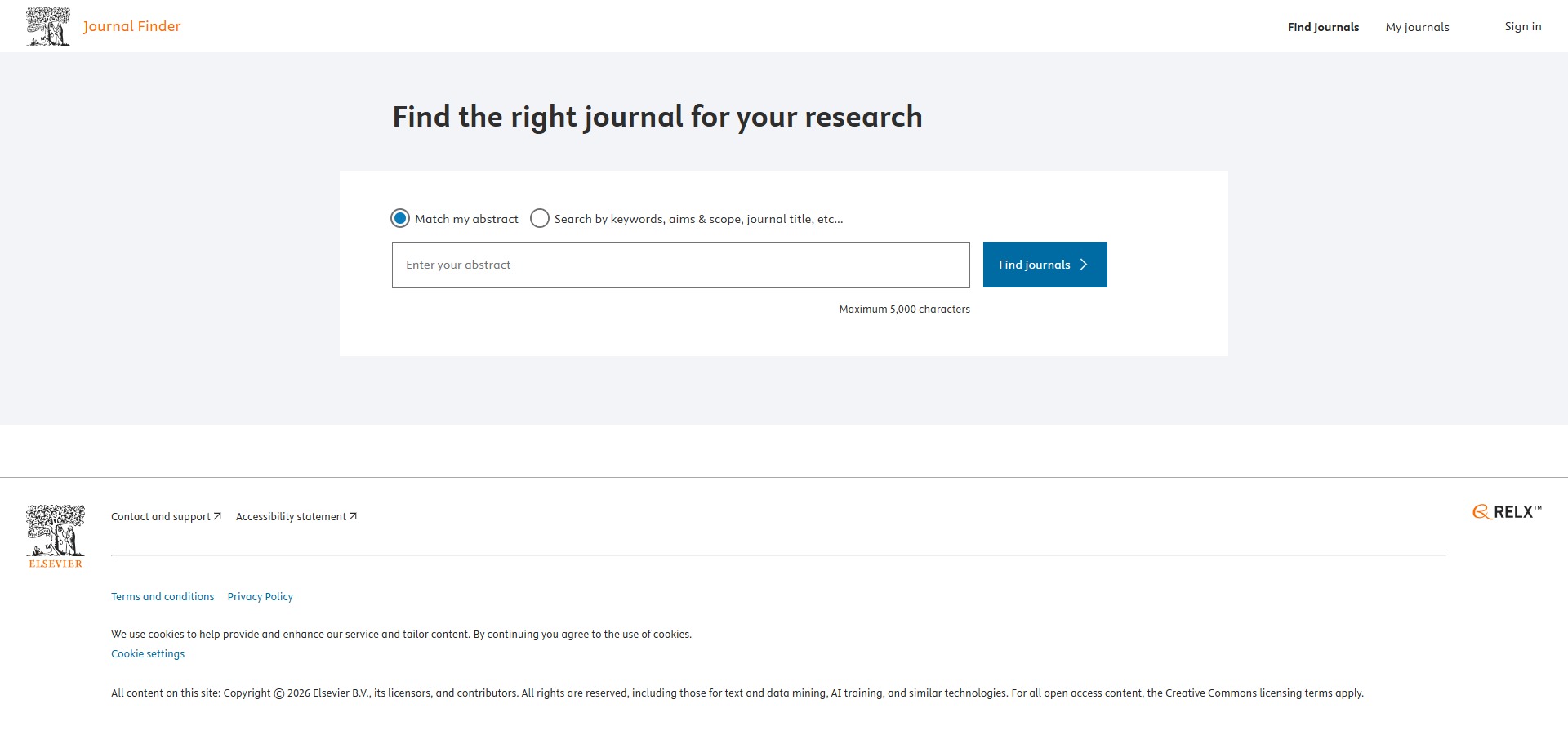

Elsevier Journal Finder is a completely free, web-based tool designed to help students, academics, and research scientists identify relevant, peer-reviewed journals for manuscript submission.
Operating as an intelligent decision-support application, the platform uses natural language processing and machine learning algorithms to bridge the gap between drafting a study and discovering a home for publication. By analyzing the linguistic fingerprint of your research summary against millions of paper records, the engine surfaces highly compatible publication outlets within the expansive Elsevier database framework.
Recommended
What can you use Elsevier Journal Finder for?
You can use it to gather real-time data on acceptance probabilities, track editorial processing speeds, and compare publishing parameters across over 2,900 indexed scholarly journals. By pasting your draft paper title and abstract text body into the workspace fields, you can instantly see which outlets match your exact topic boundaries.
It also functions as an analytical comparison dashboard. The system evaluates hidden metadata structures to reveal critical performance benchmarks, enabling researchers to discover whether a target publication offers open access models or traditional subscription tracks before initiating a formal submission line.
Who is Elsevier Journal Finder best for?
It is ideal for university postgraduates, doctoral candidates, and early-career researchers who need to map out realistic targets for their first academic articles without wasting valuable months on scope rejections.
It serves as an essential resource for busy principal investigators and cross-institutional research groups who need an efficient way to sort prospective venues based on review speeds and specific impact thresholds.
Is Elsevier Journal Finder genuinely free?
Yes. Elsevier Journal Finder is completely free to use for any writer or academic globally. There are no paid membership upgrades, hidden premium filters, or user profile registration walls required to run extensive abstract evaluations.
While individual journals discovered via the search results may enforce Article Processing Charges (APCs) for open-access licensing pathways, the diagnostic selection utility remains entirely open, unmonetized, and public for global deployment.
Should I use Elsevier Journal Finder as a journal finder?
Yes. It is an excellent, comprehensive tool for discovering scholarly literature, tracing citation networks, and finding accessible versions of research documents across almost every academic discipline.
Because it covers multiple areas of study in one central place, it makes the initial discovery process fast and straightforward. It serves as an essential starting point for any literary search before diving into niche database systems.
Key Features
- NLP-driven abstract matching engines
Utilizes modern natural language processing models to read your text, extract key scientific concepts, and calculate thematic relevance values. - Comprehensive submission speed trackers
Displays the precise median duration from document upload to the first decision point, alongside overall time-to-publication weeks. - Transparent acceptance rate indices
Provides verified institutional historical metrics outlining the percentage of submitted manuscripts accepted by each editorial board. - Granular open-access fee logs
Displays explicit article publication charges alongside embargo timelines directly on the result cards to assist with budget mapping. - Direct Editorial Manager entry pipelines
Embeds a direct submission portal link into every recommendation card to let you launch your submission project without external lookups.
Best for
- Matching manuscript abstracts to journal scopes
- Evaluating historical journal acceptance rates
- Tracking peer-review timelines and processing speeds
- Comparing open-access charges across fields
- Avoiding out-of-scope editorial desk rejections
Pros and Cons
Here are the main advantages and limitations of utilizing Elsevier Journal Finder for academic manuscript planning.
Pros
- ✓Completely free to use with zero registration hurdles or profile requirements.
- ✓Highly detailed timeline tracking details give realistic expectations for review wait times.
- ✓The interface filters let you sort options by your exact impact factor or speed targets.
Cons
- ✗The recommendation engine is entirely publisher-specific, ignoring non-Elsevier journal options.
- ✗Brand-new or highly specialized niche journals may occasionally be omitted from top lists.
- ✗The matching scores do not evaluate the internal empirical quality or methodology rigor of your draft.
How to Use Elsevier Journal Finder
Follow this quick guide to enter your paper details and find the right Elsevier journal for your research.
-
Visit the Website
Go to the official Elsevier Journal Finder website. Since the platform is completely open and free, you can start your search immediately without needing to create an account or sign in. -
Enter Your Title and Abstract
Paste the working title of your manuscript into the first text box. Next, paste your full abstract draft into the description box to give the machine learning model enough text to analyse. -
Add Keywords and Subject Areas
Type relevant keywords into the designated field to help focus the tool. You can also select your primary fields of research from the subject menu to ensure the matching engine targets relevant disciplines. -
Filter Your Journal Options
Use the refinement settings to narrow down your recommendations. You can filter the lists by your preferred publishing model, such as open access or subscription, or sort them by specific review speeds and impact thresholds. -
Compare the Search Results
Review the layout of matching journals generated by the system. Look closely at the data indicators on each card to compare historical acceptance rates, editorial processing timelines, and potential open-access fees. -
Navigate to Your Chosen Portal
Click on your preferred journal choice to expand its complete scope details. Once you are satisfied with the metrics, click the direct link provided on the card to open the Editorial Manager portal and launch your submission project.
Frequently Asked Questions
Does Elsevier Journal Finder guarantee that a top-matched journal will accept my paper?
No. The platform assesses matching parameters purely based on scope and thematic alignment. Each independent journal editorial team reviews submissions manually based on scientific novelty, experimental design, and linguistic clarity, meaning the search tool provides no guarantees of acceptance.
Why can I not find alternative major journals from Springer or Wiley inside this tool?
Elsevier Journal Finder operates exclusively within its own proprietary corporate catalog boundaries. It contains data maps for more than 2,900 peer-reviewed Elsevier publications across Scopus, meaning it cannot index or recommend venues managed by external competing publishers.
What is the minimum amount of text I need to input to receive an accurate recommendation?
While you can execute basic keyword searches, the abstract matching pipeline delivers maximum precision when you paste a complete, finalized title and a structured abstract block spanning between 100 and 300 words to give the machine learning model sufficient linguistic data points.
Are the listed article publishing charges updated automatically?
Yes. The platform draws its pricing data, metric arrays, and citation indexes directly from primary database repositories. This link ensures that all presented values, open-access fee structures, and impact indicators reflect contemporary guidelines.
Can I utilize this tool if my research paper is still in an early rough draft stage?
Yes. You can use tentative working titles and preliminary abstract outlines to map out potential targets. Evaluating prospective journals during early project phases is a great strategy to identify formatting rules and guide your final manuscript writing structure.